Peptide guides for Bali
Understand peptide ingredients, formats and evidence. Each guide answers a specific question with sources you can explore.
99 peptide guides
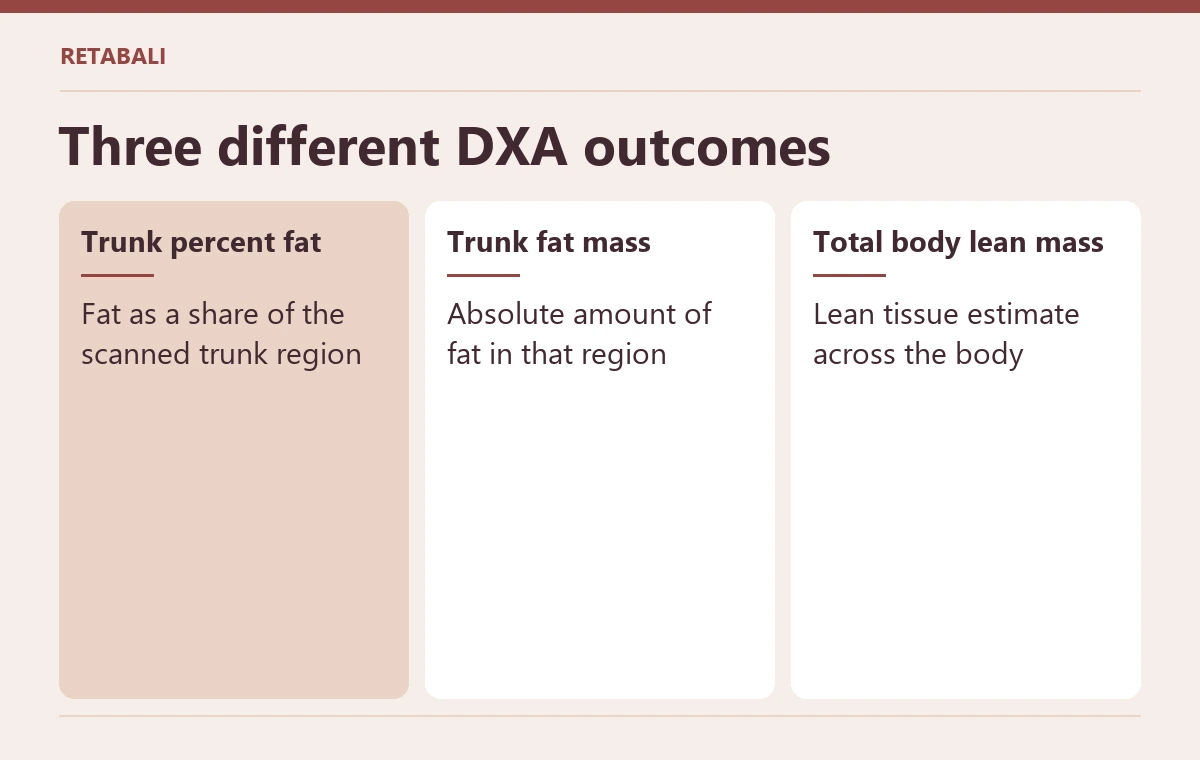
Somatropin in the foresiGHt trial: what did trunk fat percentage measure?
The adult growth hormone deficiency trial measured trunk fat percentage by DXA. Its primary comparison, regional fat mass and total lean mass answer different questions.
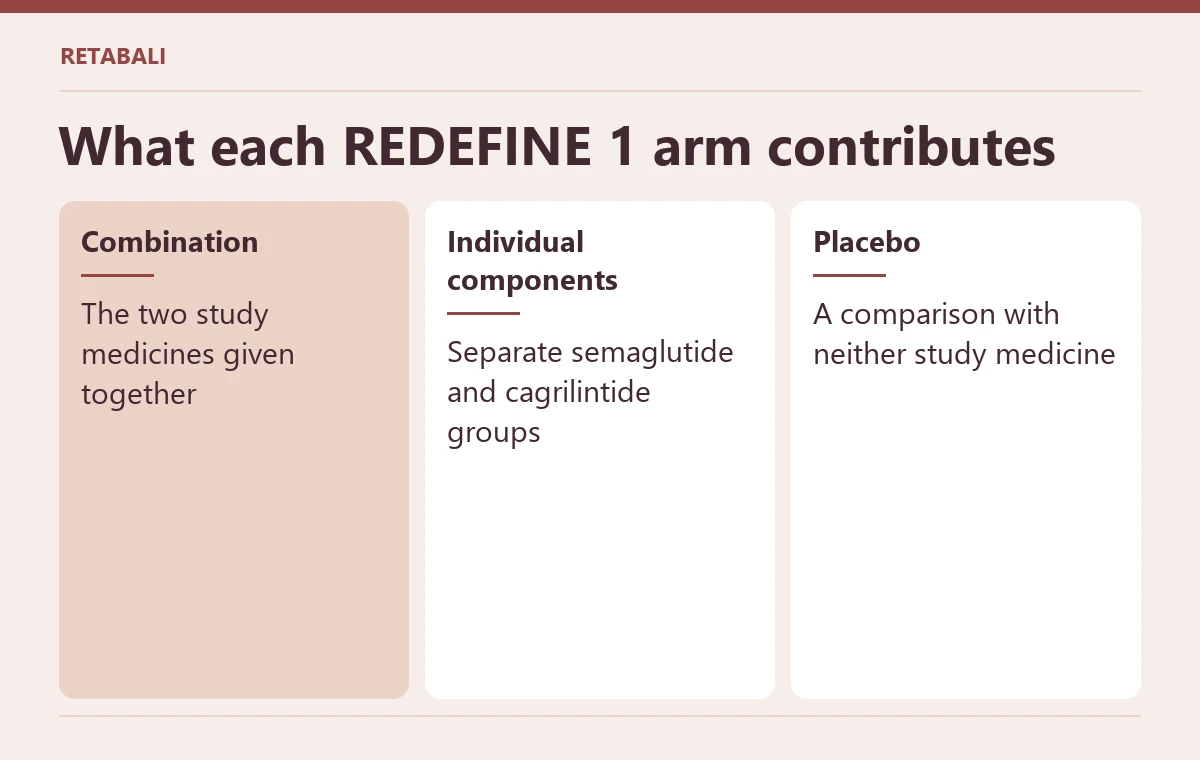
Why the CagriSema trial had four groups, and where retatrutide fits
The combination, each component alone and placebo answer different questions. Knowing which comparison you want prevents a misleading Bali product comparison.
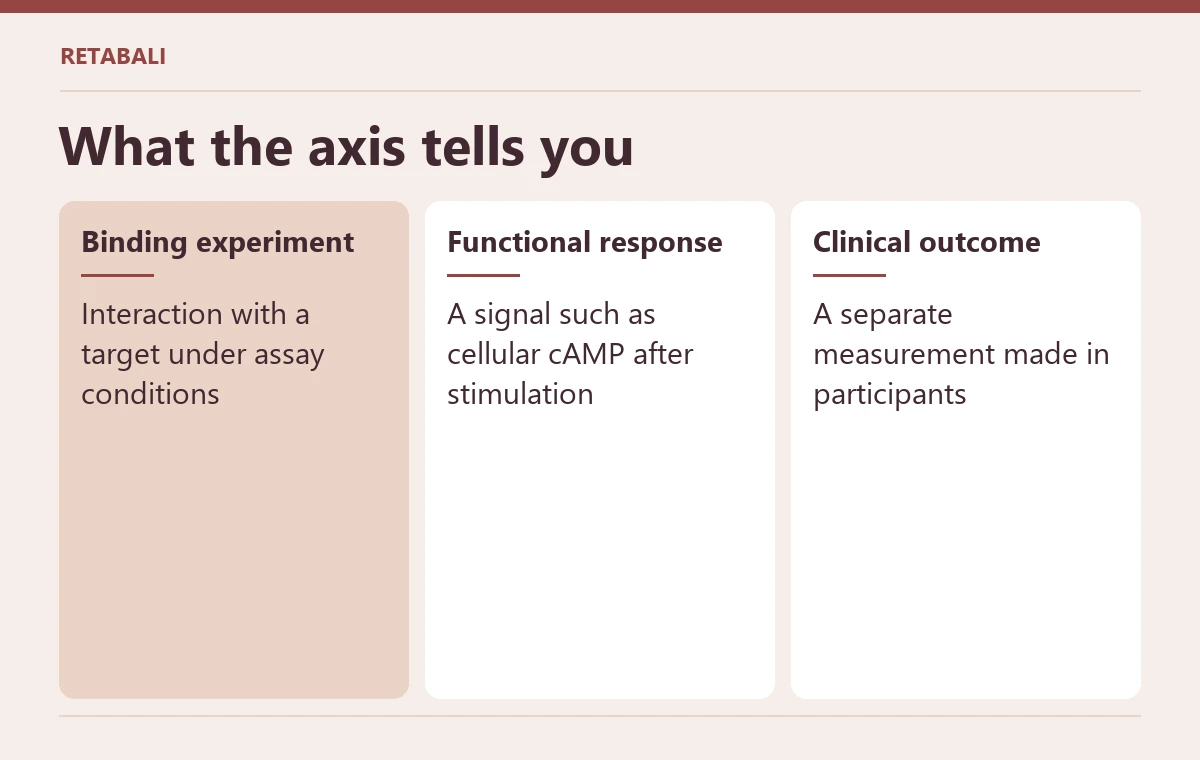
Retatrutide receptor curves: binding affinity or a cAMP response?
A concentration printed under a laboratory graph can describe two different measurements. The axes reveal what the researchers tested.
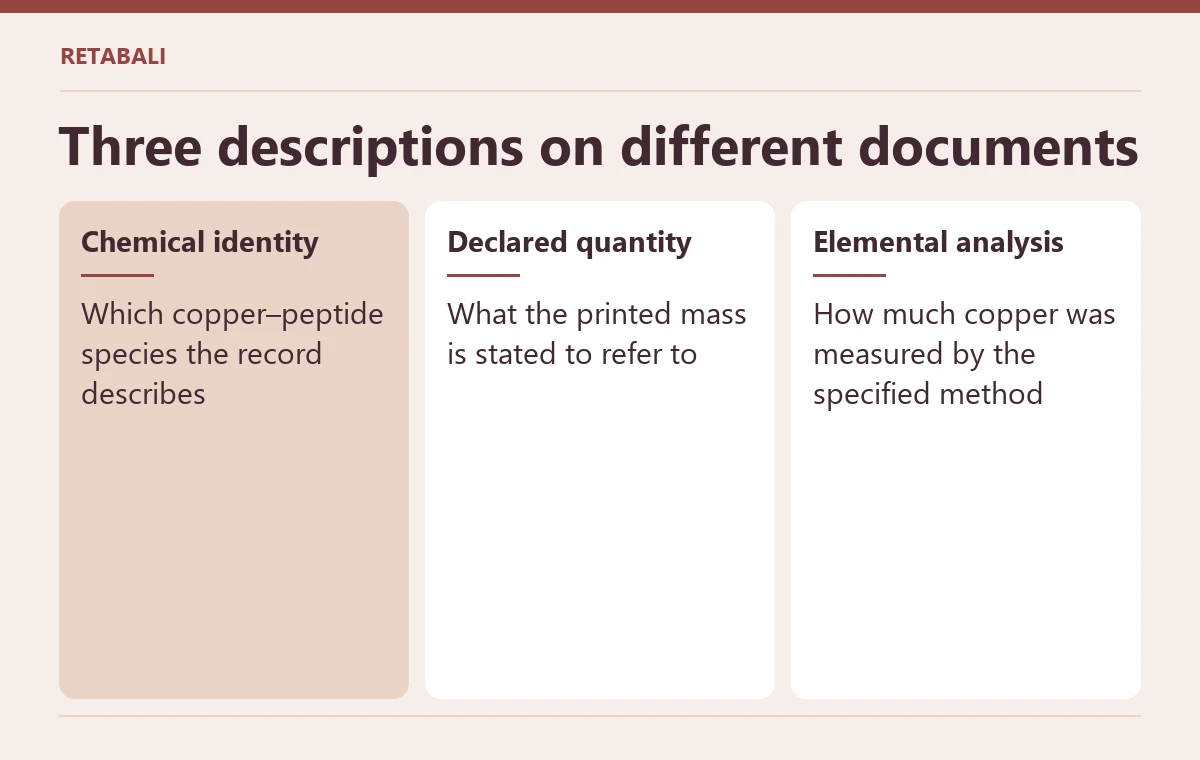
Does a GHK-Cu mass refer to the copper or the whole complex?
A peptide name, the mass on a box and an elemental copper measurement are three different pieces of information. Reading their labels in the right order matters.
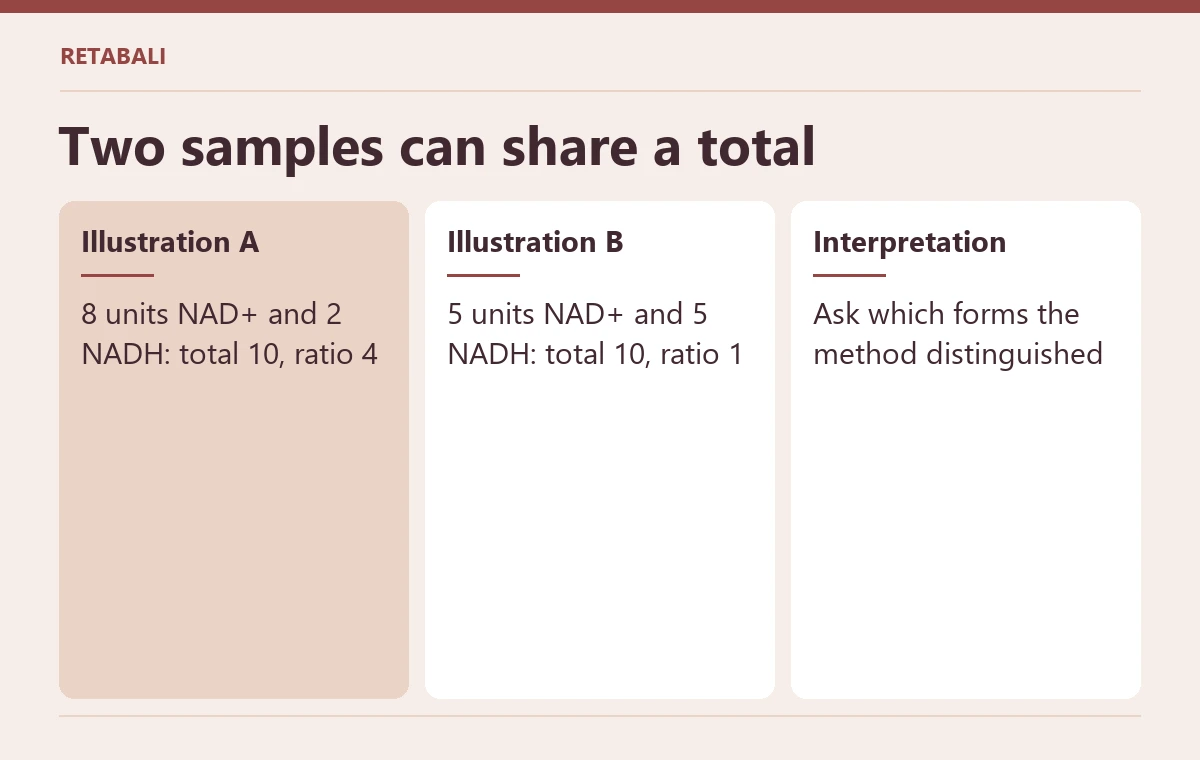
A total NAD result cannot tell you the NAD+/NADH ratio
Two samples can contain the same combined amount and have very different ratios. The distinction starts with how the laboratory measured the sample.
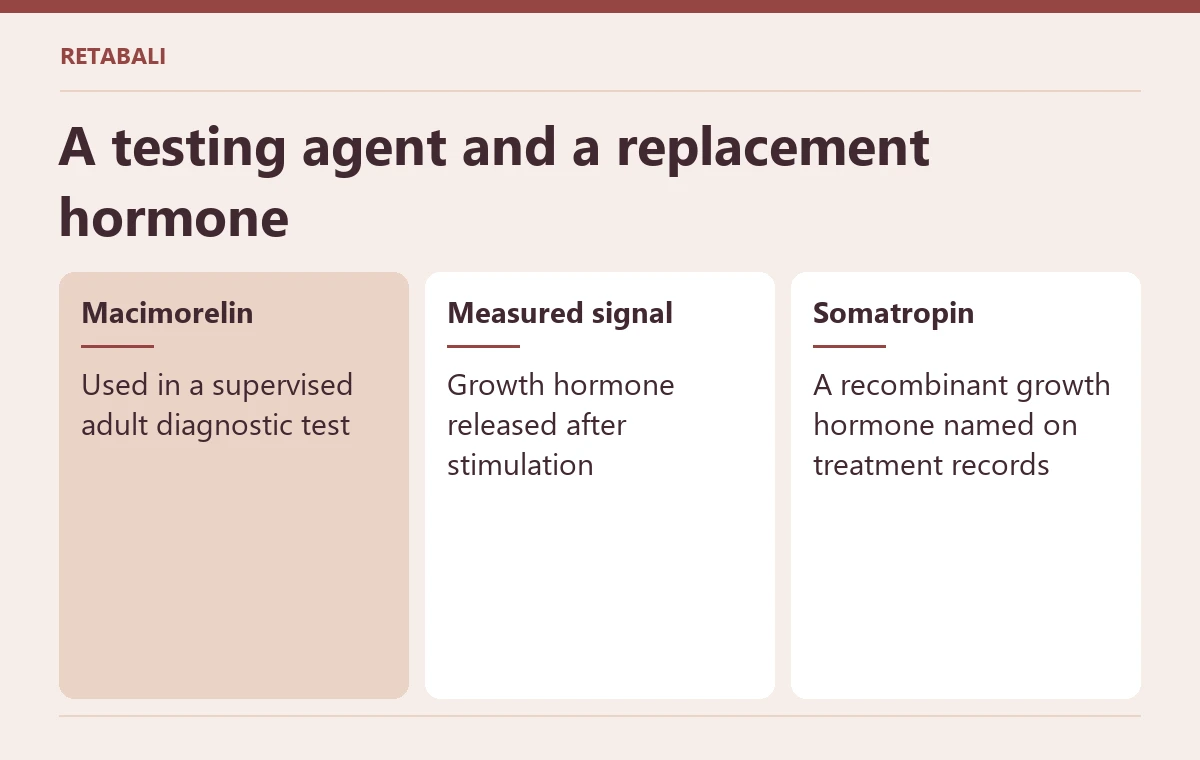
Macimorelin on a test report is not a previous somatropin treatment
Both names appear in material about growth hormone. One can describe the agent used to provoke a measurable response during an adult diagnostic procedure.

When a diabetes trial participant needs rescue medicine, what happens to their result?
A later glucose reading can matter even after an additional treatment starts. Whether it answers the trial's main question depends on the effect the researchers set out to estimate.
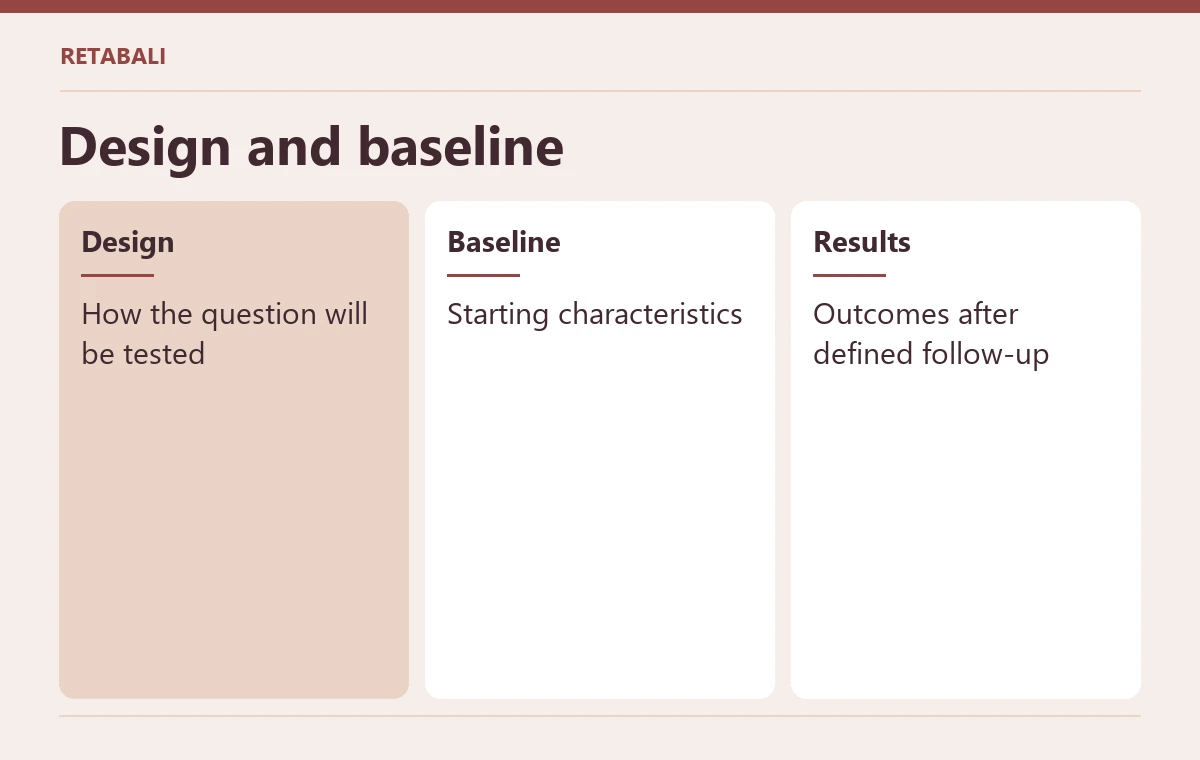
A retatrutide kidney trial paper with no outcome curve yet
A design and baseline paper explains who entered a study and how investigators intend to answer its question.
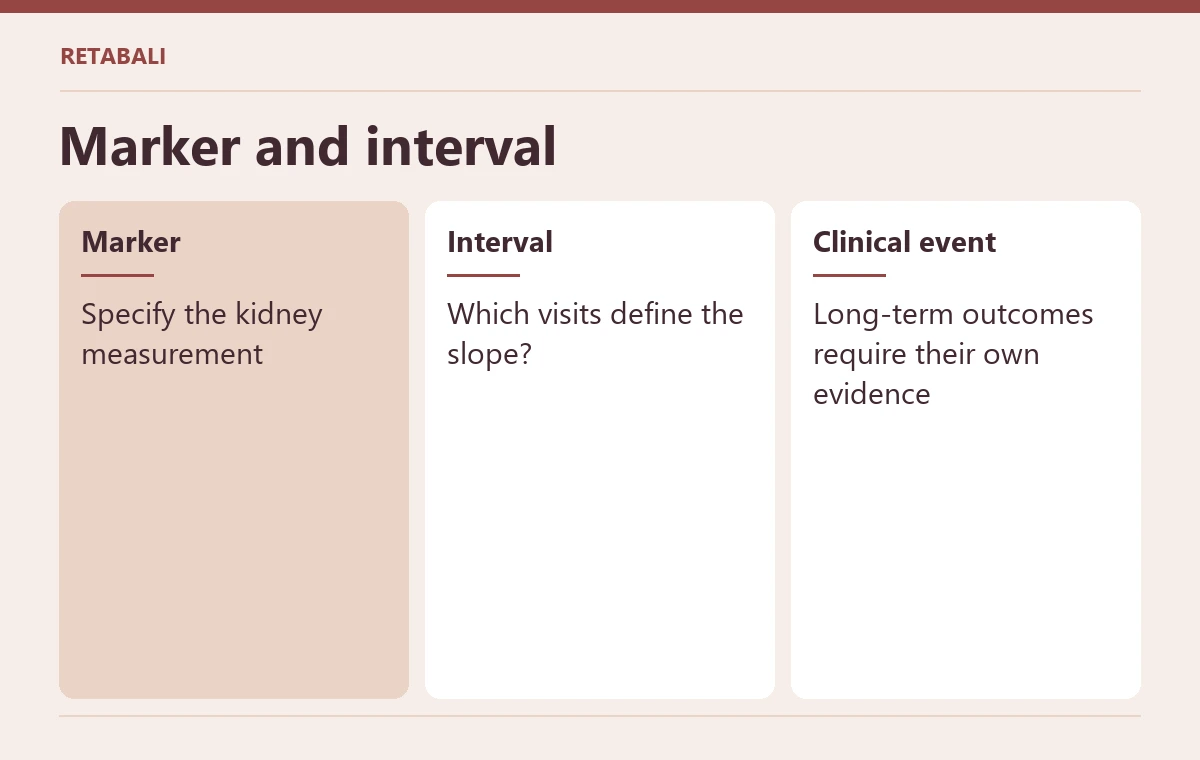
An early dip and a later kidney estimate during a retatrutide study
Two kidney estimates from different visits describe a trajectory, not automatically long-term kidney protection.
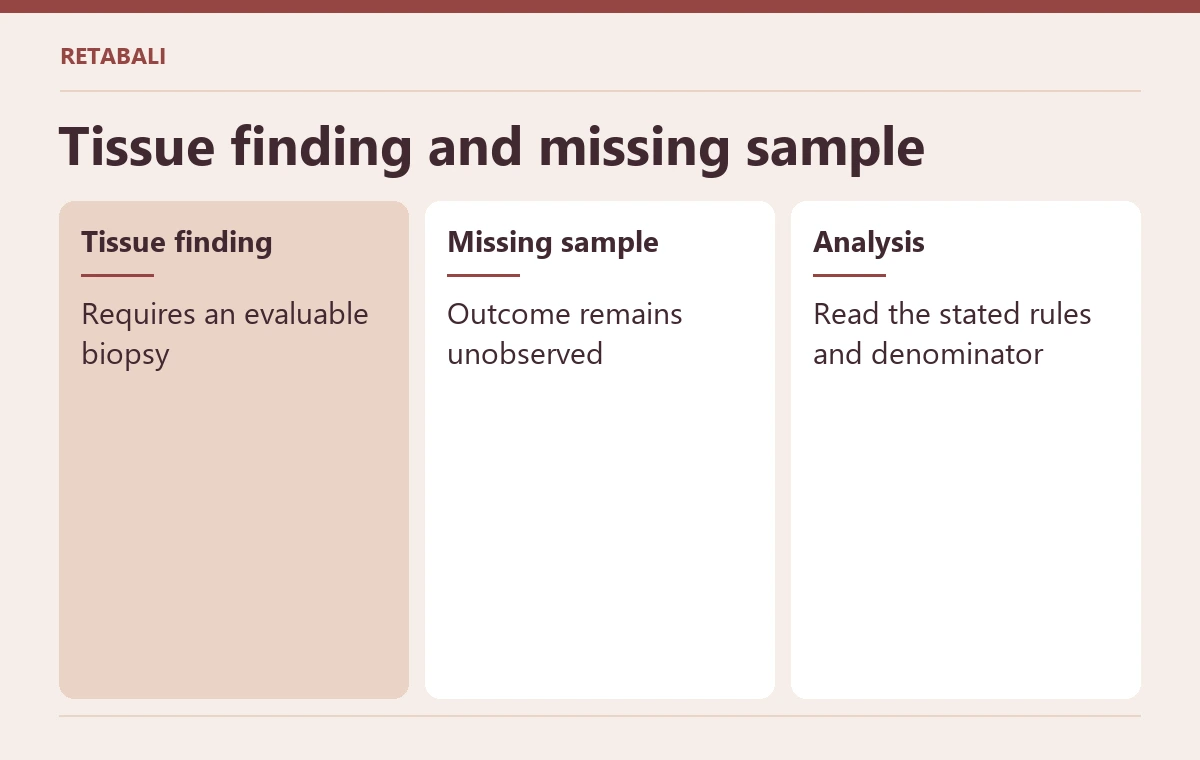
What if a follow-up liver biopsy was missing in a MASH trial?
A missing follow-up biopsy differs from a biopsy showing persistent disease.
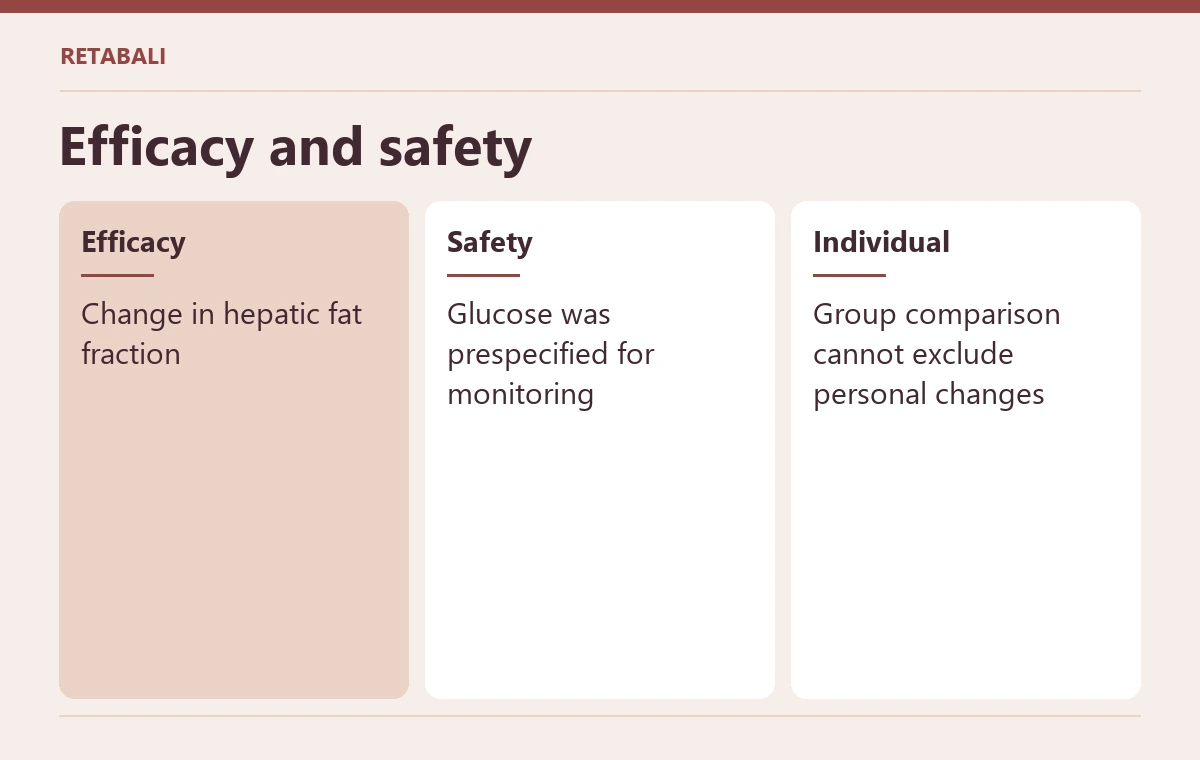
Why a tesamorelin liver trial also tracked blood glucose
A trial can choose an efficacy endpoint about one organ and a safety endpoint about another physiological process.
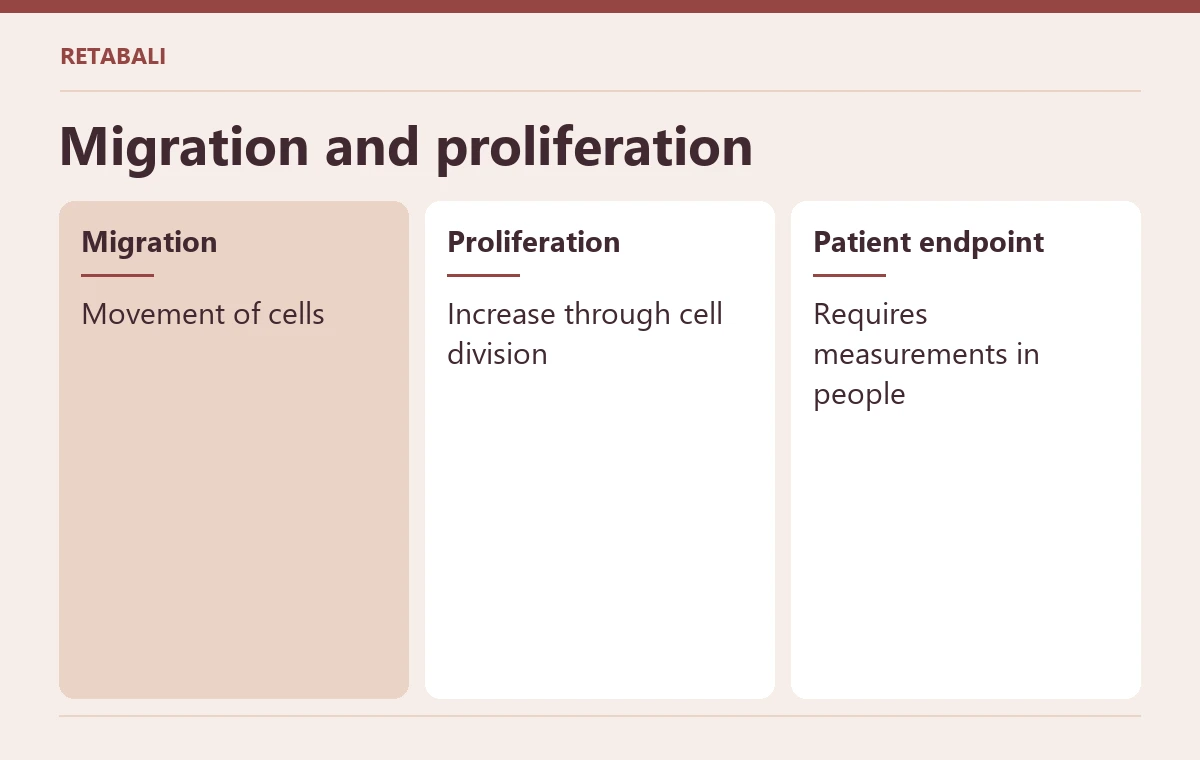
Cell migration or cell division in a BPC-157 paper?
More cells visible in an area can reflect movement, division or both.
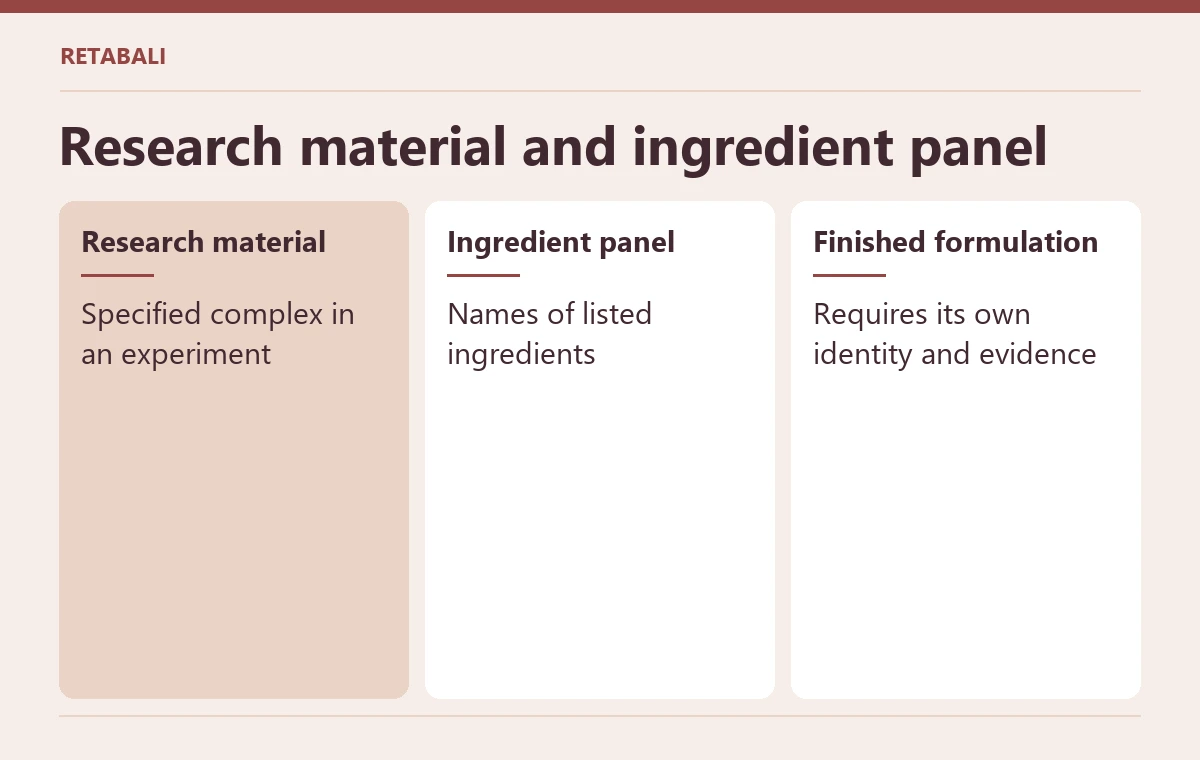
Why a copper–peptide complex is not the same as two ingredient names
A study can investigate a defined copper–peptide complex under controlled conditions.
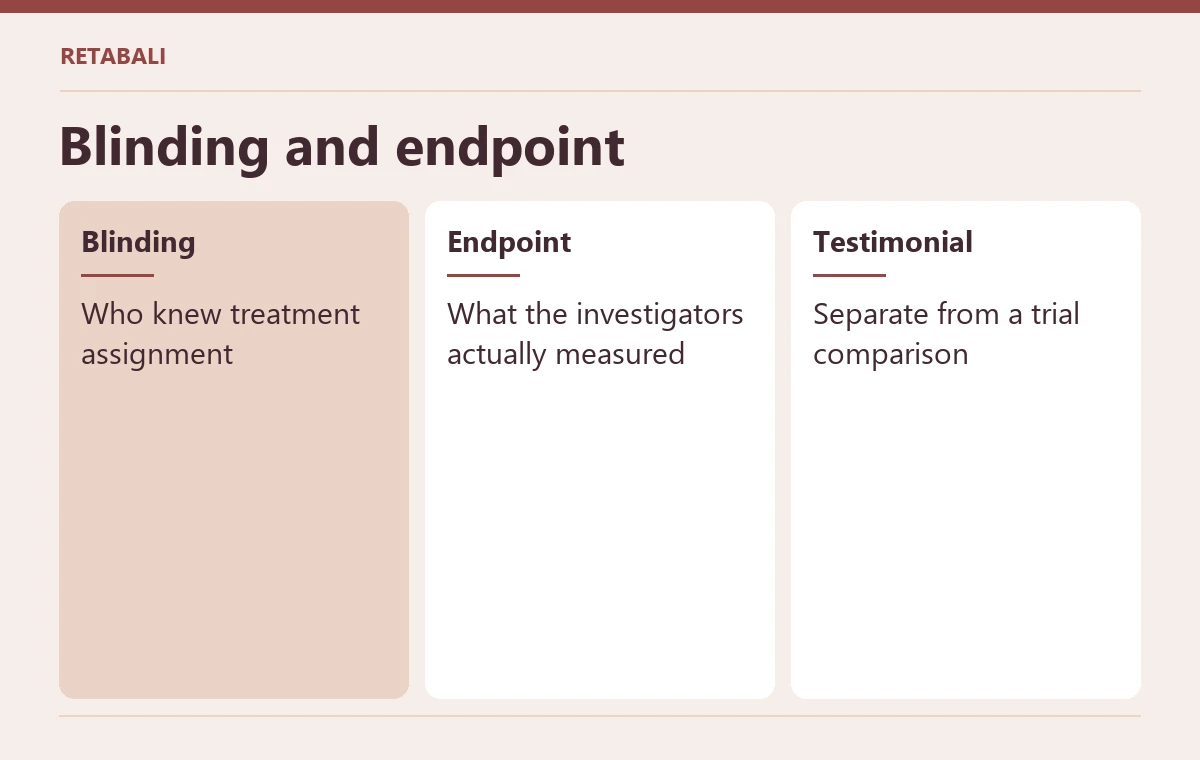
Does blinding tell us whether an NAD precursor improved fatigue?
Blinding can reduce bias in the measurement of outcomes a trial actually collected.
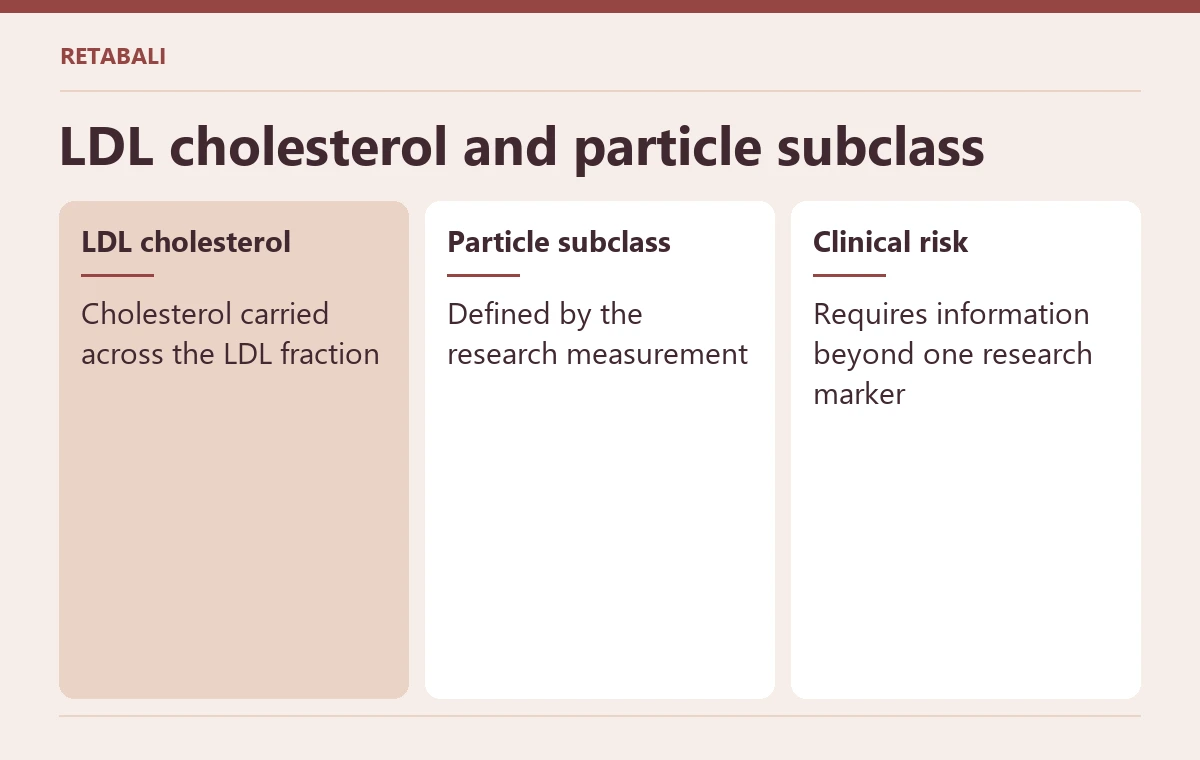
Small LDL particles in a retatrutide chart: what was counted?
An LDL particle subclass is defined by the analytical method used in a study.
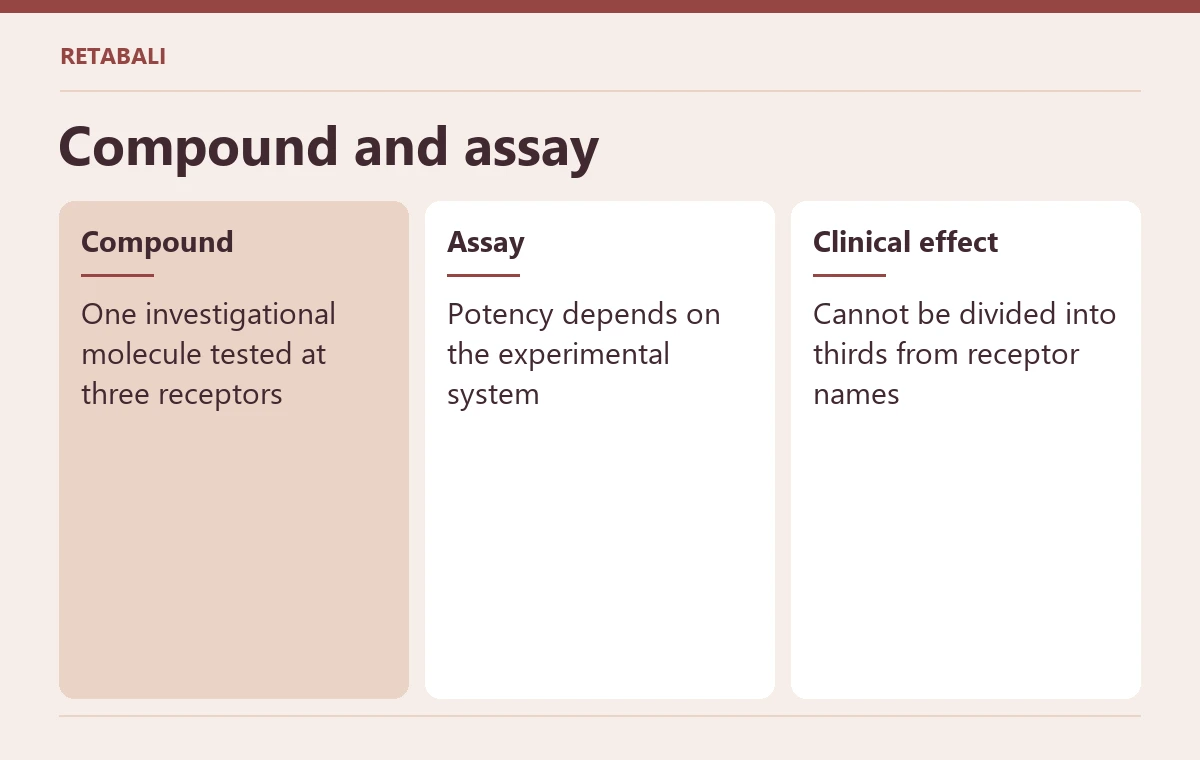
Three receptor signals are not three equal clinical effects
Retatrutide is one molecule studied for activity at GIP, GLP-1 and glucagon receptors.
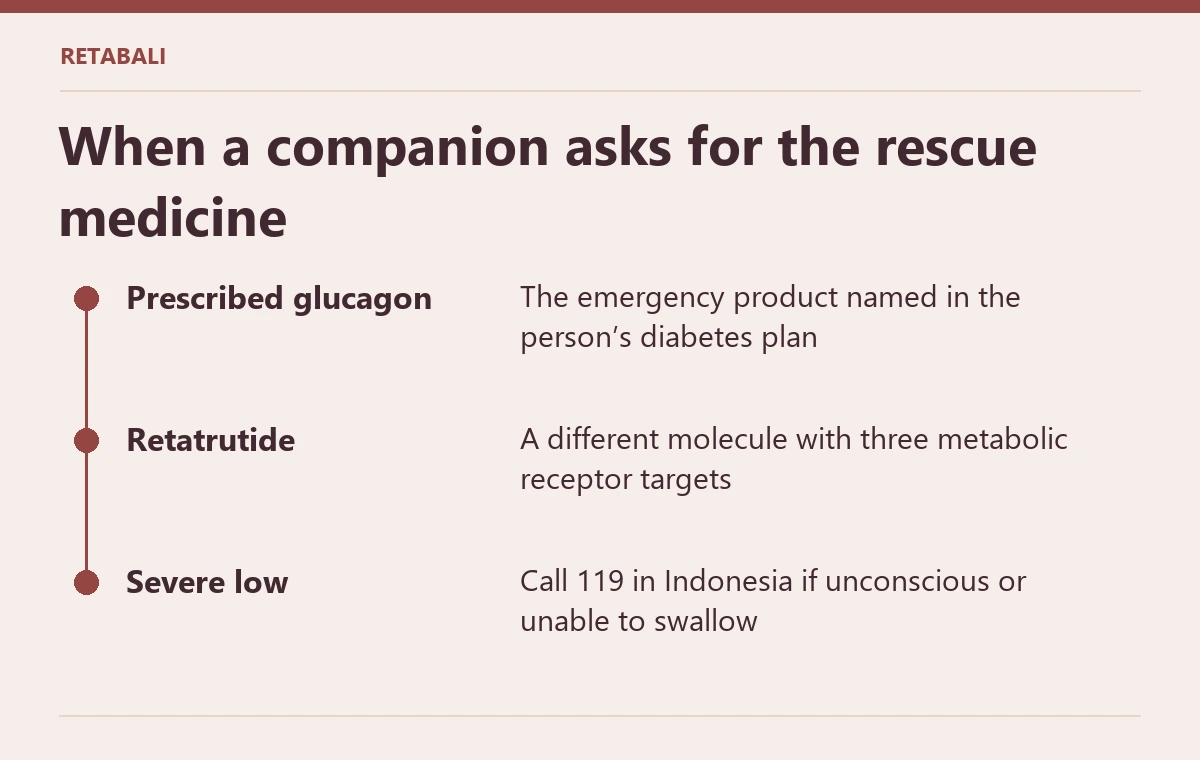
Can retatrutide stand in for emergency glucagon in Bali?
Why a retatrutide pen cannot replace prescribed rescue glucagon during a severe low, and what a travel companion in Bali needs to know before an emergency.
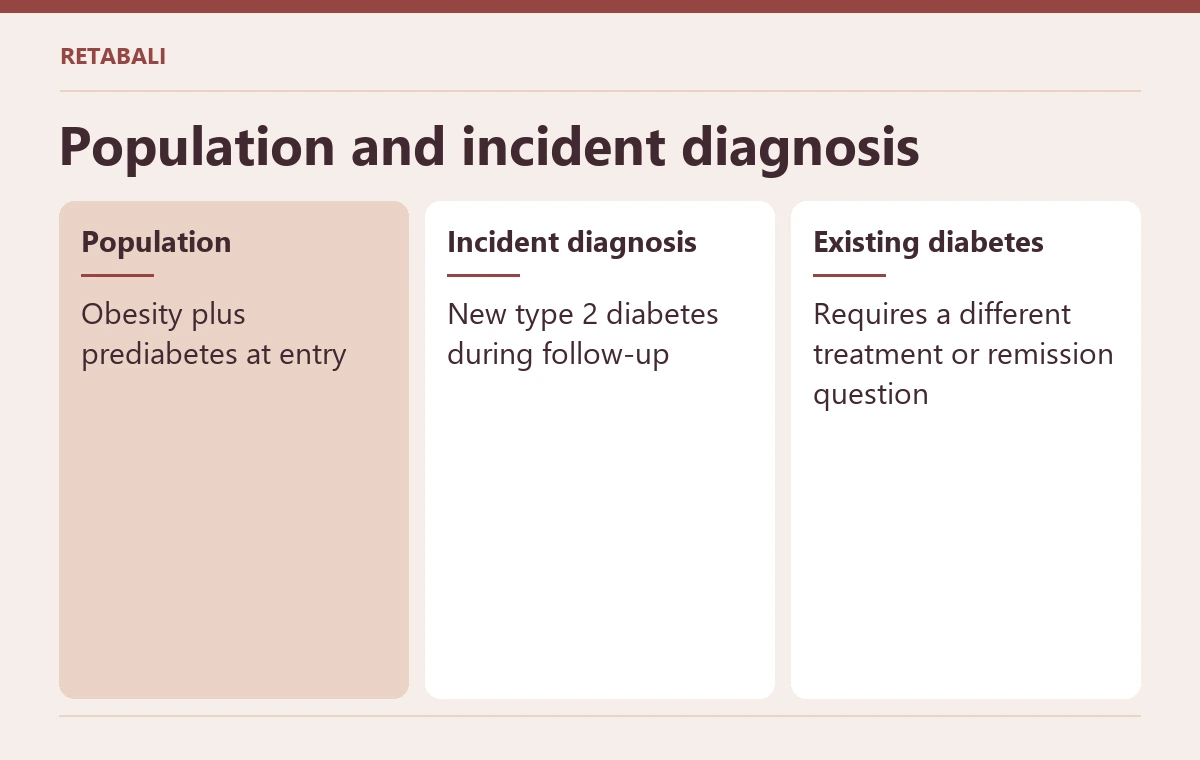
Diabetes prevention with tirzepatide: which participants were followed?
The longer diabetes-prevention analysis concerned participants with obesity and prediabetes.
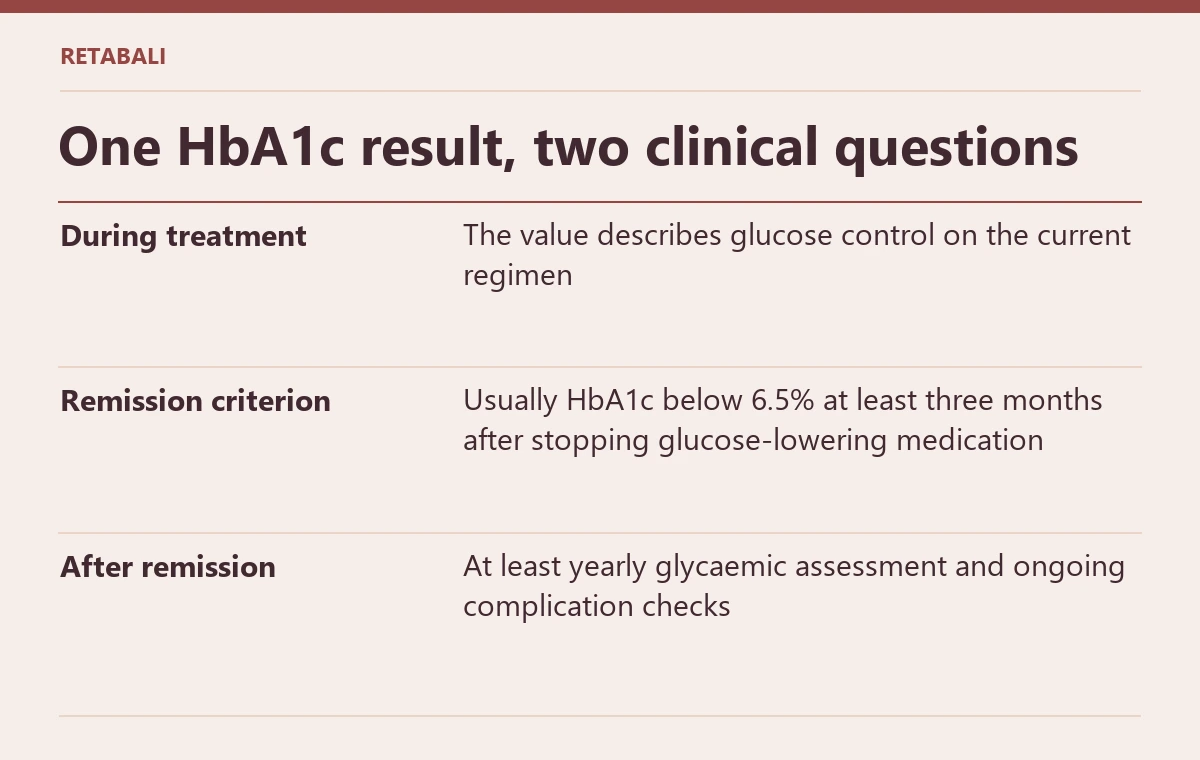
When does a lower HbA1c on tirzepatide count as diabetes remission?
A lower HbA1c during tirzepatide treatment and confirmed type 2 diabetes remission answer different questions. Read the dates and treatment history together.
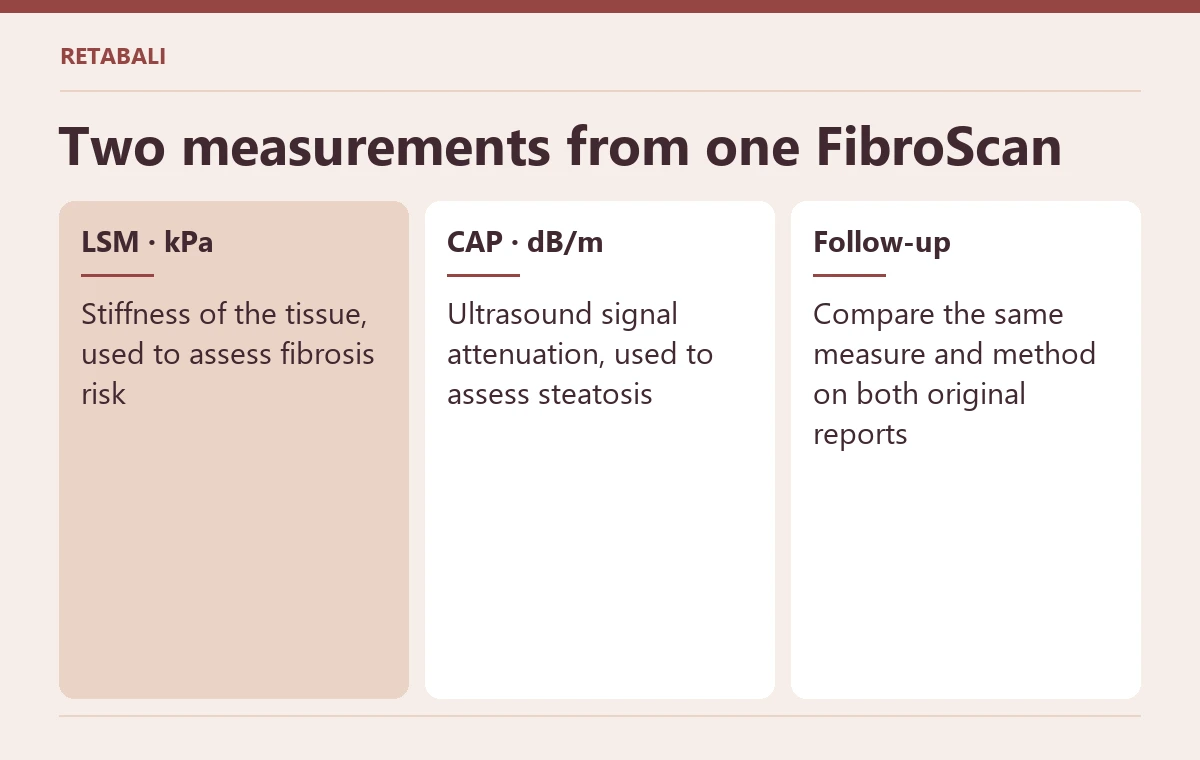
Why a liver scan lists both kPa and dB/m
Reading a liver elastography report in Bali? Learn what stiffness and controlled attenuation measure, and which lines to match when comparing two scans.
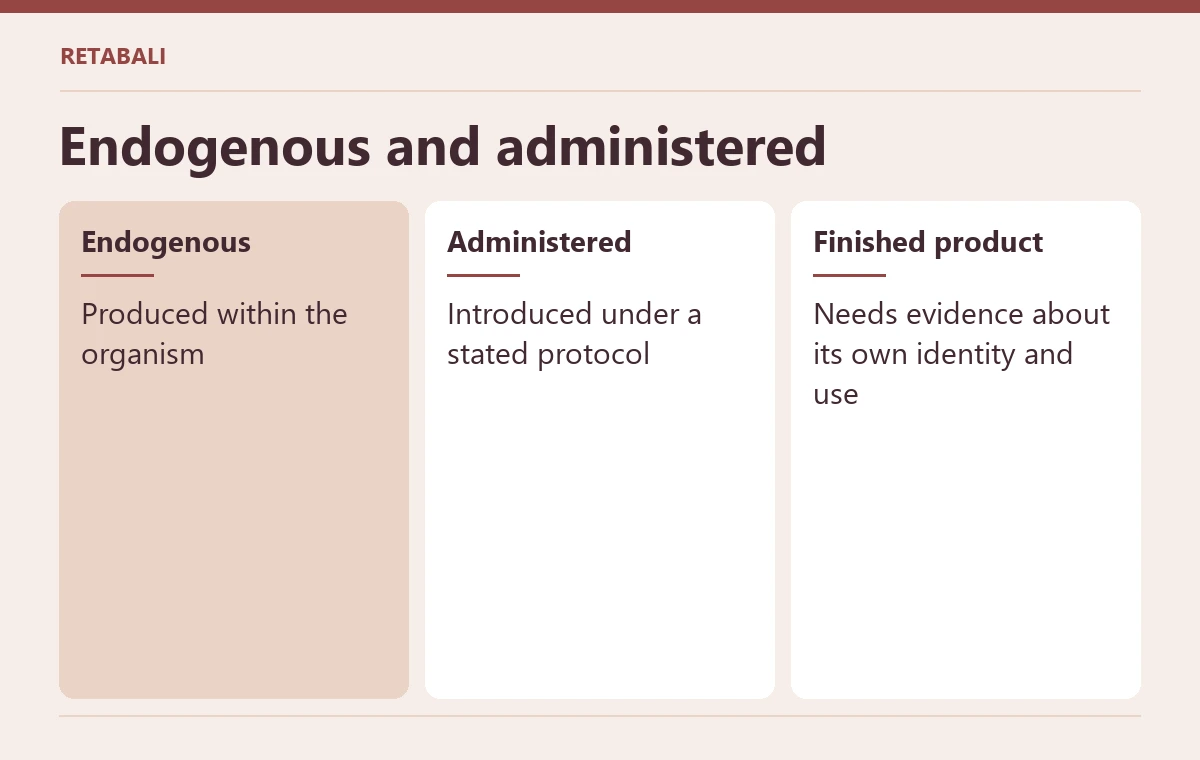
Endogenous MOTS-c on a lab graph and a labelled product
Detecting a peptide produced by the body establishes its presence under the measured conditions.
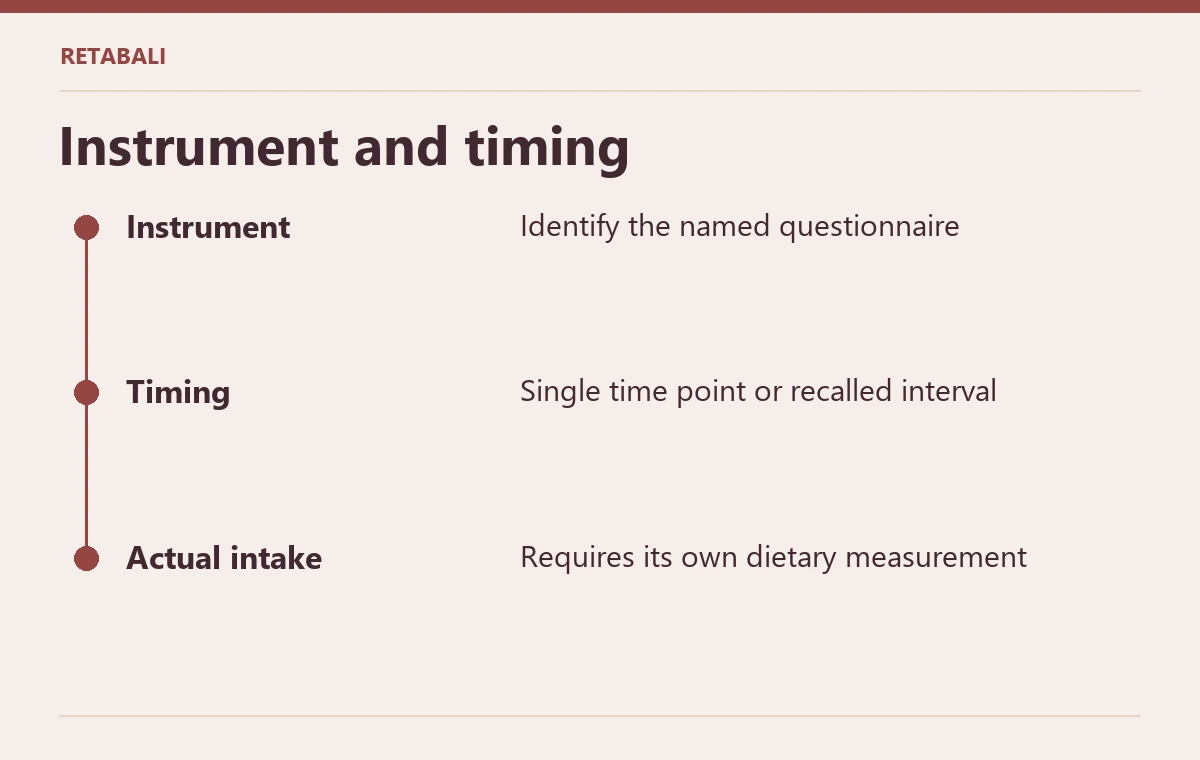
Did the retatrutide appetite study measure what people ate?
A trial questionnaire about hunger, cravings or eating attitudes measures what participants report.
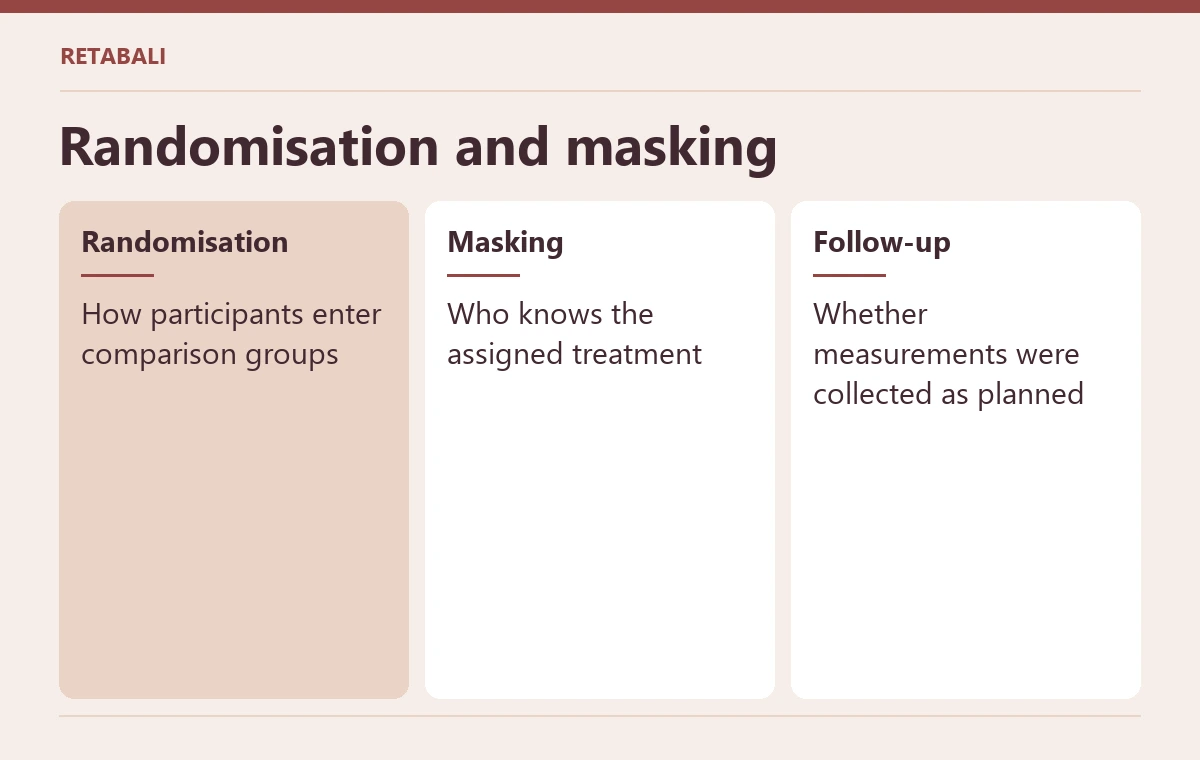
Randomised and blinded mean different things in a retatrutide paper
Randomisation concerns assignment to study groups.
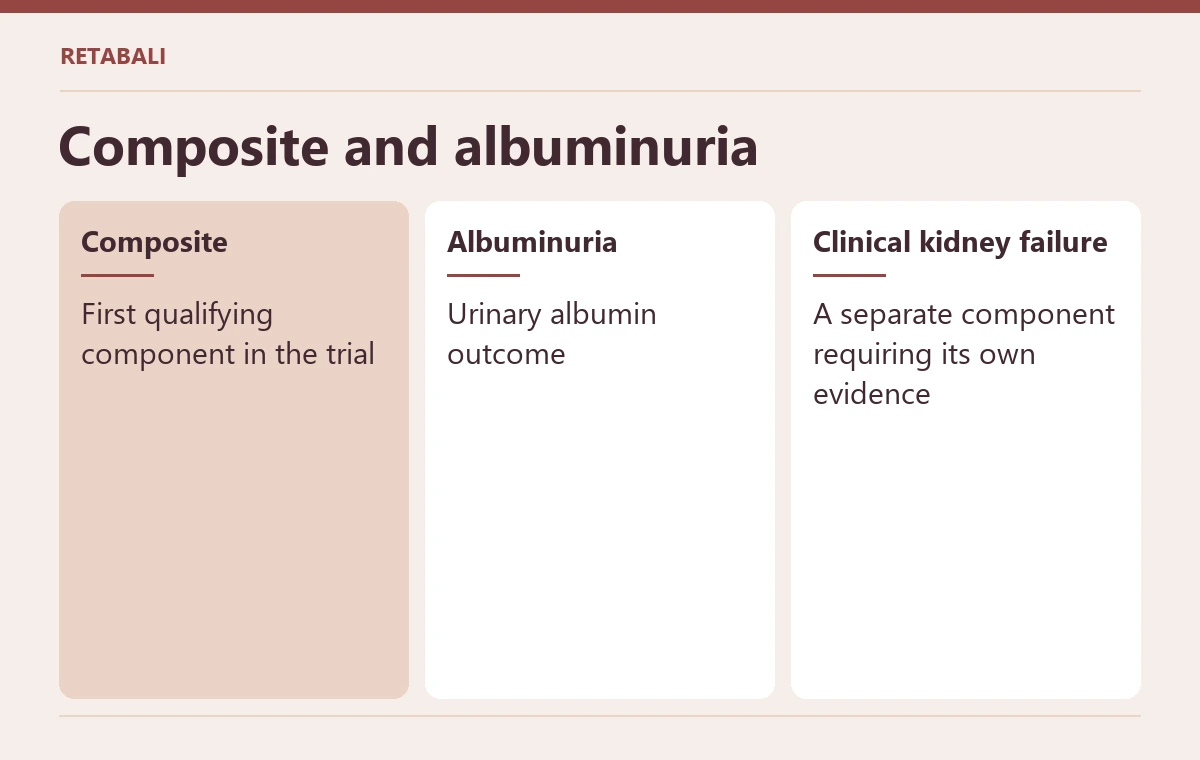
Which kidney events counted in the SURPASS-4 composite?
A composite kidney endpoint counts the first qualifying component as defined by a study.
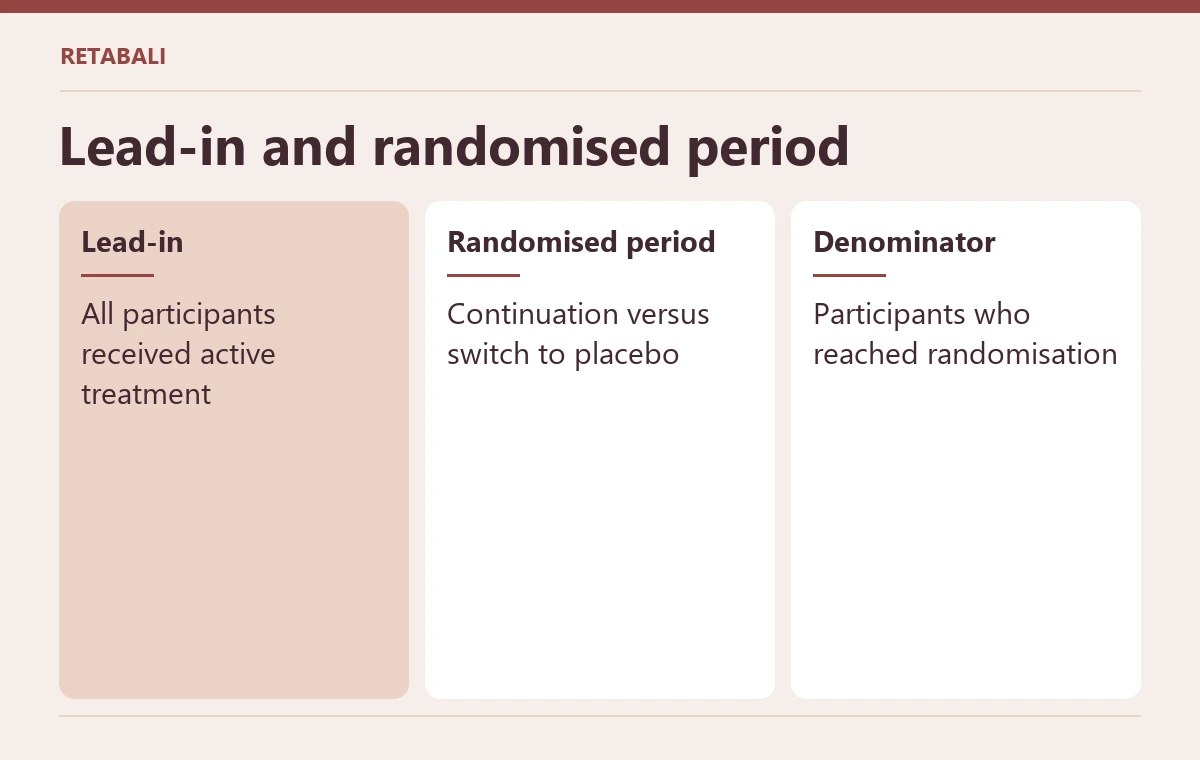
Who was still in SURMOUNT-4 when treatment was withdrawn?
A randomised withdrawal trial answers a question about people who reach the withdrawal stage.
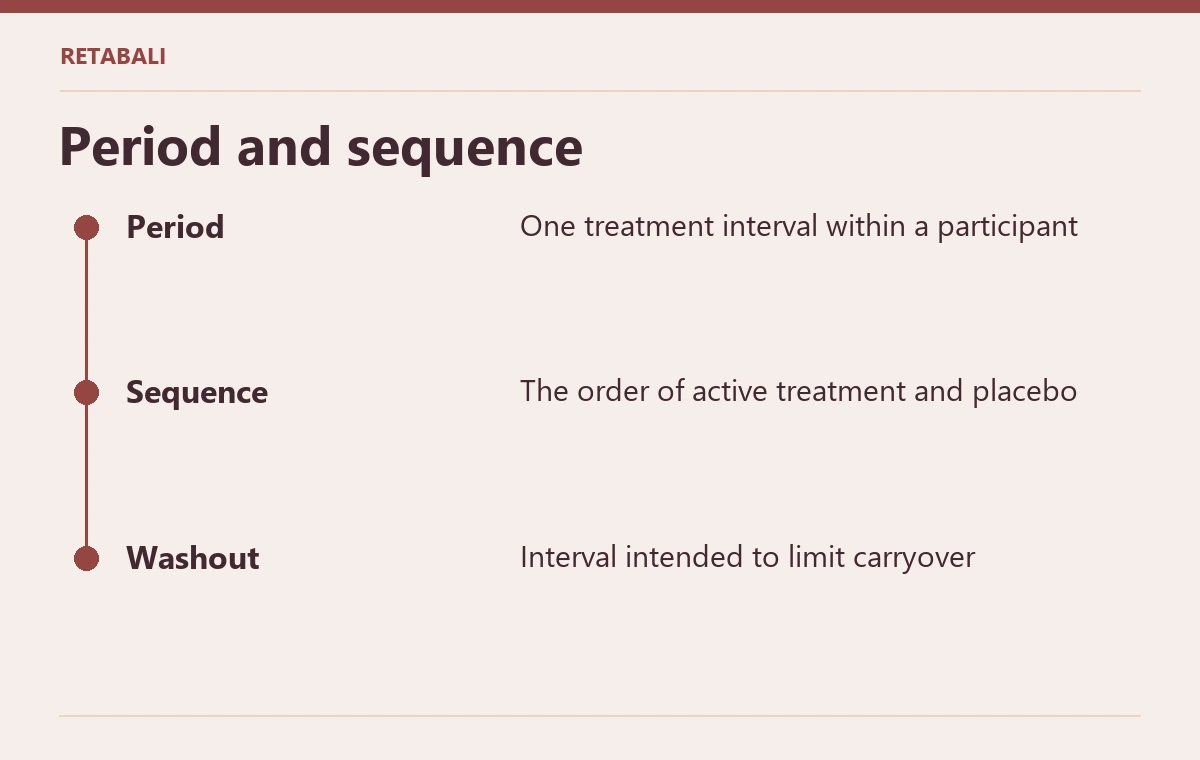
What a washout period does in an NAD precursor crossover trial
In a crossover trial the same participant receives the study interventions in different periods.
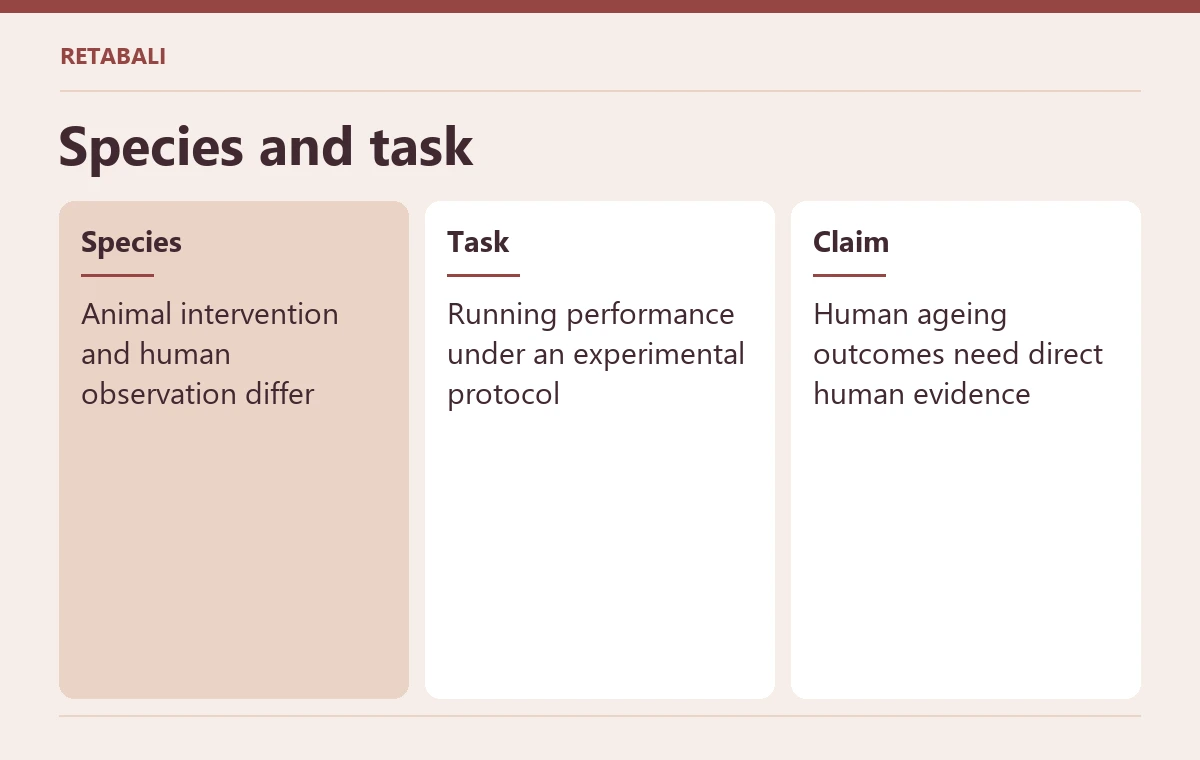
MOTS-c, mouse age and a running test: what to carry into human research
A change in a laboratory animal's running performance is a measurable experimental endpoint.
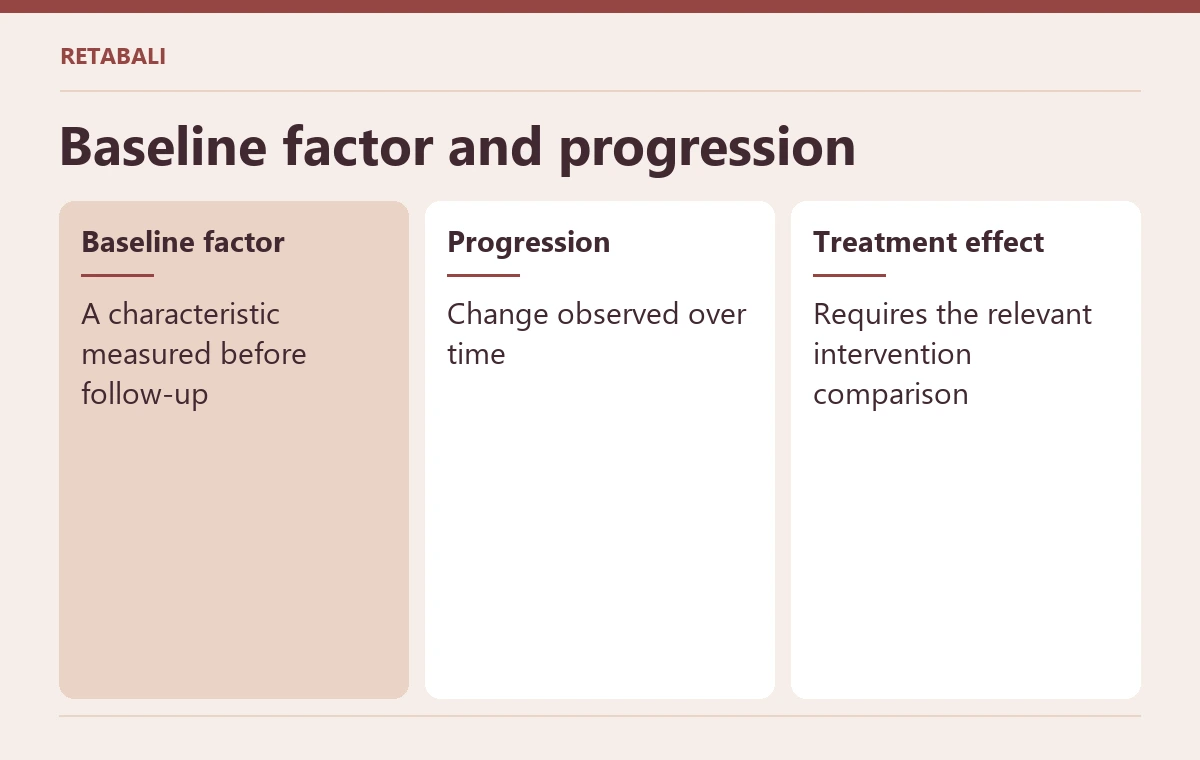
A fibrosis predictor in a tesamorelin cohort is not a treatment effect
A baseline factor associated with later fibrosis progression helps researchers understand risk.

Retatrutide and lean mass: where is the strength test?
A DXA body-composition measurement estimates lean soft tissue and fat.
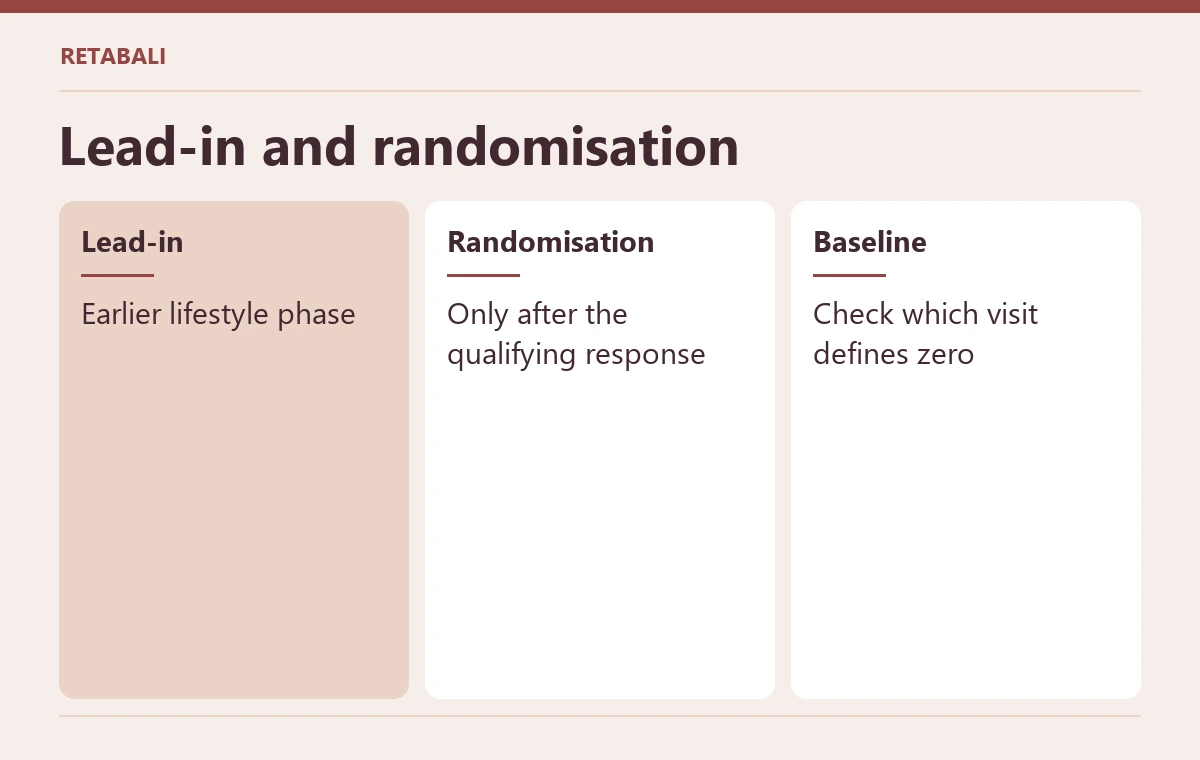
Who qualified for randomisation after the SURMOUNT-3 lifestyle phase?
SURMOUNT-3 started by asking participants to complete an intensive lifestyle intervention.
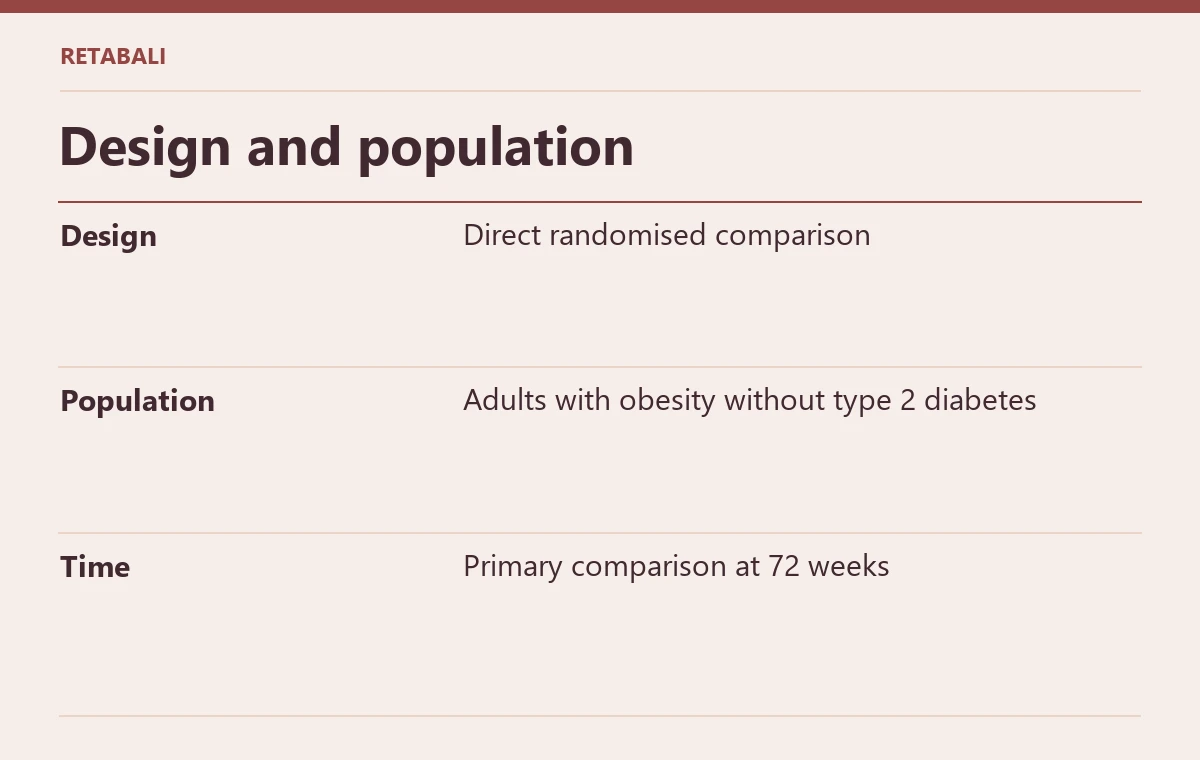
Which question did the head-to-head obesity trial actually test?
A head-to-head trial places two treatments in the same randomised study, reducing the problems of comparing separate trials with different populations.
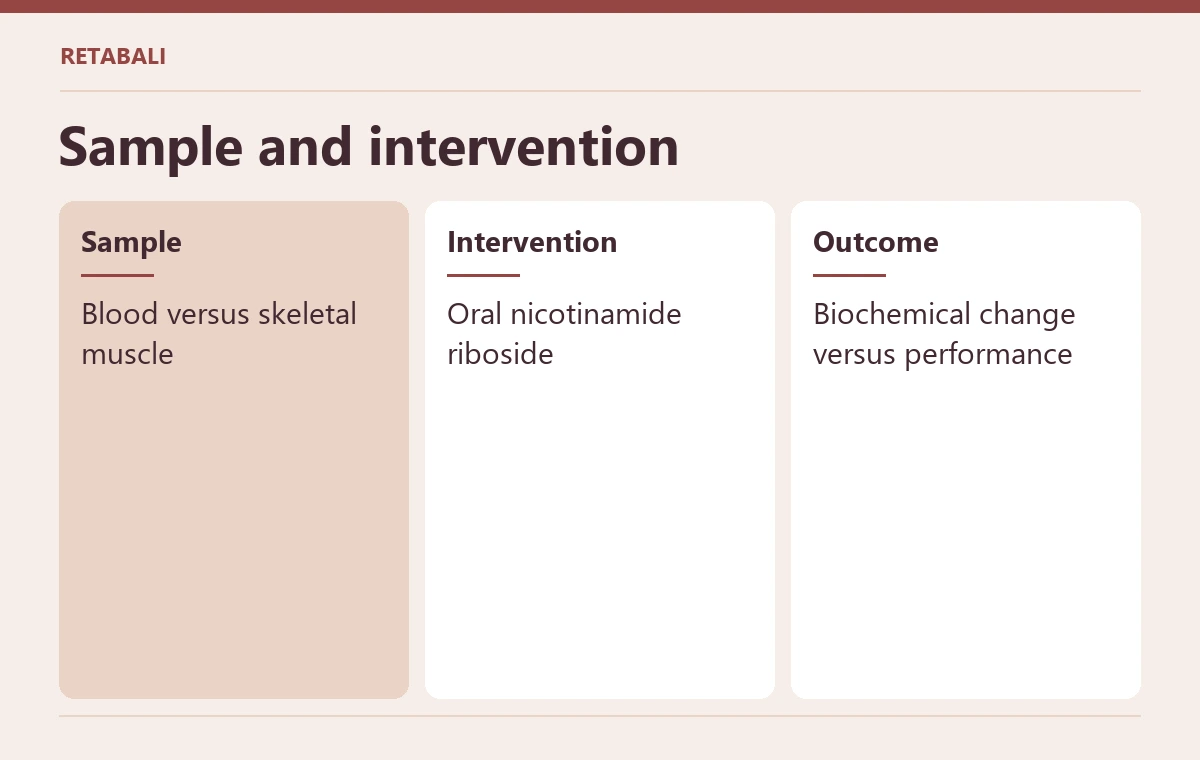
Blood NAD and a muscle biopsy answer different questions
Where the sample came from matters when interpreting studies of a precursor to NAD.
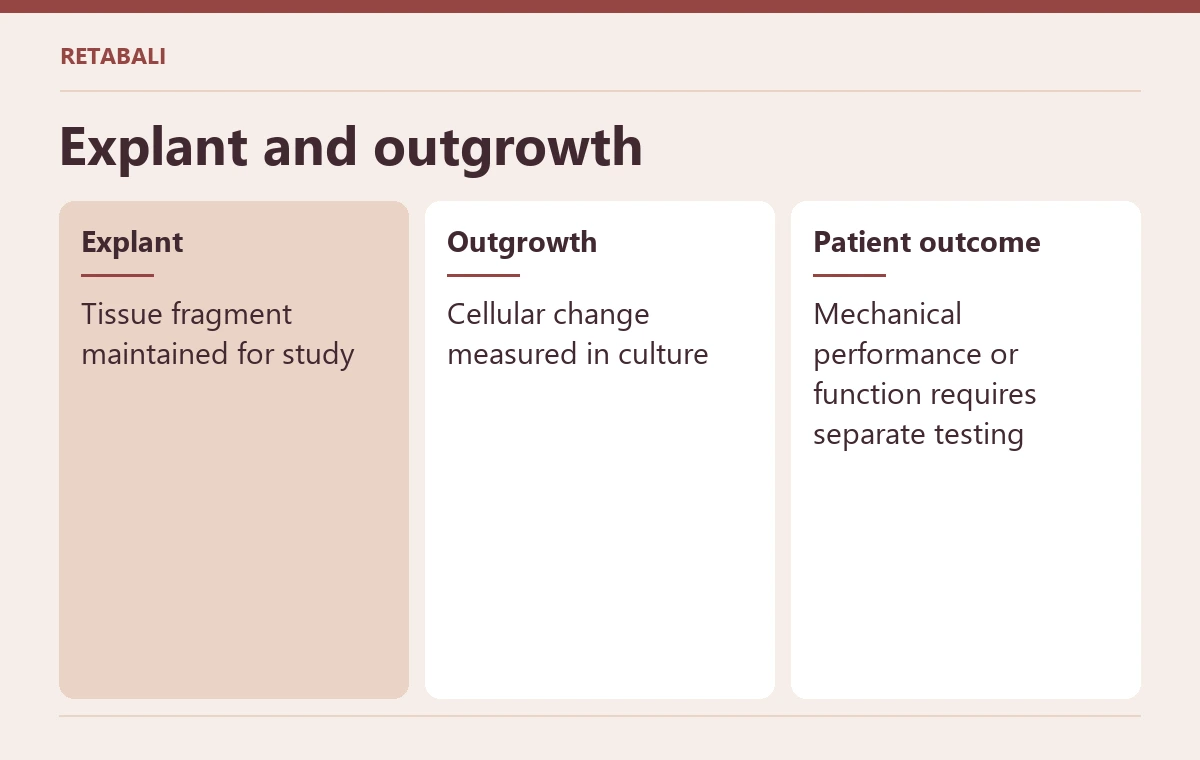
What does “outgrowth” mean in a BPC-157 tendon study?
Tendon explant outgrowth describes cells moving or growing from a piece of tissue under laboratory conditions.
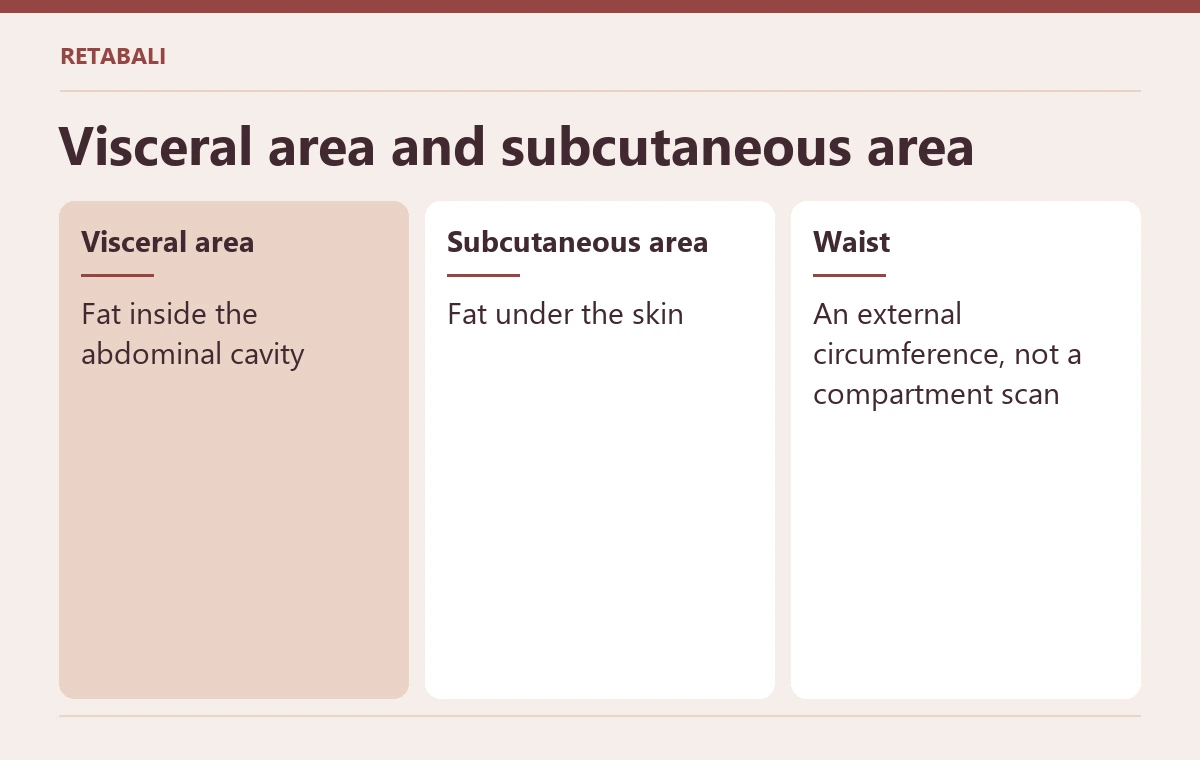
Two fat areas on the same CT slice in a tesamorelin study
A cross-sectional CT area of visceral fat and the area of subcutaneous fat on the same image describe different anatomical compartments.
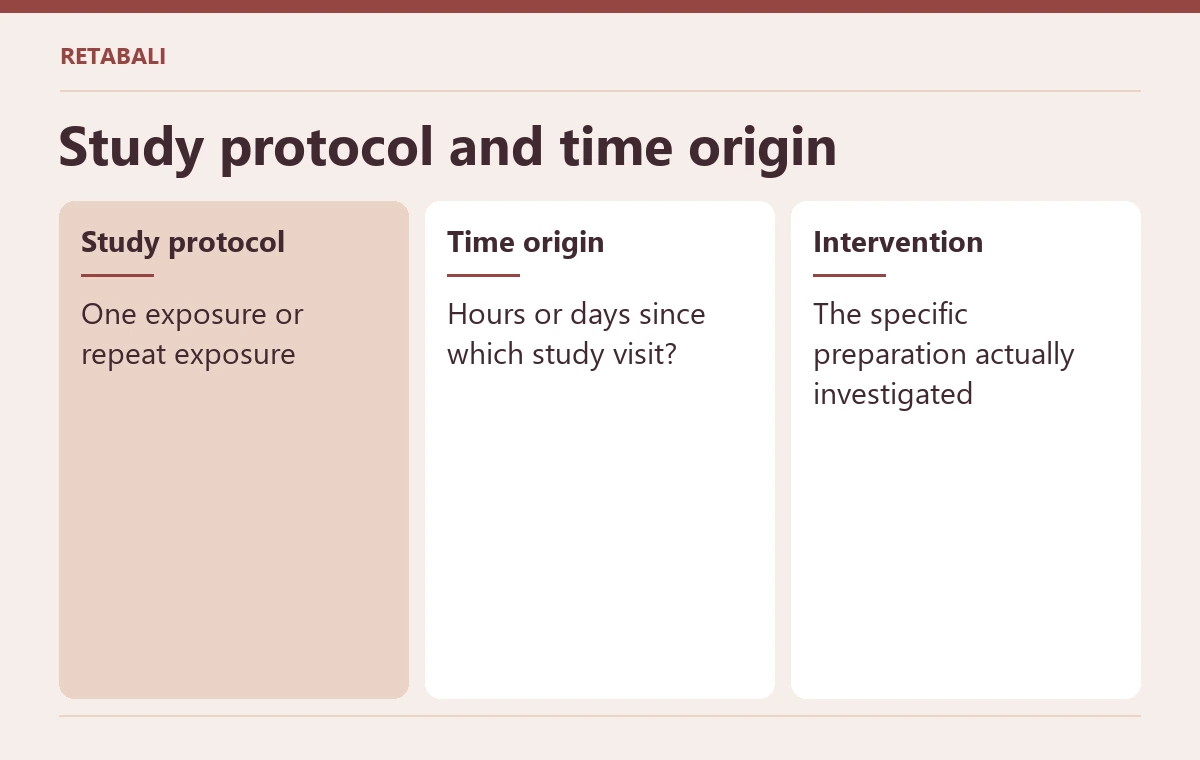
One exposure or repeated exposure? The two CJC-1295 protocols
A first-exposure experiment and a repeat-exposure experiment do not ask the same question.

Is a retatrutide trial recruiting in Indonesia? How to check the actual location
Match the trial number, city, facility and recruitment status before interpreting a retatrutide research listing from Bali.
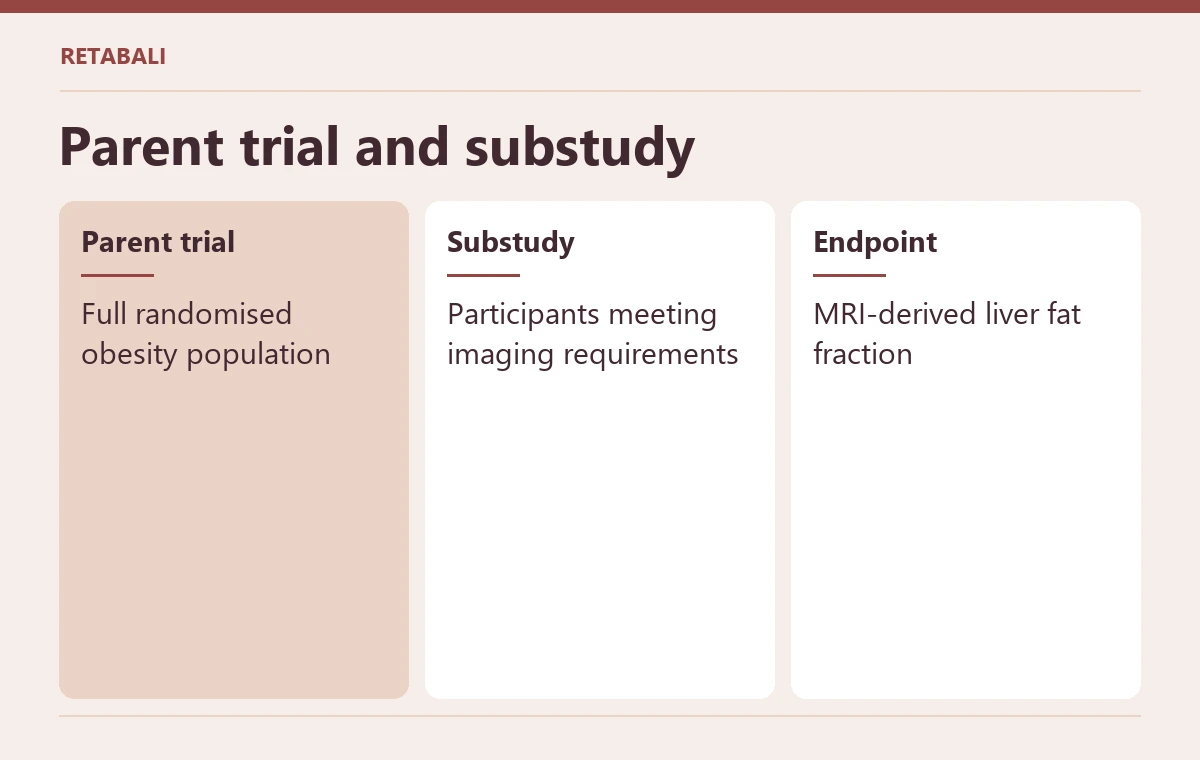
Who entered the retatrutide liver-fat analysis?
The participants in a liver imaging substudy are a selected part of a larger trial.

Why the tirzepatide sleep-apnea paper ran two trials
The SURMOUNT-OSA report separated participants according to their use of positive airway pressure.
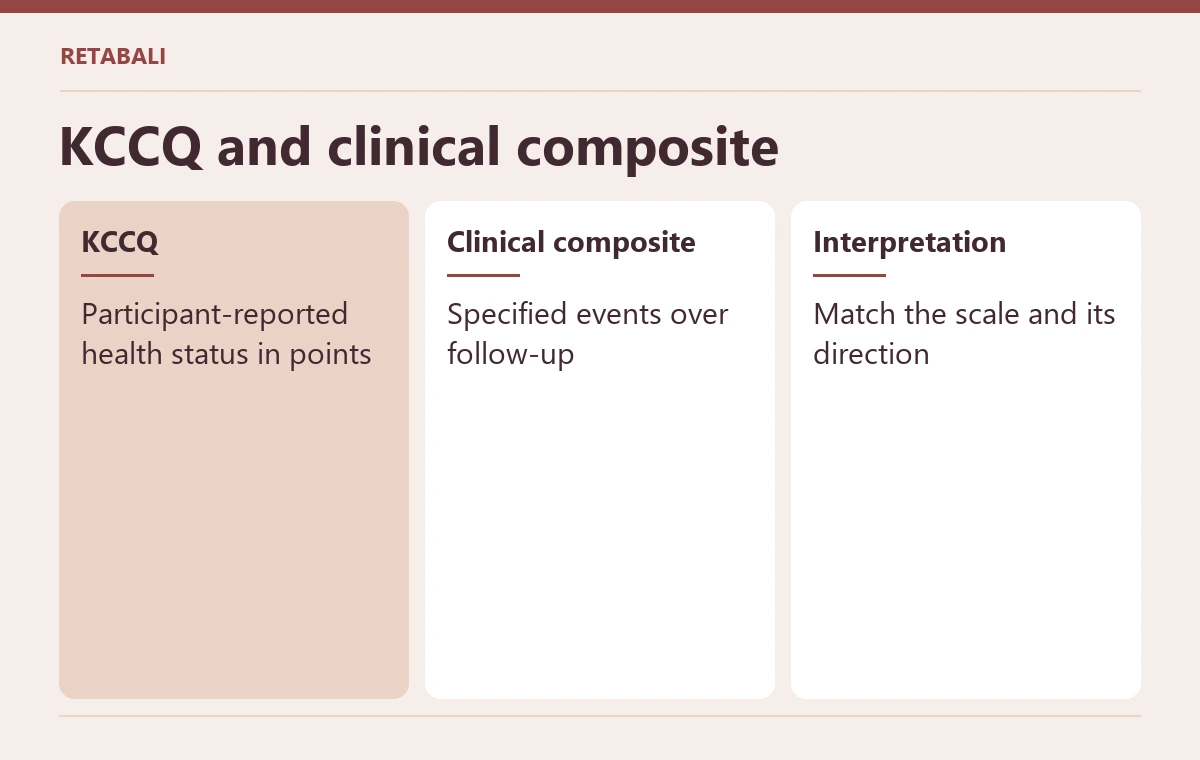
What KCCQ points meant in the tirzepatide heart-failure trial
The Kansas City Cardiomyopathy Questionnaire records how heart failure affects symptoms and activity as reported by participants.
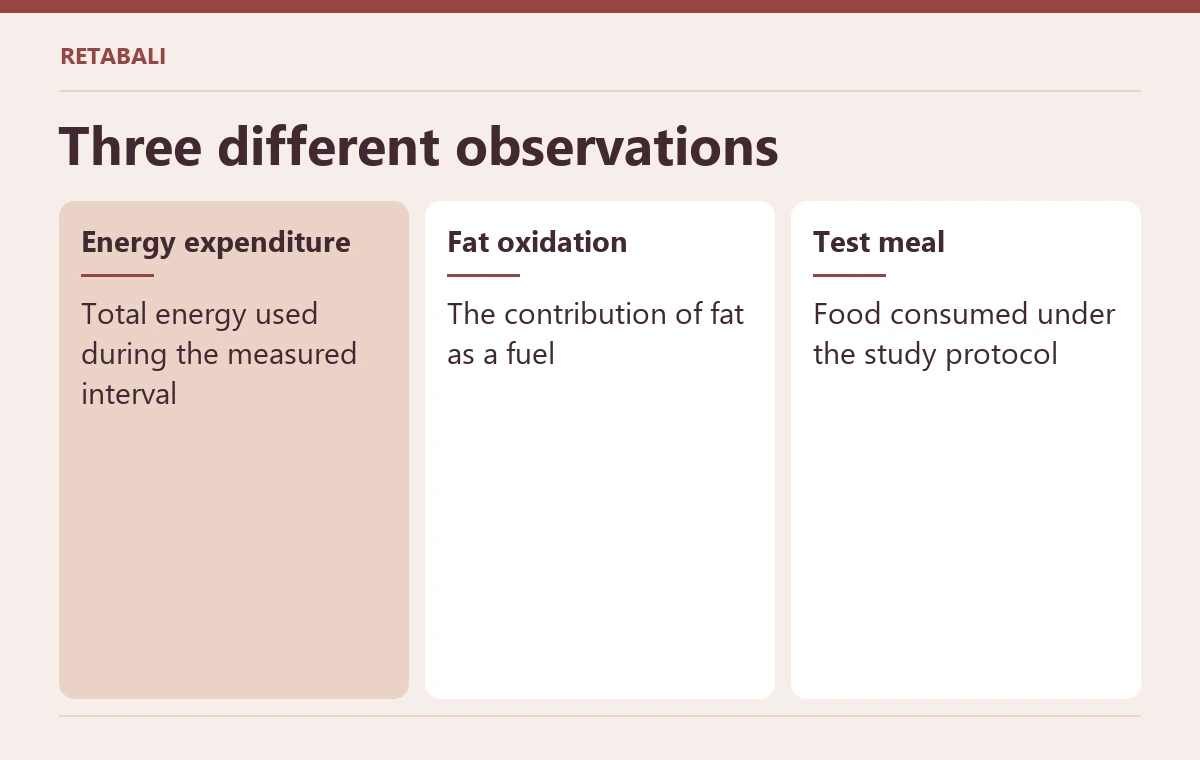
Tirzepatide in a metabolic chamber: did using more fat mean burning more calories?
A human chamber trial separated energy expenditure, fuel use and food intake. Here is how to read its seemingly different results.
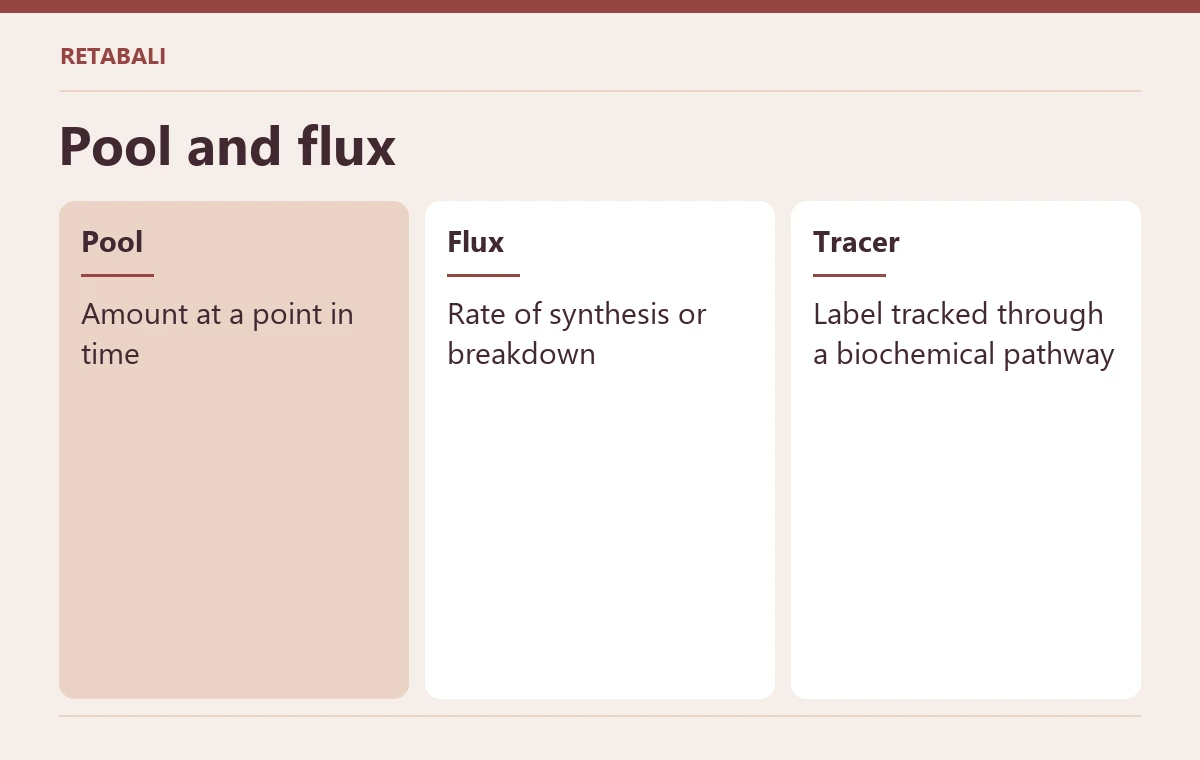
NAD+ amount and turnover: what isotope tracing reveals
A tissue can maintain a similar NAD concentration while making and consuming NAD at different rates.
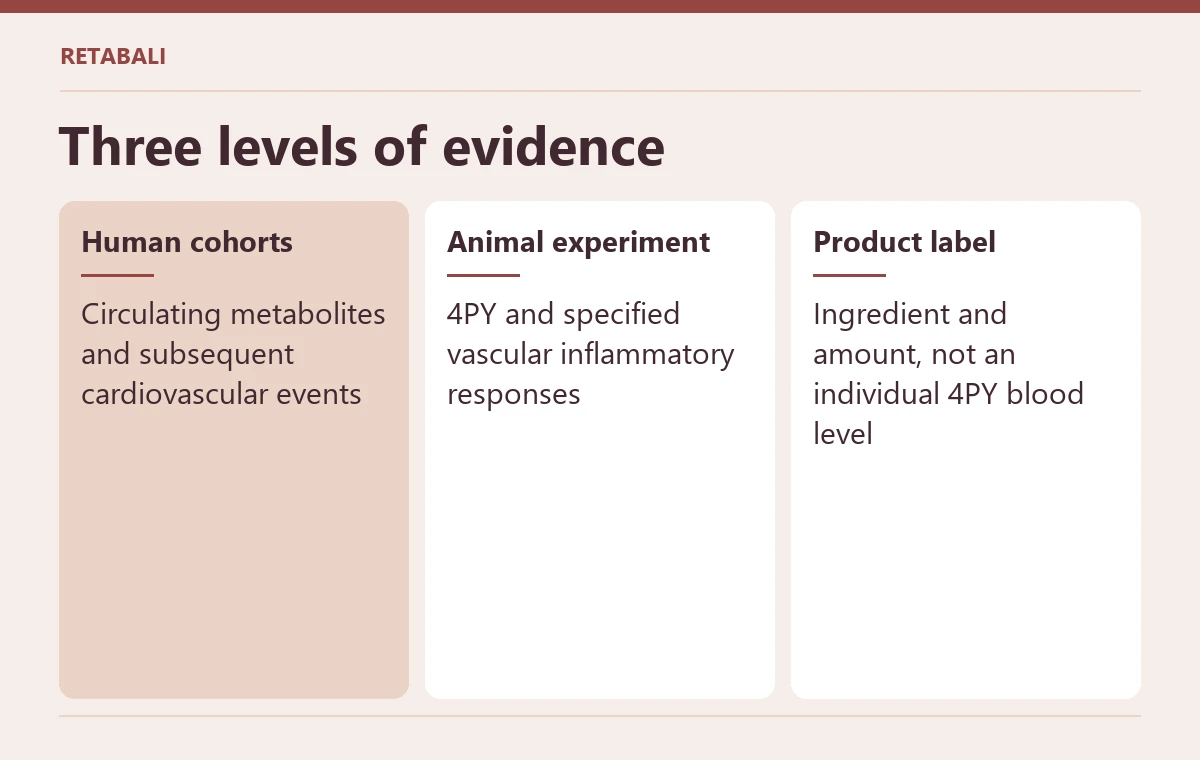
Niacin metabolite 4PY and heart risk: what the cohort actually measured
A 4PY association in cardiovascular cohorts and a mouse vessel experiment answer different questions from a trial of an NAD+ product.
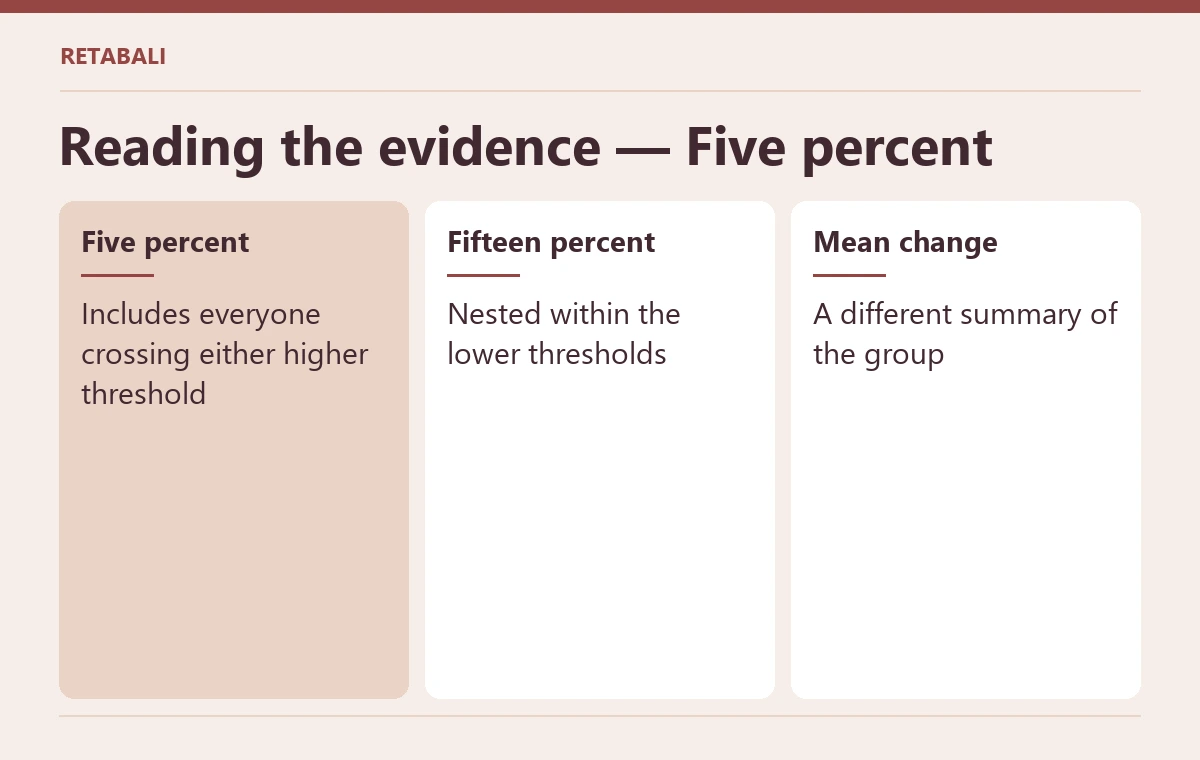
Retatrutide responder rates: who crossed which weight threshold?
A responder percentage tells you the proportion of a trial group that crossed a specified threshold by a specified visit.
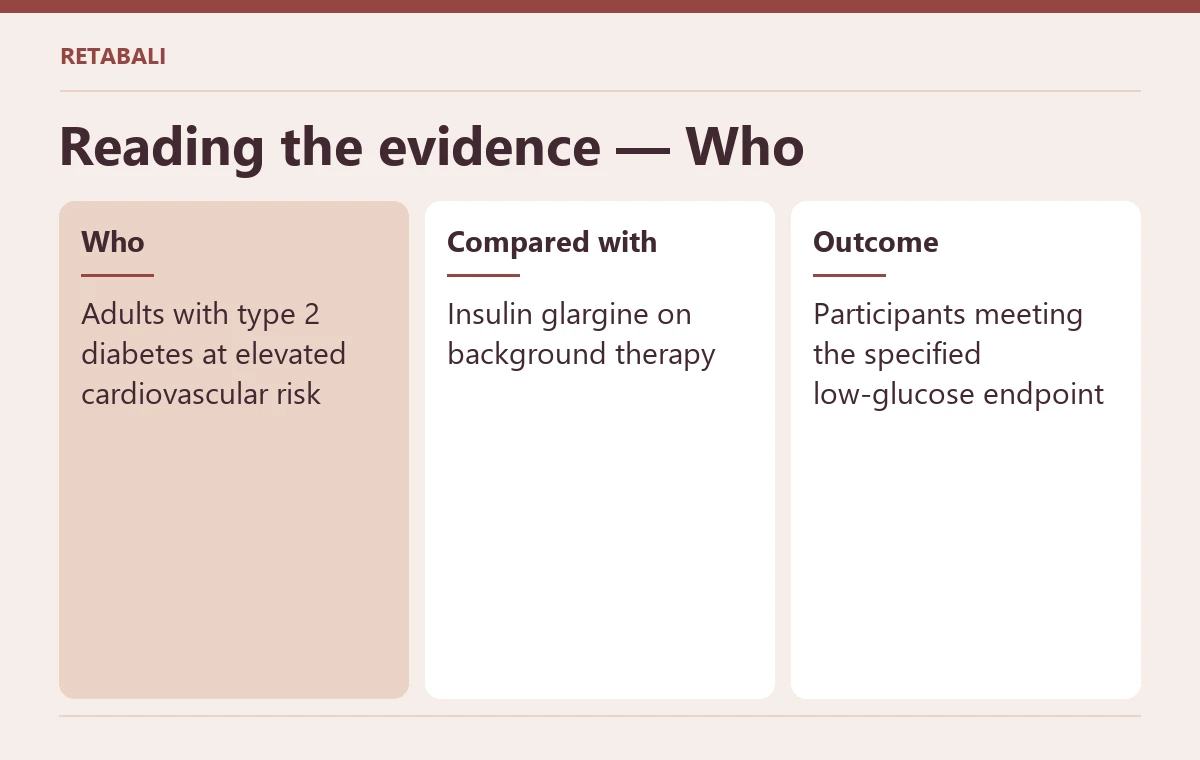
Tirzepatide and low glucose: how to read the SURPASS-4 comparison
A risk expressed as the proportion of participants with at least one low glucose event differs from the number of events experienced over a year.
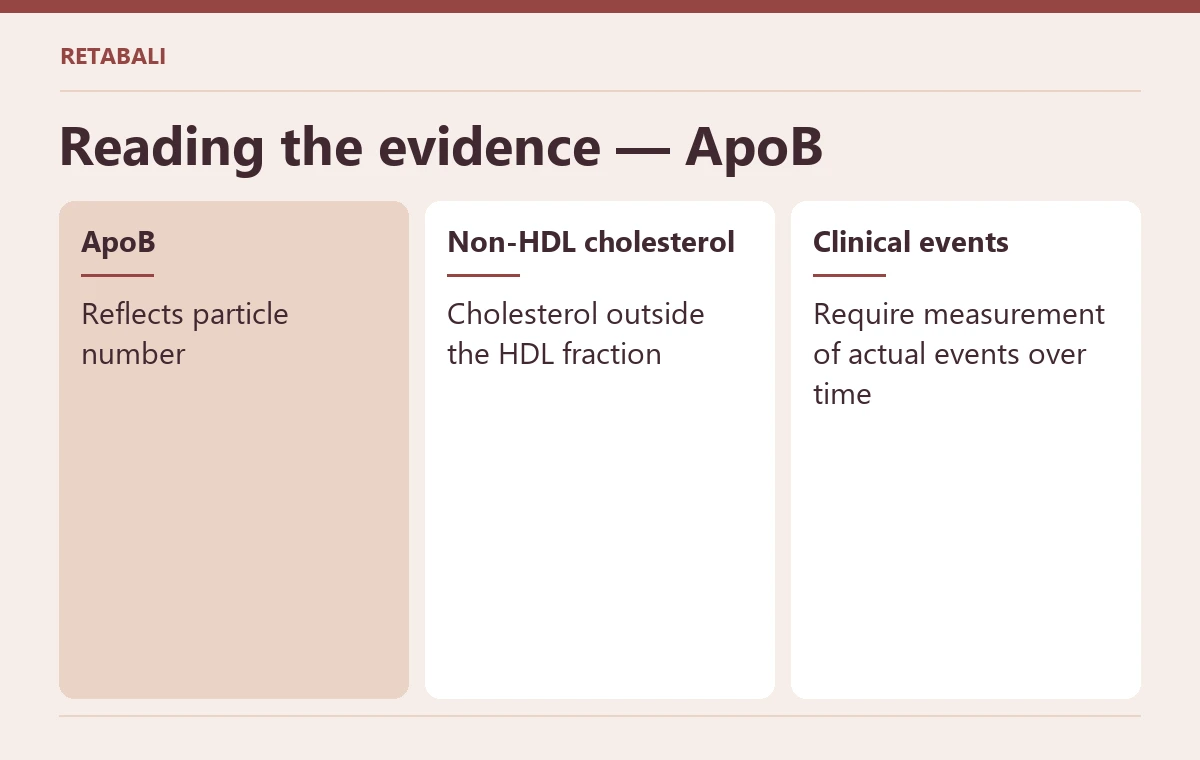
What apoB adds to the retatrutide lipid findings
Apolipoprotein B and non-HDL cholesterol describe related but different features of circulating lipoproteins.
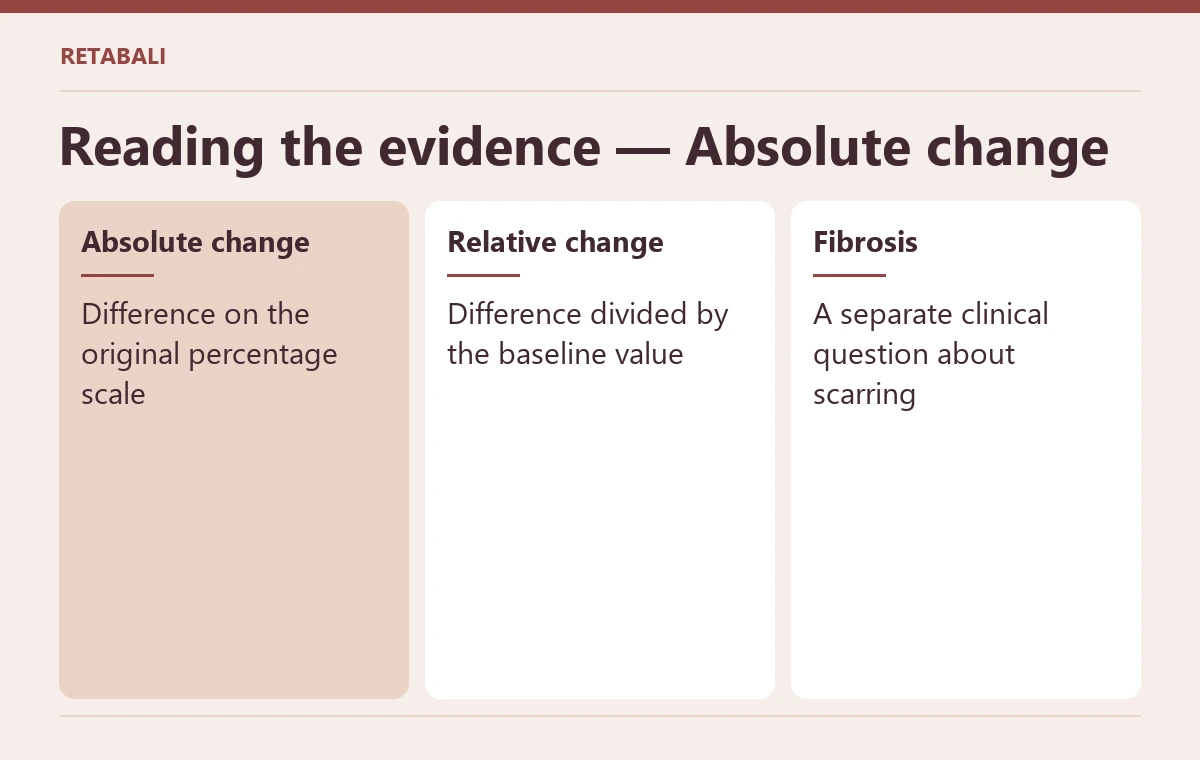
Tesamorelin and liver fat: percentage points or percent?
A liver fat proportion can fall by a few percentage points and by a much larger relative percentage at the same time.
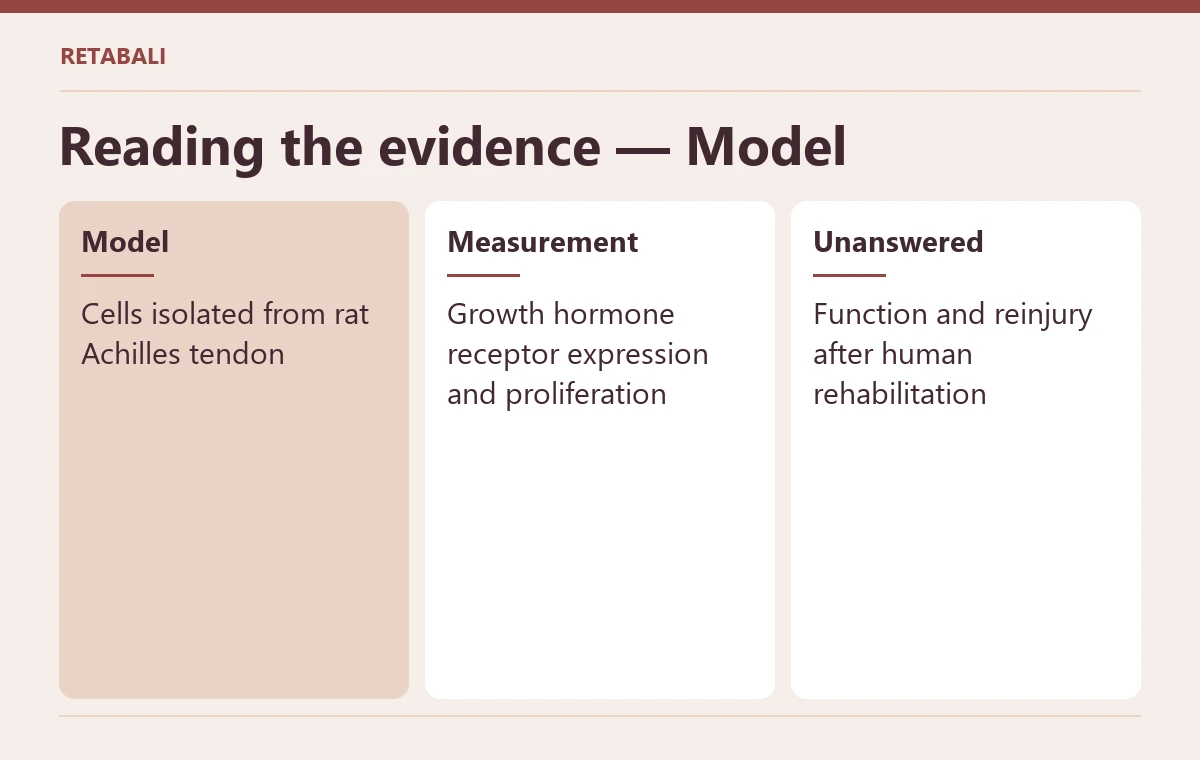
BPC-157 and tendon fibroblasts: what actually grew in the experiment?
A paper about BPC-157 and growth hormone receptors describes isolated cells from rat Achilles tendons.
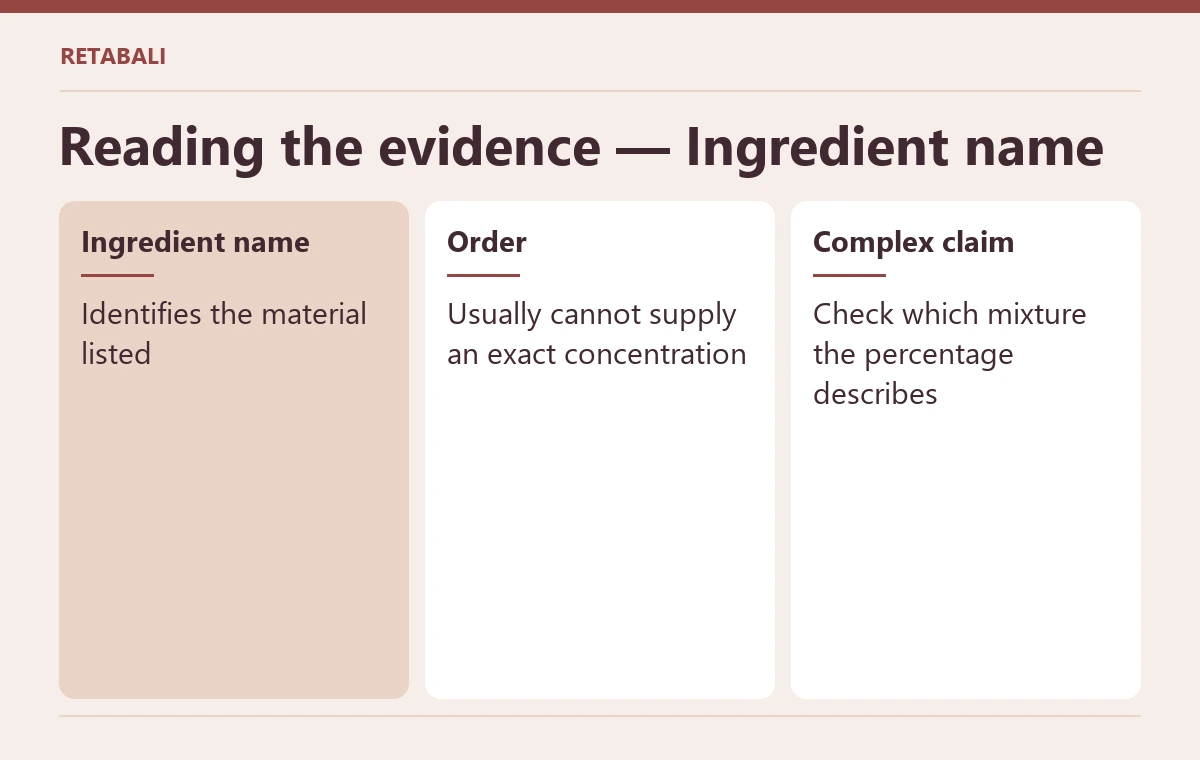
Can an ingredient list tell you the percentage of copper peptide?
An ingredient's place on a cosmetic label rarely gives its exact percentage.
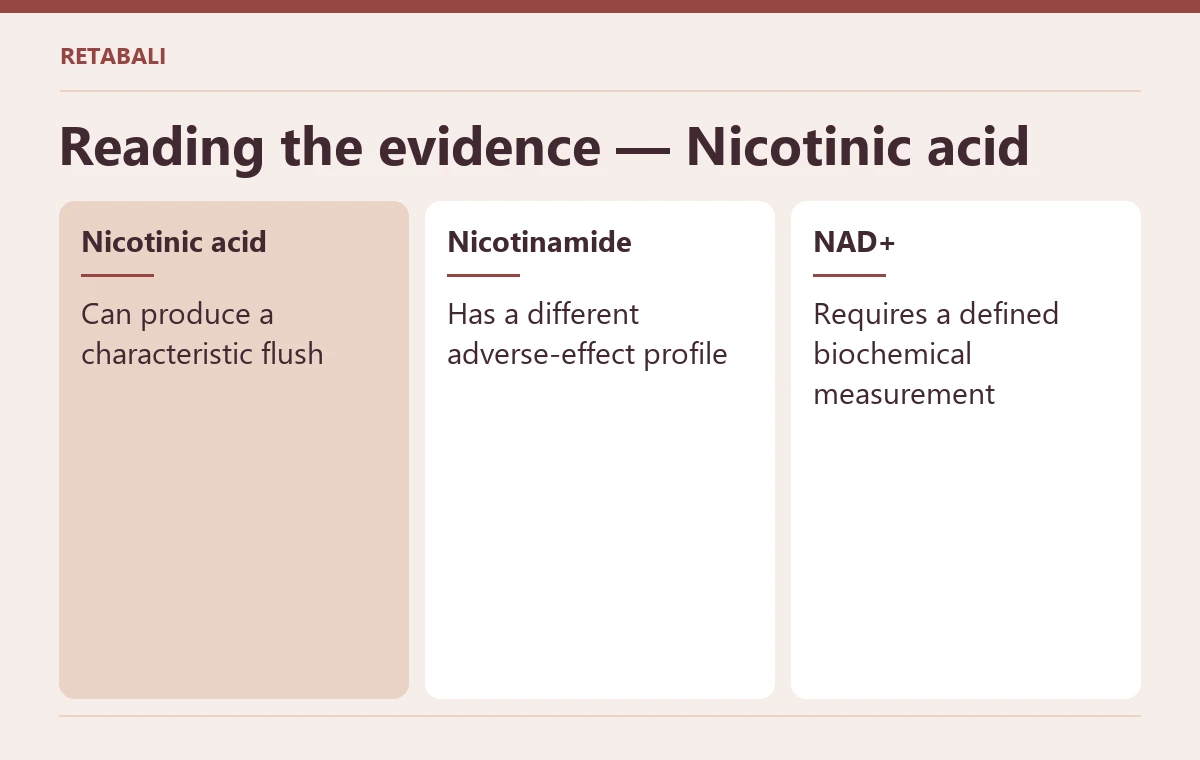
Why a niacin flush cannot measure an NAD+ response
A flush after taking nicotinic acid is a skin response to that form of vitamin B3.
Retatrutide or VK2735 in Bali: five questions for a claim about ‘better results’
Build a useful retatrutide and VK2735 comparison in Bali using molecule, formulation, study timing and comparator. Bring clear questions to a clinical discussion.
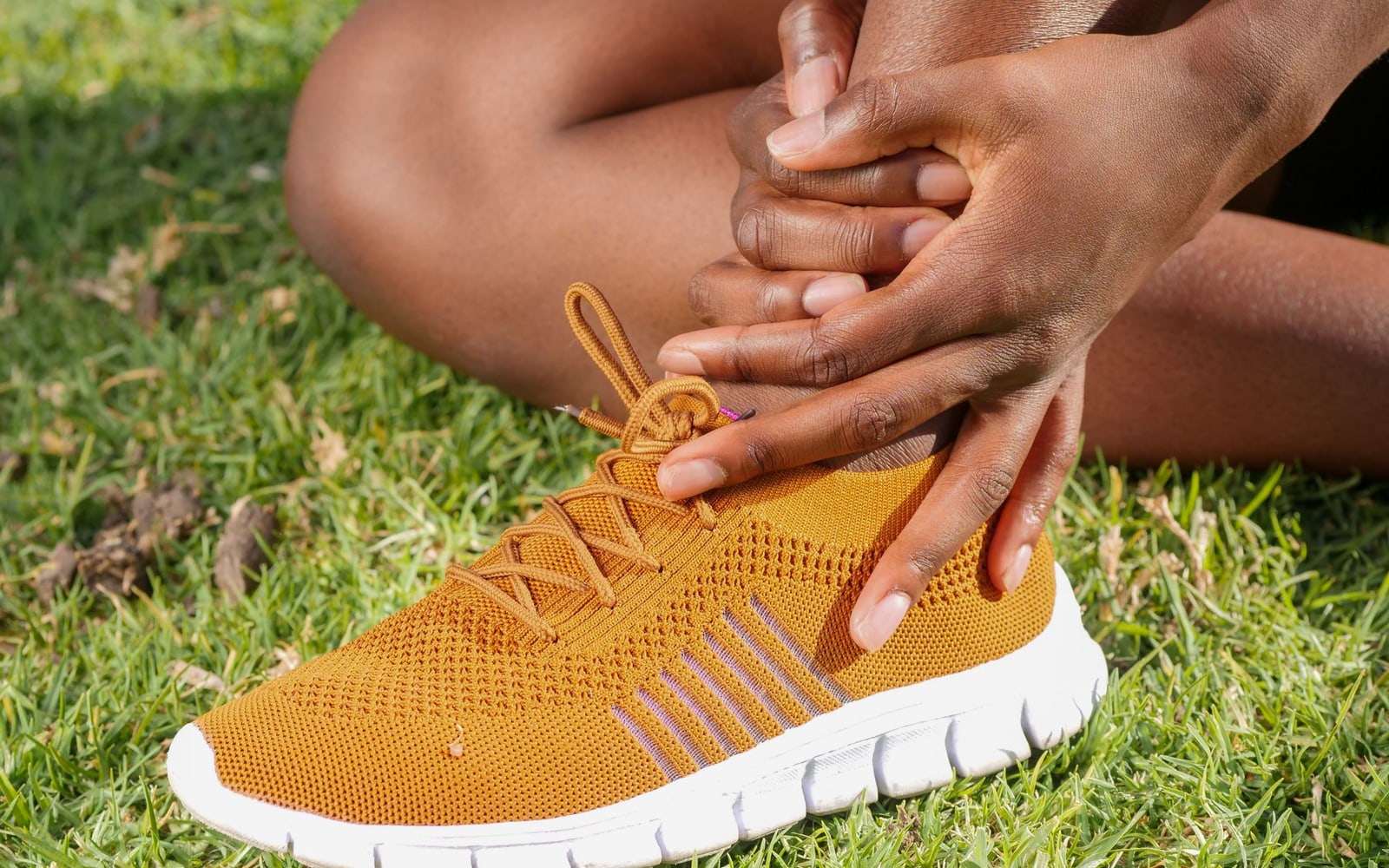
BPC-157 and Achilles injuries in Bali: insertion or midportion?
Understand tendon attachment and mid-portion terminology when reading BPC-157 Achilles research in Bali. An injury location belongs beside every recovery claim.
MOTS-C, urolithin A and exercise in Bali: marker or meaningful outcome?
Separate biological markers from how people function when comparing MOTS-C and urolithin A in Bali. Ask what was measured before interpreting mitochondrial claims.
IGF-1 and IGFBP-3: what to ask when two hormone results seem to disagree
Understand why IGF-1 and IGFBP-3 are not duplicate measurements. Prepare useful questions when their reports seem inconsistent during a Bali consultation.
Tirzepatide and exenatide pens in Bali: which instructions belong to your device?
Keep product instructions attached to the right medicine when comparing tirzepatide and exenatide in Bali. Make a clear record before a handover or consultation.
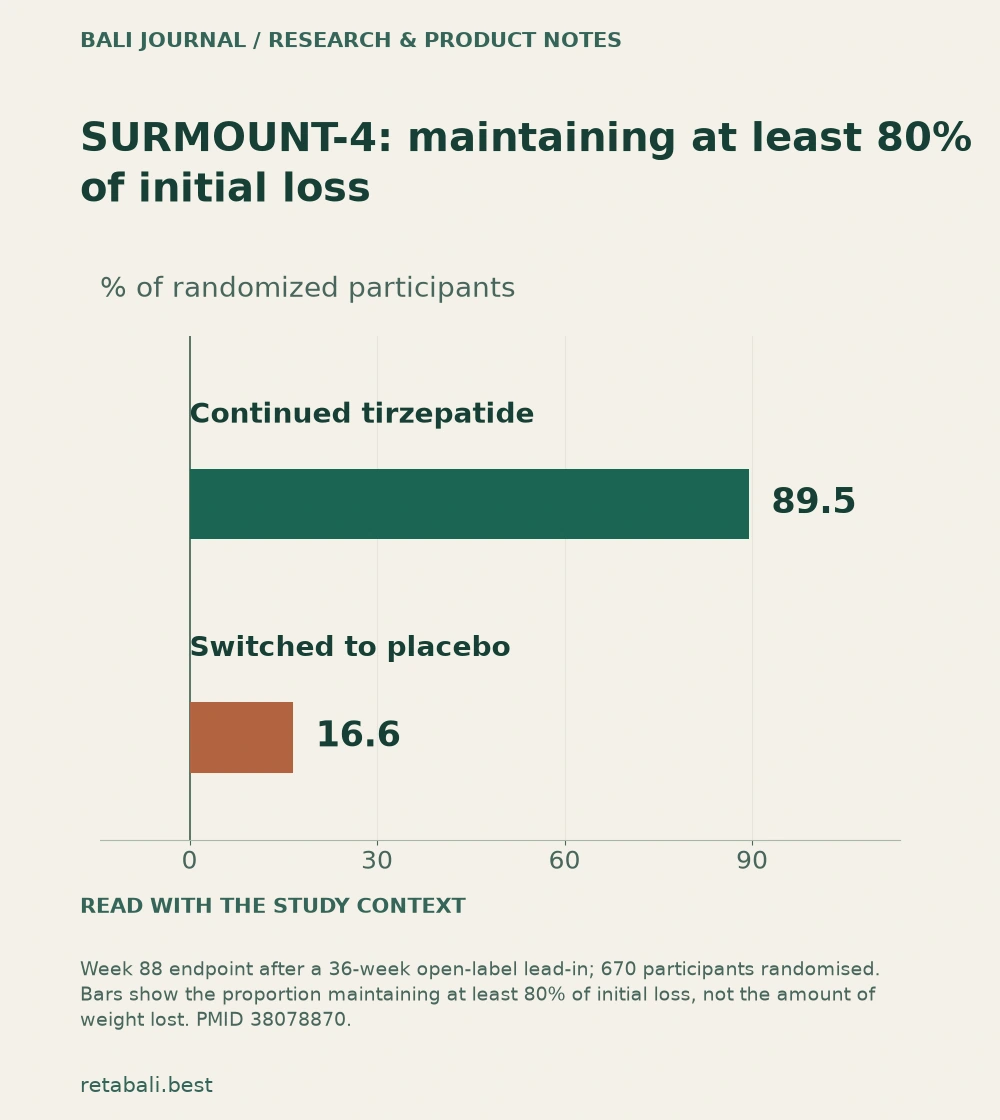
Long-Term Tirzepatide Results: What Maintenance Adds
Explore the long-term tirzepatide findings from SURMOUNT-4, why maintenance was measured and how to compare a defined pen format for your Bali enquiry.
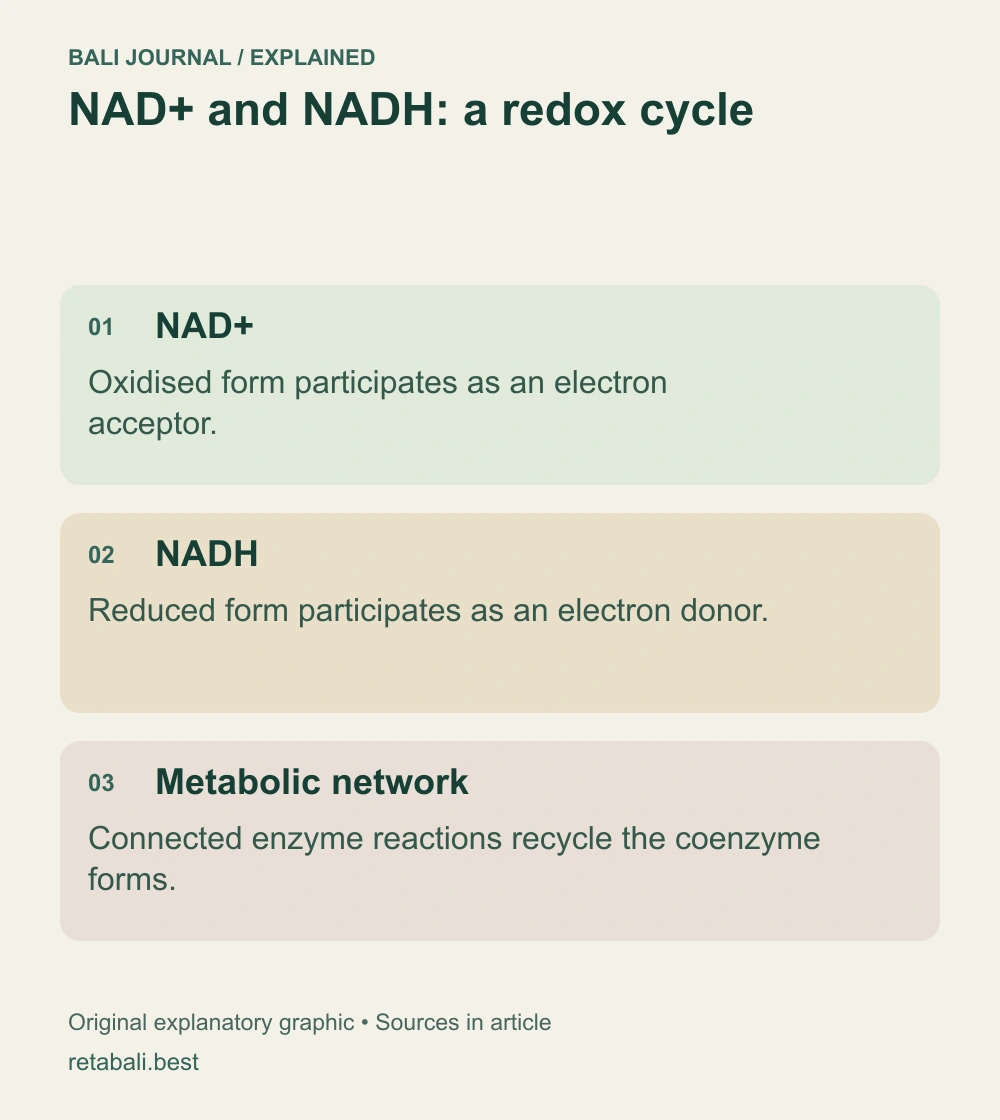
NAD+ vs NADH: The Cellular Energy Cycle Explained
Understand NAD+ and NADH, electron transfer and why a Bali NAD+ pen differs from an IV service or an oral precursor supplement.
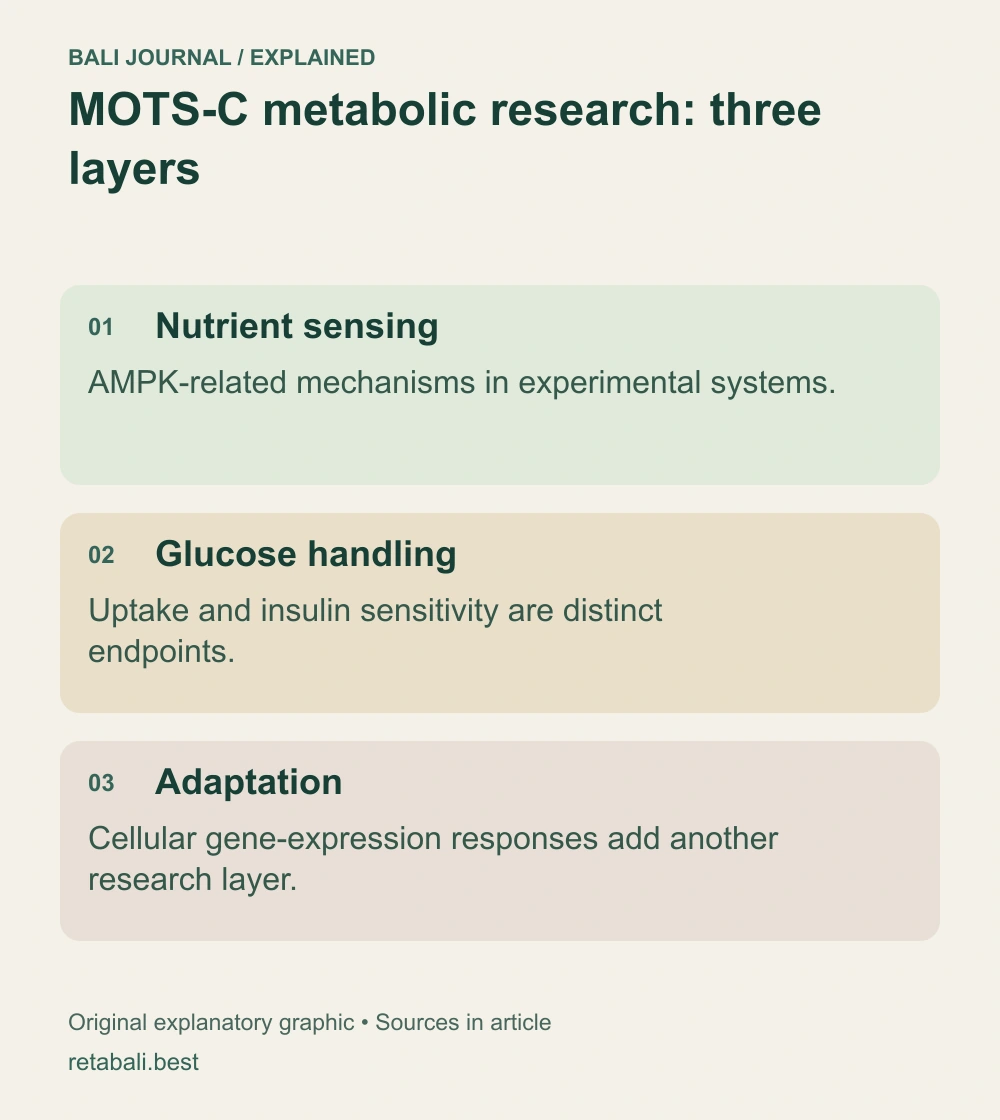
MOTS-C, AMPK and Glucose: The Metabolic Research Explained
Explore MOTS-C’s nutrient-sensing research, AMPK and glucose-related endpoints, then compare the 32 mg pen offered in Bali.
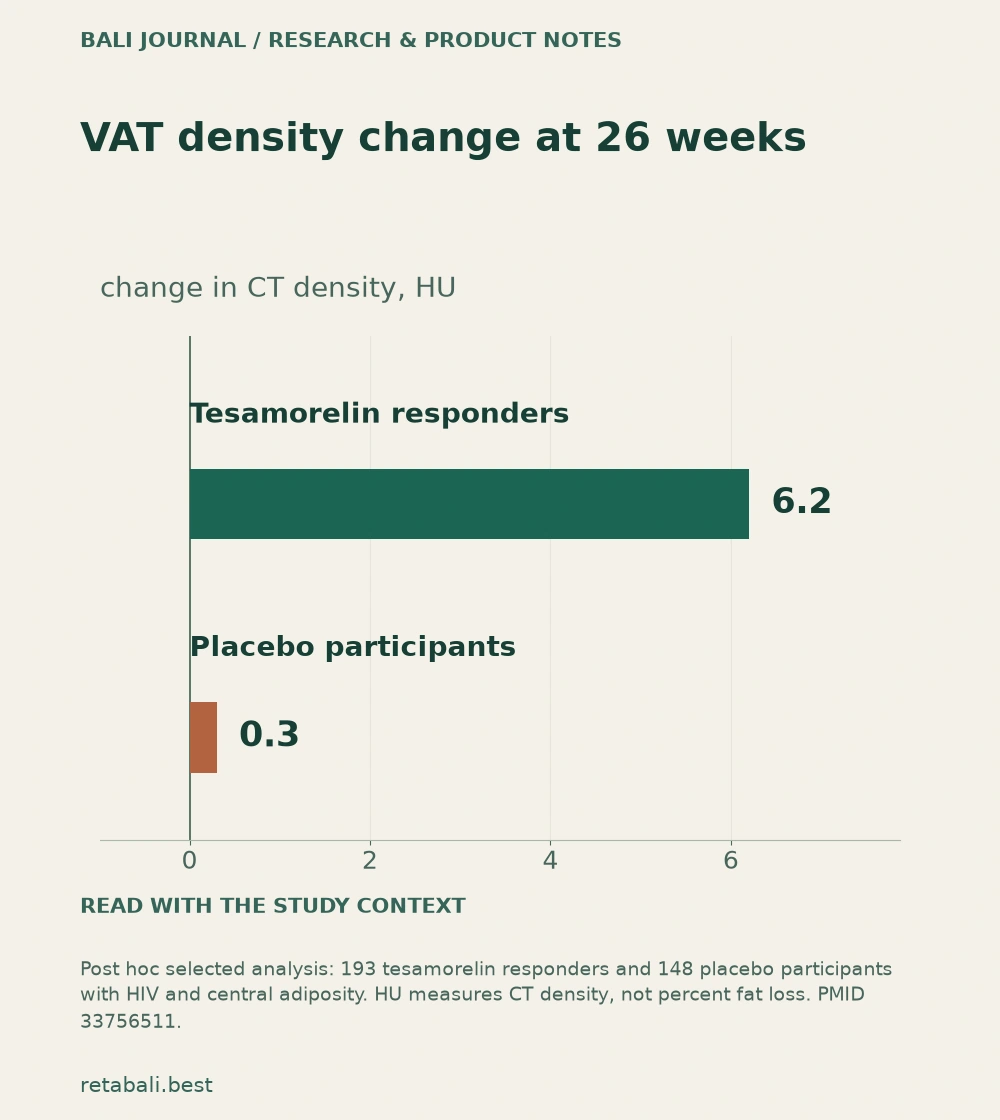
Tesamorelin and Fat Quality: What CT Density Can Reveal
Explore tesamorelin research on fat density, how it differs from fat quantity and what the selected-responder analysis found.
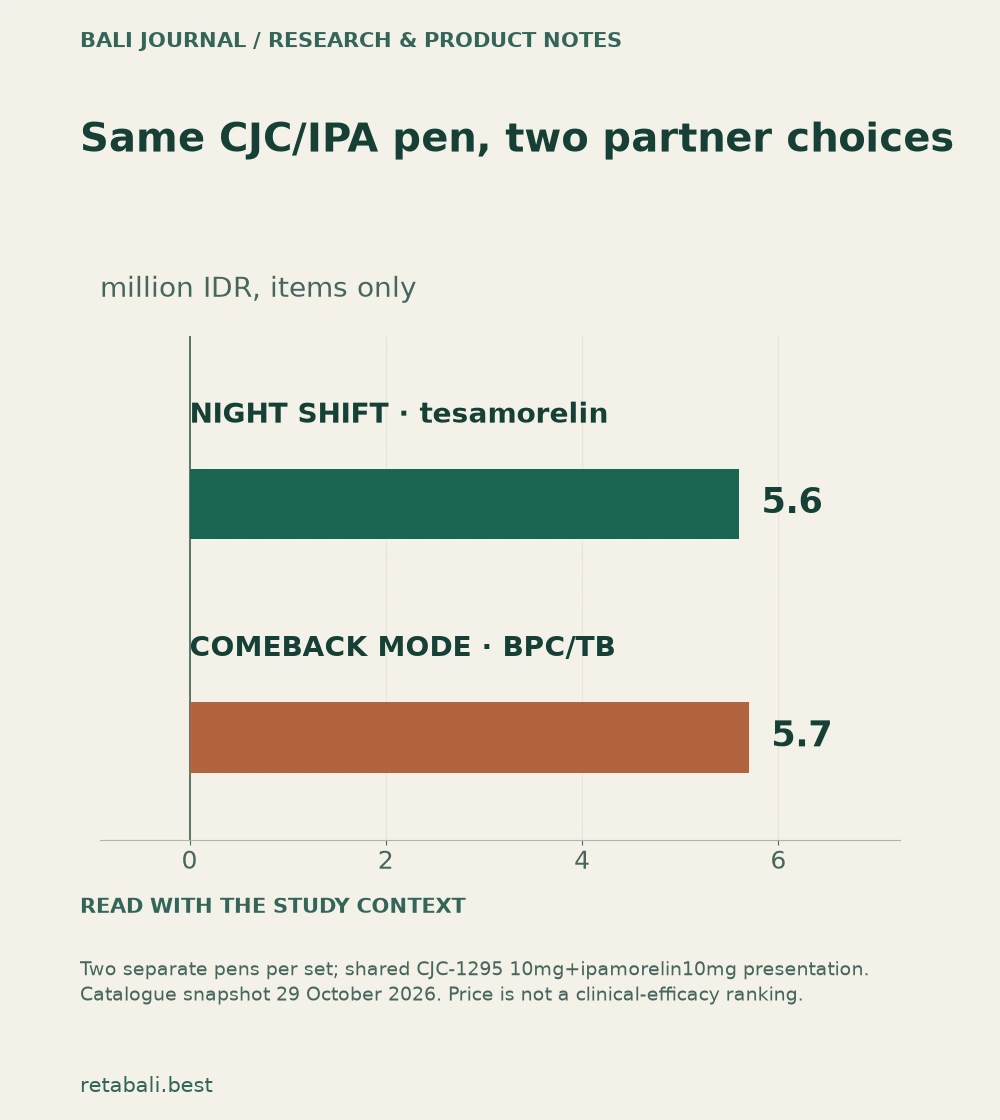
NIGHT SHIFT vs COMEBACK MODE: Compare the Partner Pens
Compare two Bali bundles with the same CJC/ipamorelin pen: tesamorelin or BPC-157/TB-500 as the partner, plus contents and item savings.
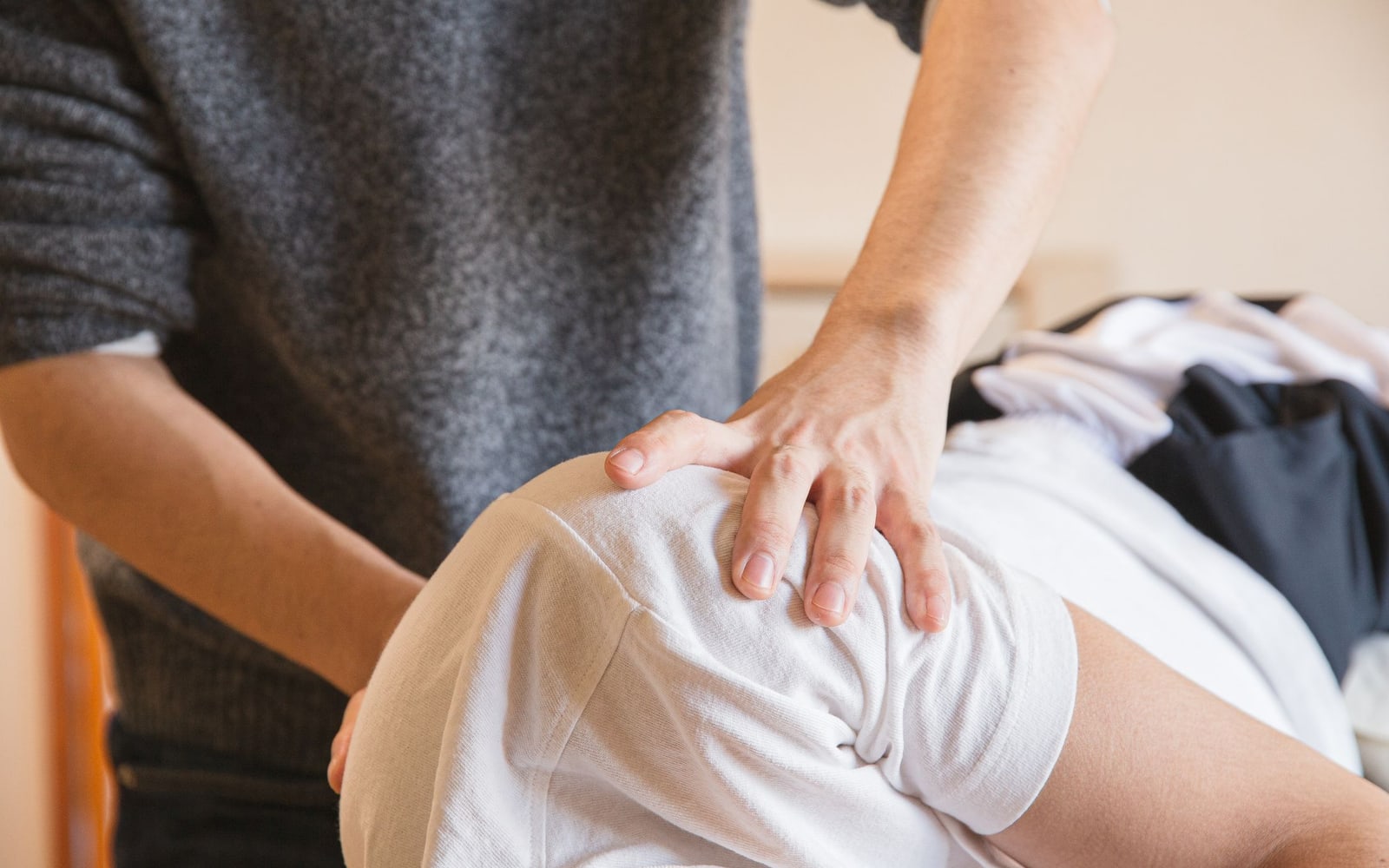
BPC-157 vs Hyaluronic Acid in Bali: Read the Guideline Scope
A recommendation against routine hyaluronic acid in knee OA does not endorse BPC-157. Understand guideline wording and product evidence before comparing Bali options.
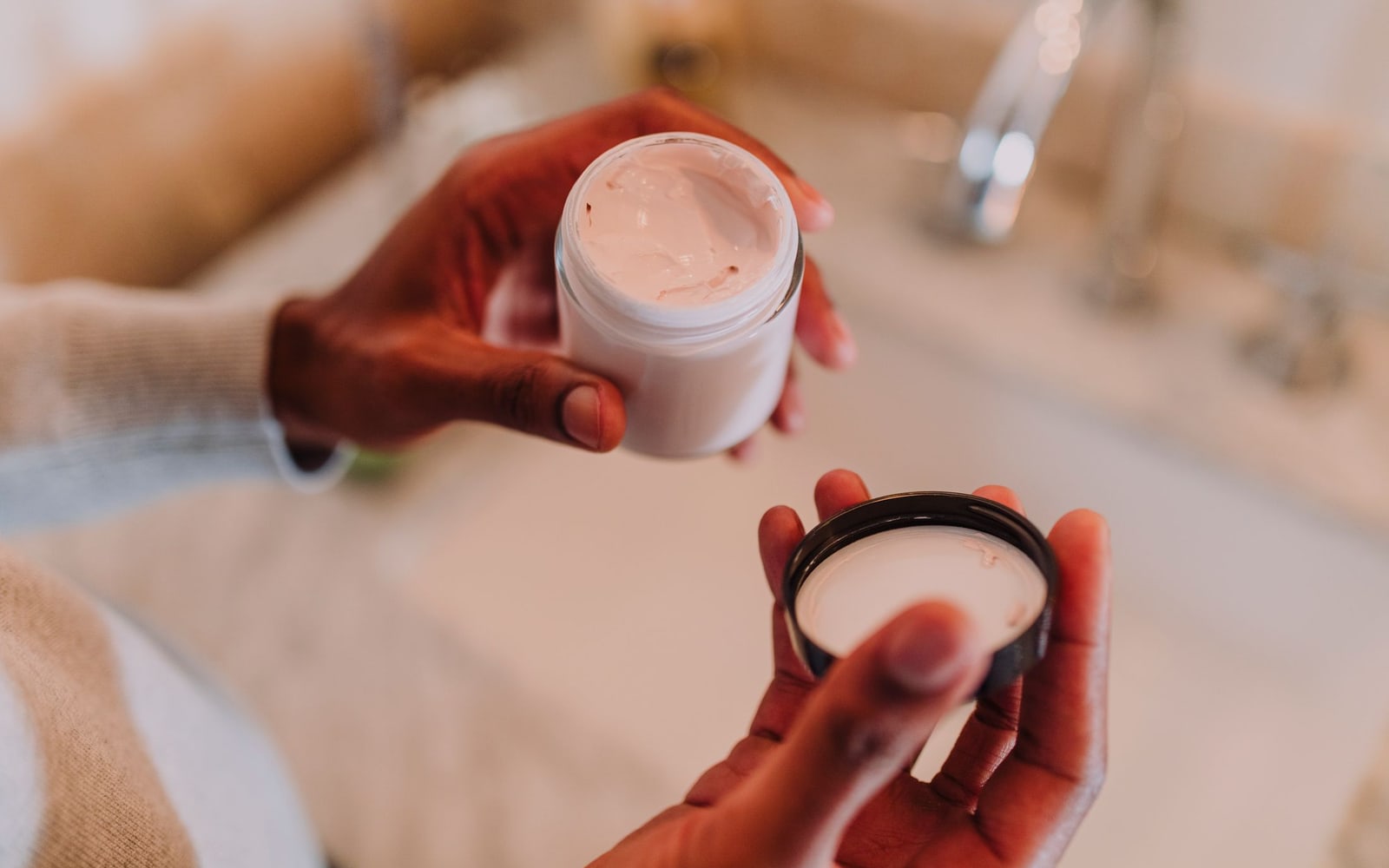
GHK-Cu vs Ceramides in Bali: Eczema and Post-Laser Skin
Eczema care and post-laser care are different settings. Read the populations behind GHK-Cu and ceramide research before applying a skin comparison in Bali.
MOTS-C vs L-Carnitine in Bali: Define the Training Outcome
Fatigue, cycling performance and peptide levels are different outcomes. Make a MOTS-C and L-carnitine comparison useful by naming the training question in Bali.
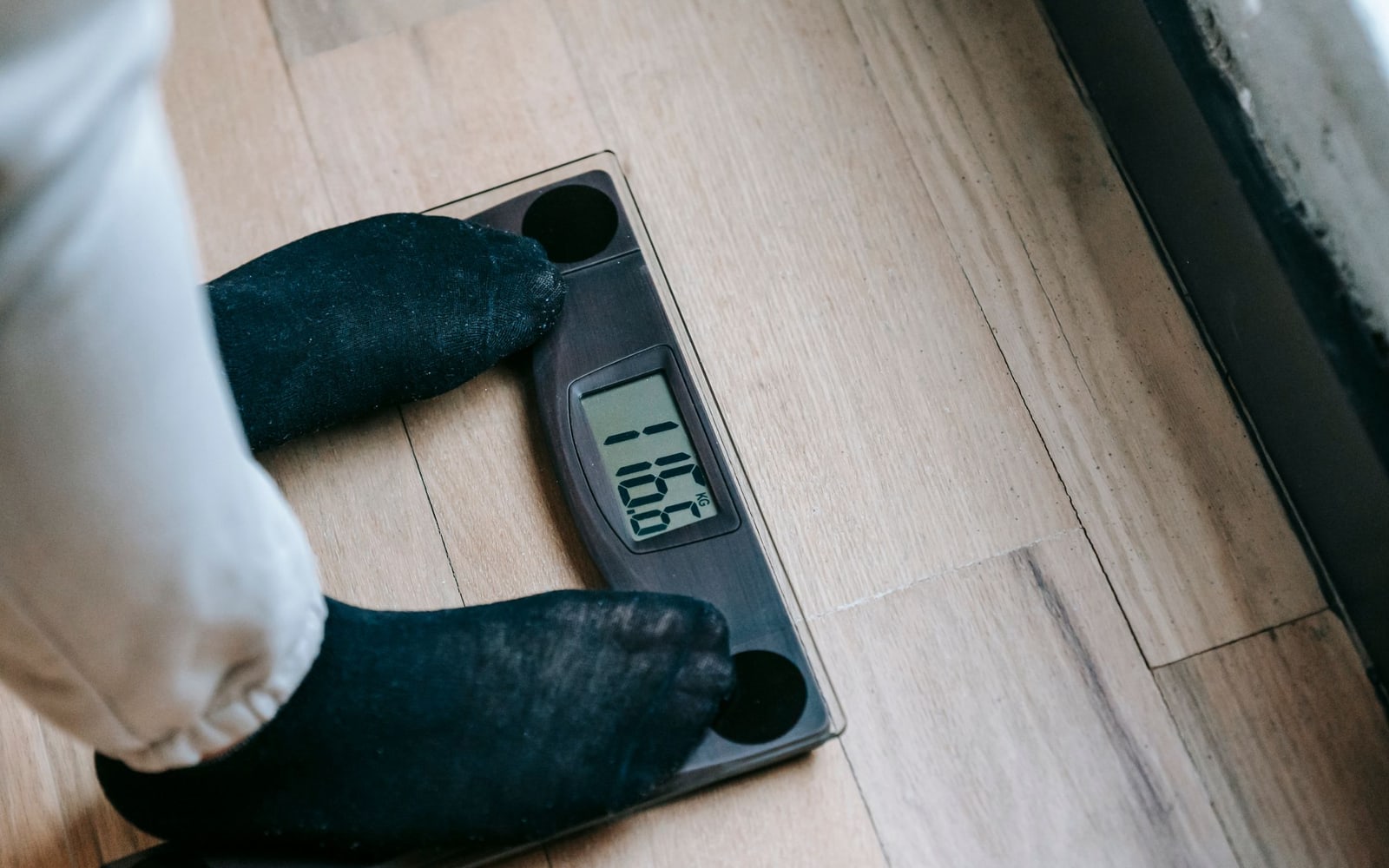
Retatrutide vs Liraglutide in Bali: Averages Are Not Forecasts
Read retatrutide and liraglutide weight results in Bali with the group, comparator and follow-up visible. Trial averages cannot predict one person’s change.
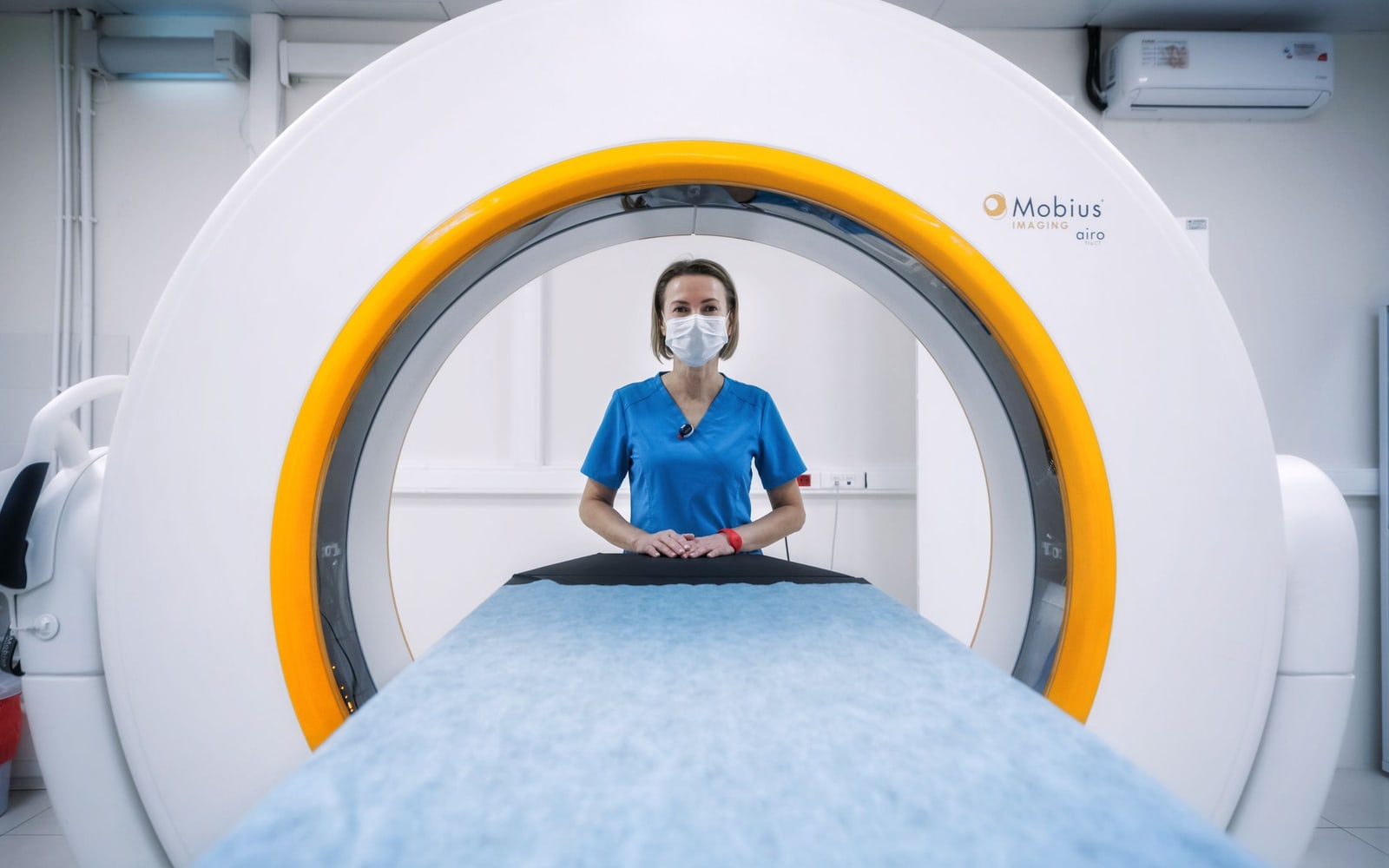
Tesamorelin in Bali: The Trial Used CT, Not Any Fat Score
Tesamorelin’s labelled pivotal trials used a specific CT visceral-fat endpoint. Compare that with DXA and MRI reports in Bali without assuming product equivalence.
Tirzepatide in Bali: Ferritin Is Not an HbA1c Correction
Ferritin, haemoglobin and HbA1c answer different questions. Keep iron assessment separate from glucose interpretation when reading tirzepatide-related reports in Bali.
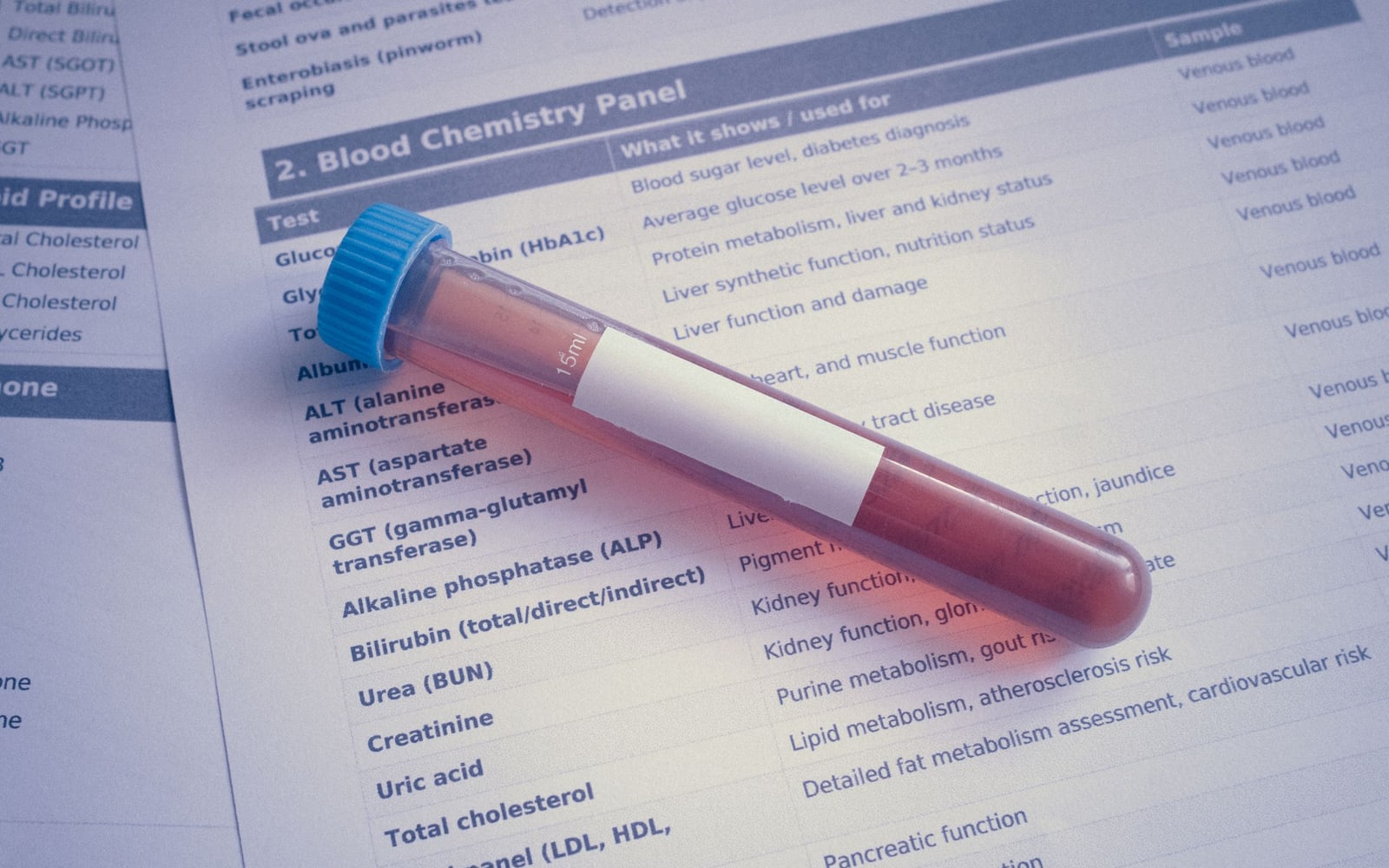
Tesamorelin in Bali: What Does “Metabolic” Mean?
Unpack a tesamorelin metabolic headline into blood lipids, body composition and the actual product indication.
BPC-157 in Bali: Immediate Pain or Longer-Term Recovery?
Understand why a study’s follow-up period matters when comparing BPC-157 tendon experiments with a shockwave pain trial.
NAD+ vs Taurine in Bali: What Did Human Studies Measure?
Distinguish NAD+ infusion measurements from human taurine observations and keep functional outcomes separate from lifespan claims.

MOTS-C in Bali: Peptide, Amino Acid and Carnosine
Untangle MOTS-c, beta-alanine and carnosine so a molecular name does not become an unsupported performance comparison.

GHK-Cu in Bali: Read a Topical Skin Study Clearly
Match a copper-peptide study to its route, skin setting and outcome before comparing a GHK-Cu pen with a urea moisturizer.
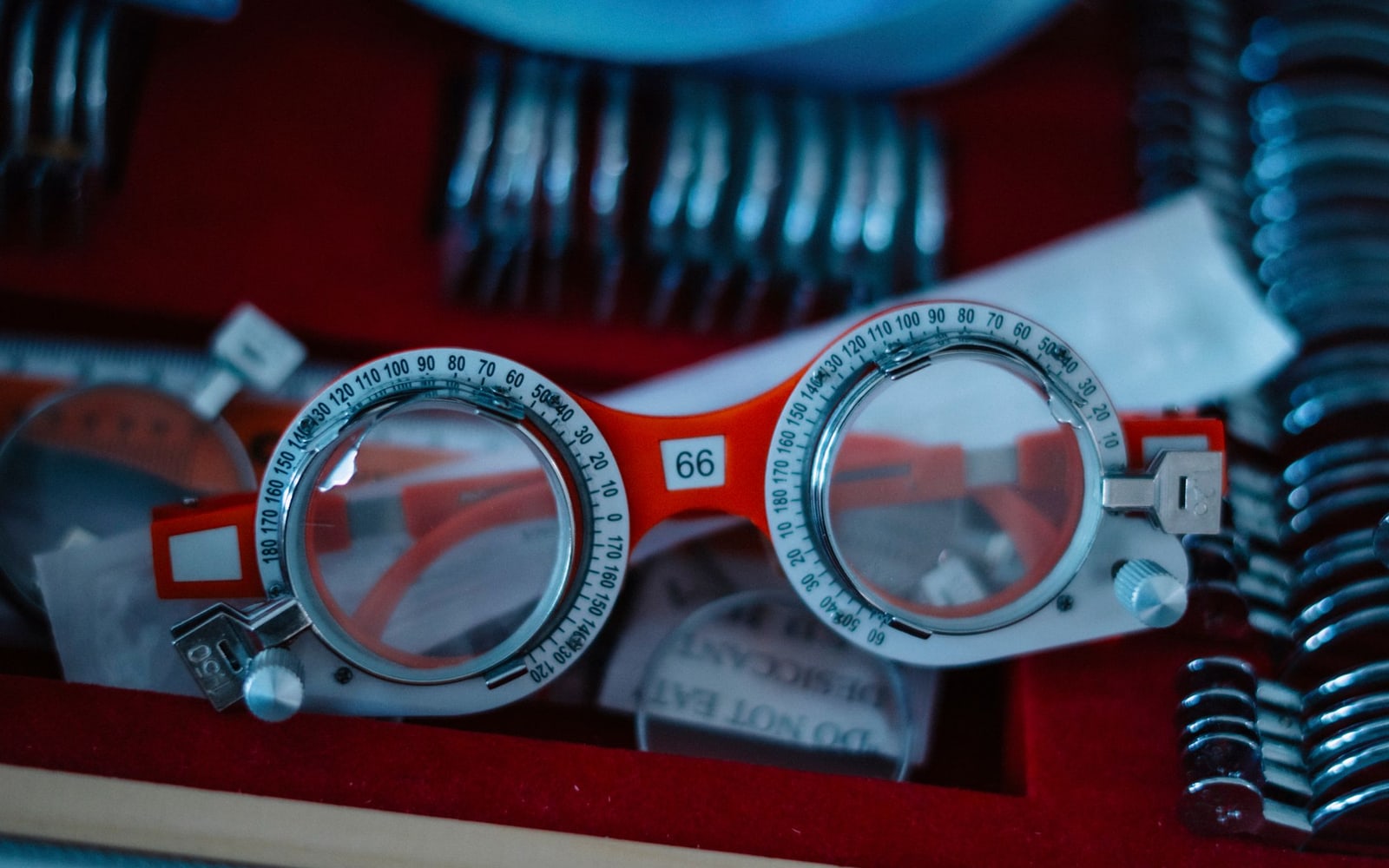
Tirzepatide in Bali: Describe Vision Changes Clearly
How to organize a useful symptom note for a clinician while keeping routine diabetes eye screening separate from urgent visual changes.