Tirzepatide in a metabolic chamber: did using more fat mean burning more calories?
A human chamber trial separated energy expenditure, fuel use and food intake. Here is how to read its seemingly different results.
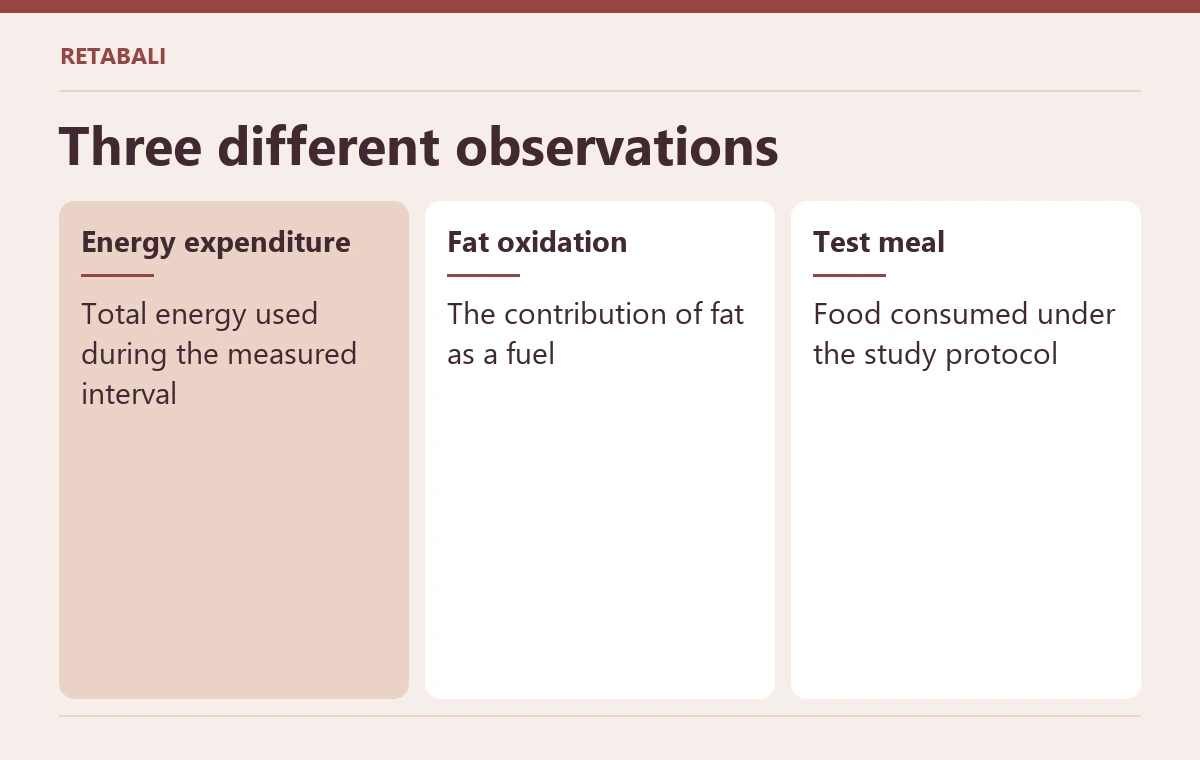
In a human phase-one study, tirzepatide increased fat oxidation without an apparent effect on metabolic adaptation. These findings can coexist. Fuel use describes which substrates the body oxidises. Energy expenditure describes how much energy it uses. A Bali reader who tracks food or exercise should keep both separate from the amount eaten at one meal.
Three measurements from the same research programme
The investigators studied people with obesity in a clinical trial and also conducted a separate experiment in mice. In the human component they reported greater fat oxidation and lower appetite and energy intake at an unrestricted test meal compared with placebo. Their human data did not show the attenuation of metabolic adaptation seen in the mouse experiment. Taking the animal finding and attaching it to the people in the study would reverse the message of the paper. Human and animal metabolic study
The trial record describes whole-room indirect calorimetry. A respiratory chamber measures gas exchange under controlled conditions. The ratio of carbon dioxide production to oxygen consumption helps investigators study the mixture of fuels being used. A change in that ratio is not itself a measurement of how many extra calories someone burned. For the expenditure question the researchers used measurements and an analysis specifically designed to address energy use. ClinicalTrials.gov study record
A change in the mix is different from a change in the total
Consider two hypothetical days on which total energy expenditure is similar. On the second day a larger share of the energy could come from fat and a smaller share from carbohydrate. That would change the mixture without increasing the total. It also would not tell us how much fat was eaten, stored or lost over a month. Those are questions about intake and balance over time, rather than the fuel mixture oxidised during the observation period.
Metabolic adaptation adds another distinction. Investigators are interested in the change in expenditure beyond what might be expected as body size and composition change. Comparing raw calorie totals from the start and end of a weight-loss period would not, by itself, isolate that component. The phrase therefore should remain attached to the study's definition and analysis.
What the test meal can tell you in Bali
Energy intake at an unrestricted test meal concerns the food consumed at that meal under a protocol. It is a different observation from a diary covering daily life in Bali. A larger or smaller appetite rating is another kind of information again. When a summary says “boosts metabolism,” ask which of the three claims is intended: greater total expenditure, a shift in fuel oxidation or a change in food intake. The original study measured them separately and did not find the same answer for all three.
