A total NAD result cannot tell you the NAD+/NADH ratio
Two samples can contain the same combined amount and have very different ratios. The distinction starts with how the laboratory measured the sample.
A post describing a “higher NAD level” leaves a surprisingly basic question unanswered. Did the experiment measure oxidised NAD+, reduced NADH, or a total containing both forms? These are related quantities, but no one measurement of the total can reveal how it was divided. The distinction matters when comparing research mentioned alongside NAD+ products in Bali.
Try two samples with the same total
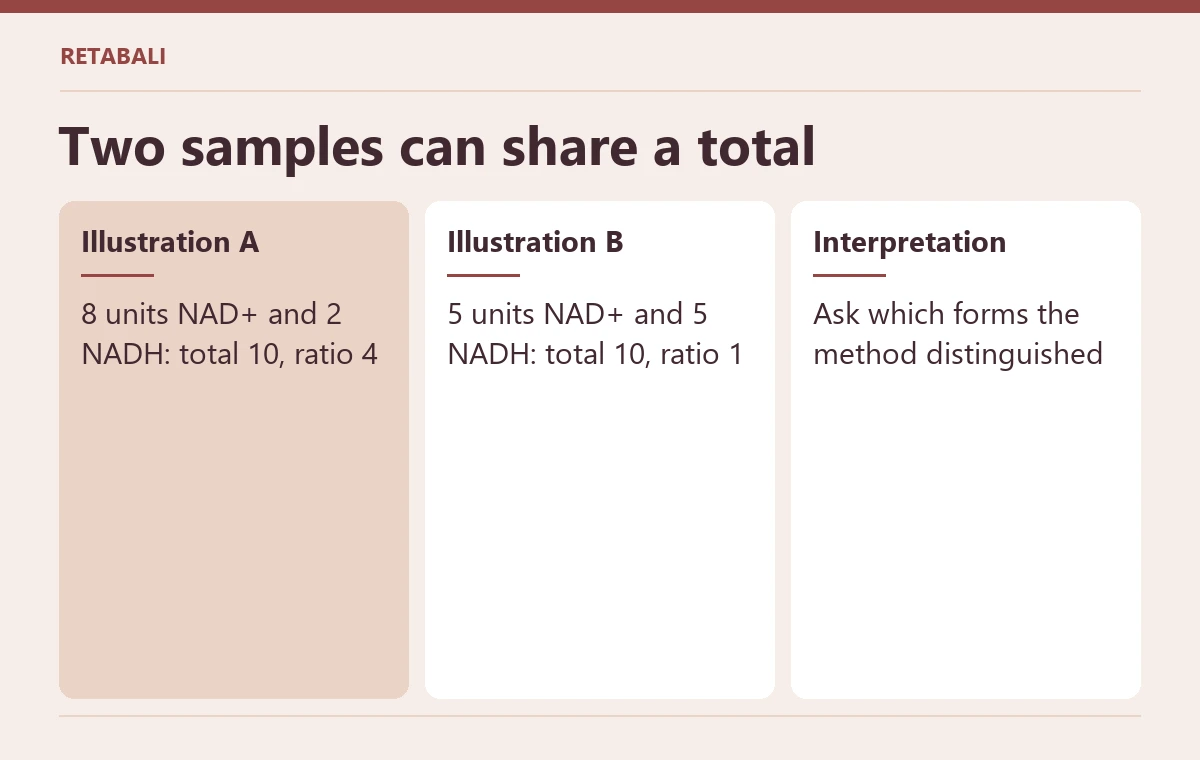
Use arbitrary units for a paper exercise. In the first sample, eight units of NAD+ and two units of NADH give a combined ten and a ratio of four to one. In another sample, five units of each give the same combined ten and a ratio of one to one. An assay reporting only the combined value would not distinguish the two examples on that basis. Neither set of numbers describes a normal human range.
Direction matters as well. NAD+ divided by NADH is the reciprocal of NADH divided by NAD+. Look at the labels in the paper. Two statements about a ratio can appear contradictory if one author put the reduced form in the numerator and another put it in the denominator.
Open the method behind the abbreviation
The manufacturer's NAD/NADH-Glo assay protocol gives an example of a laboratory method used to measure these cofactors. The protocol distinguishes total measurement from approaches that resolve the individual forms. Sample handling and the particular preparation are part of the result. A generic statement about “an NAD blood test” does not establish that this specific assay, specimen or analysis was used.
Check whether the value was reported for a cell extract, blood sample or a particular tissue. Look for the unit and any normalisation to cell number, protein quantity or sample volume. A value per unit of protein and a whole-sample amount answer different questions even if both panels use the same chemistry.
Check what the figure can support
Write a short caption of your own naming the specimen, the measured form and the reference used. If any field is missing, avoid filling it with a detail from a different study. A result in an experimental extract is evidence about that extract under the reported conditions. It cannot establish a person's tissue redox balance from a Bali catalogue label or predict how they will feel after using a product.
