Does a GHK-Cu mass refer to the copper or the whole complex?
A peptide name, the mass on a box and an elemental copper measurement are three different pieces of information. Reading their labels in the right order matters.
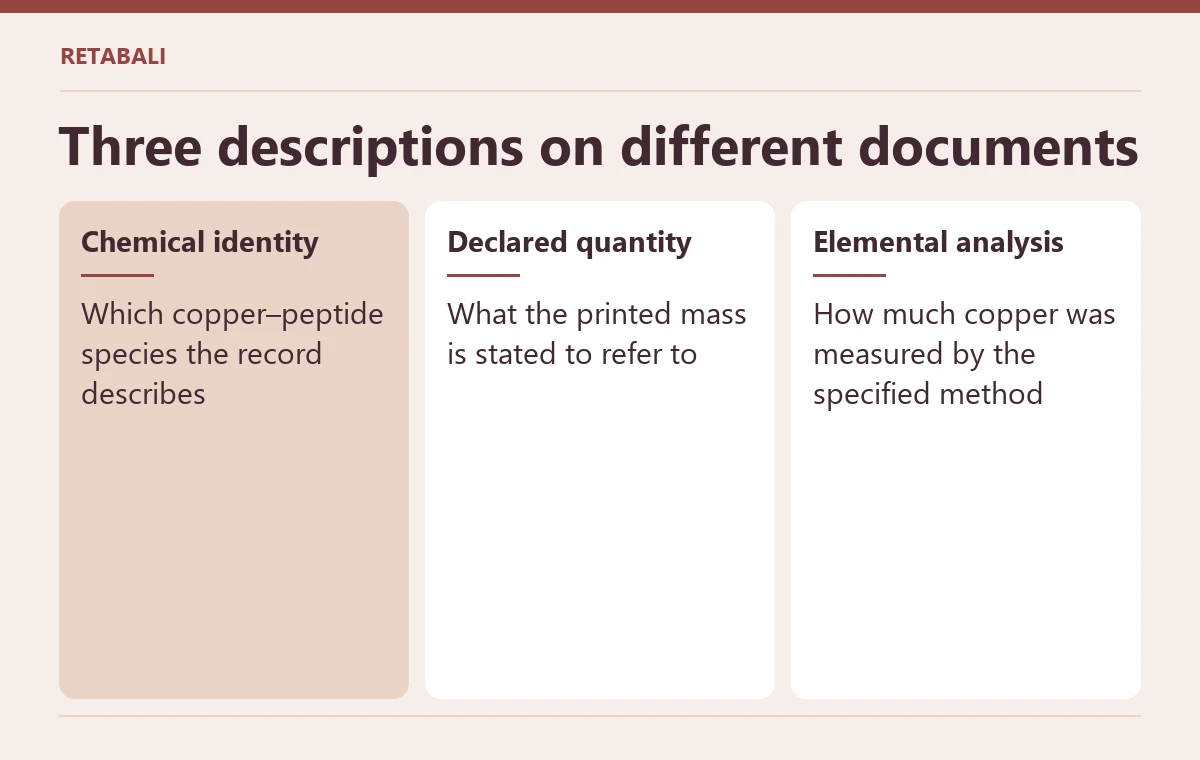
A visitor in Bali sees a copper-peptide presentation labelled in milligrams and a laboratory sheet listing copper in a different unit. The temptation is to place the numbers side by side and decide whether the pack is underfilled. Before doing that, establish what each number is a mass of. A compound containing copper also contains other atoms. A mass reported for the compound and a mass reported specifically for the element are not automatically measuring the same thing.
Use the chemical record to identify the question
The PubChem record for prezatide copper describes a copper-containing molecular species with a specific formula and identifier. The peptide portion contributes to the mass of that species. The database entry helps distinguish the named chemical entity from elemental copper. It is a reference record, not a certificate that identifies or quantifies the material in a retail pack.
A related name can also refer to a different stated form or salt. If a specification names an acetate, hydrate or another formulation detail, retain that wording. A calculation made with a formula for one chemical species does not automatically describe every preparation sold under a shorter commercial name.
Read the quantity line as a complete sentence
Copy the material name, quantity, unit and basis from each document. “Per pen,” “per millilitre,” “per gram of raw material” and “per tested sample” lead to different comparisons. If one line reports the mass of a complex and another the concentration of copper in a laboratory sample, both the chemical identity and the denominator need to match before the figures can be related.
The instrument or method also matters. An elemental measurement can quantify copper in the tested sample without identifying which peptide bound it. Conversely, a catalogue description identifies the intended presentation without supplying an independent measurement of the particular batch.
Ask for a statement about the actual lot
If the question concerns a GHK-Cu item in Bali, ask what substance the declared mass refers to and where the applicable lot or specification is identified. Keep the answer with the precise product and batch details. If the seller cannot clarify the basis, record that as an unresolved product-information question. Neither a chemical formula nor a generic elemental result can supply a safe use amount from an ambiguous label.
