MOTS-c, mouse age and a running test: what to carry into human research
A change in a laboratory animal's running performance is a measurable experimental endpoint.
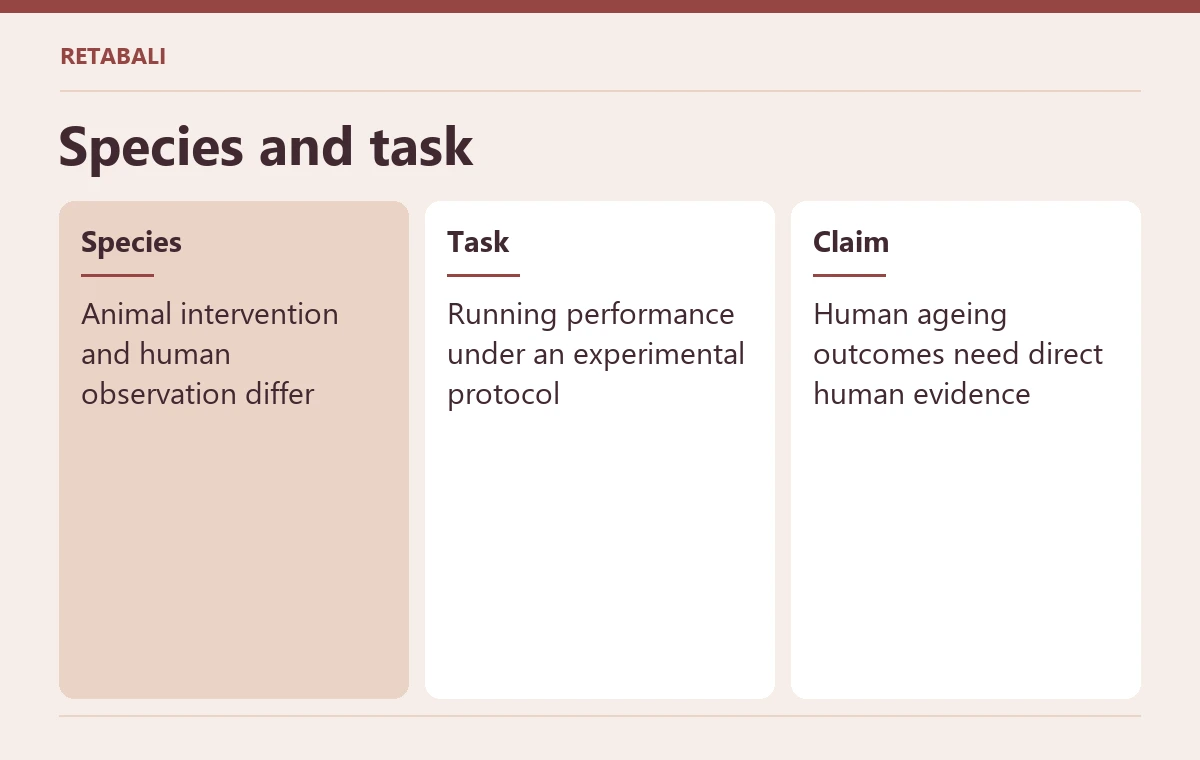
A change in a laboratory animal's running performance is a measurable experimental endpoint. “Reversing human ageing” would require evidence about people, different outcomes and a defined period of observation.
What age represents in this experiment
The MOTS-c research programme included experiments in mice and observations around exercise in humans. A comparison of animals at different ages is valuable for studying age-related biology but does not establish the clinical age at which a particular treatment works in people. MOTS-c is an exercise-induced mitochondrial-encoded regulator of age-dependent physical decline and muscle homeostasis
Animal studies can compare groups at specified ages under controlled conditions. That allows investigators to ask whether a measured response differs across those groups within the model. It does not supply a general conversion from animal age to human diagnosis or treatment eligibility. The exact task matters as much as the age. A performance measure recorded on an experimental apparatus describes the capacity expressed under those testing conditions and over the period actually observed.
Which human result appeared in the same paper?
A Bali athlete reads a headline about old mice and equates a particular age group with their own birthday. Chronological ages do not translate to treatment response through a simple ratio. Neither does treadmill performance capture the whole range of what human ageing means.
A paper may include naturally occurring molecular measurements in people and separate experiments in mice. The presence of human participants in the publication does not mean they received the same intervention as the animals. Read the figure legend and methods for each claim instead of treating the entire paper as one shared protocol. For an endurance question in people, the relevant evidence would need a suitable human performance endpoint, a defined intervention and comparison and appropriate follow-up. A molecular response around an exercise session is an interesting observation without supplying each of those missing elements.
How to use the research figure
A genuine finding about performance at a specified age under a controlled protocol is already informative. It does not need a conversion chart from mouse years to human years to make it scientifically worthwhile.
Likewise, endurance on a forced or standardised animal task does not amount to a person's own report about daily energy. A claim about quality of life would require a measure that addresses quality of life in the population under discussion.
Identify species, actual task, comparison group and duration before discussing the result. A human observational sample in the same paper does not convert a separate animal performance experiment into human treatment evidence.
