Which question did the head-to-head obesity trial actually test?
A head-to-head trial places two treatments in the same randomised study, reducing the problems of comparing separate trials with different populations.
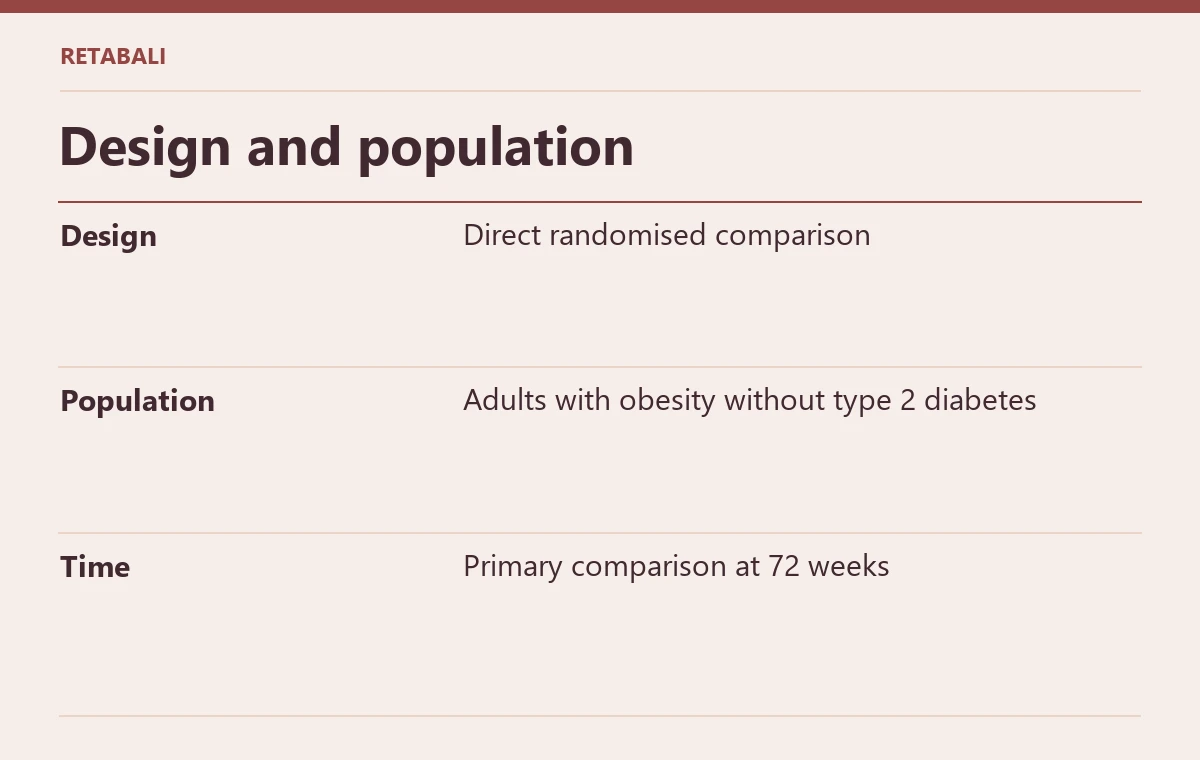
A head-to-head trial places two treatments in the same randomised study, reducing the problems of comparing separate trials with different populations. It still answers a question about the tested treatments and participants.
Why direct comparisons matter
SURMOUNT-5 compared tirzepatide with semaglutide in adults with obesity without type 2 diabetes. The primary endpoint was percent change in weight at seventy-two weeks. The study was open-label, so participants and investigators knew the assigned treatment. Tirzepatide as Compared with Semaglutide for the Treatment of Obesity
Eligibility, background care and duration can differ between independent trials. Even when two papers use percent weight change as their headline, the comparison groups and observation schedules can differ. A single randomised head-to-head trial removes some of these cross-study differences by assigning treatments within one protocol. It does not compare every product available in a market or every possible population. In particular, adding a third medicine to a social-media graphic does not make that third treatment part of the randomised design.
What open-label tells the reader
A chart comparing the separate highest percentage ever reported for each drug might include different lengths of follow-up and populations. The head-to-head design avoids that particular mismatch. It does not test retatrutide or establish that a locally labelled formulation recreates either trial product.
Participants and investigators knew the assigned treatment. That information should be kept alongside the endpoint and methods; knowing the assignment is not the same as choosing the assignment. Randomisation and open-label follow-up can coexist. Read what the investigators measured, when they measured it and how they handled participants who did not complete the planned follow-up. Then distinguish an average outcome at the protocol visit from a prediction about which treatment an individual will tolerate. Those questions can share a conversation without sharing a single numerical answer.
The question to take to clinic
Direct comparison also does not make the two arms identical in every practical respect. Read what preparation each group received and how the assigned regimen was implemented within the trial. A graph can support a comparison between the studied groups without answering what would happen after switching an individual between different products outside that protocol.
When citing a direct trial with a specified follow-up, keep the number of participants who contributed data distinct from the number originally assigned. Missing visits and treatment interruptions are questions about how outcomes were analysed; the fact that two treatments were compared directly does not answer them automatically.
For a discussion in Bali, keep the drug names, no-diabetes population and week together. Distinguish the average comparison from an individual prediction of response or tolerability.
