A fibrosis predictor in a tesamorelin cohort is not a treatment effect
A baseline factor associated with later fibrosis progression helps researchers understand risk.
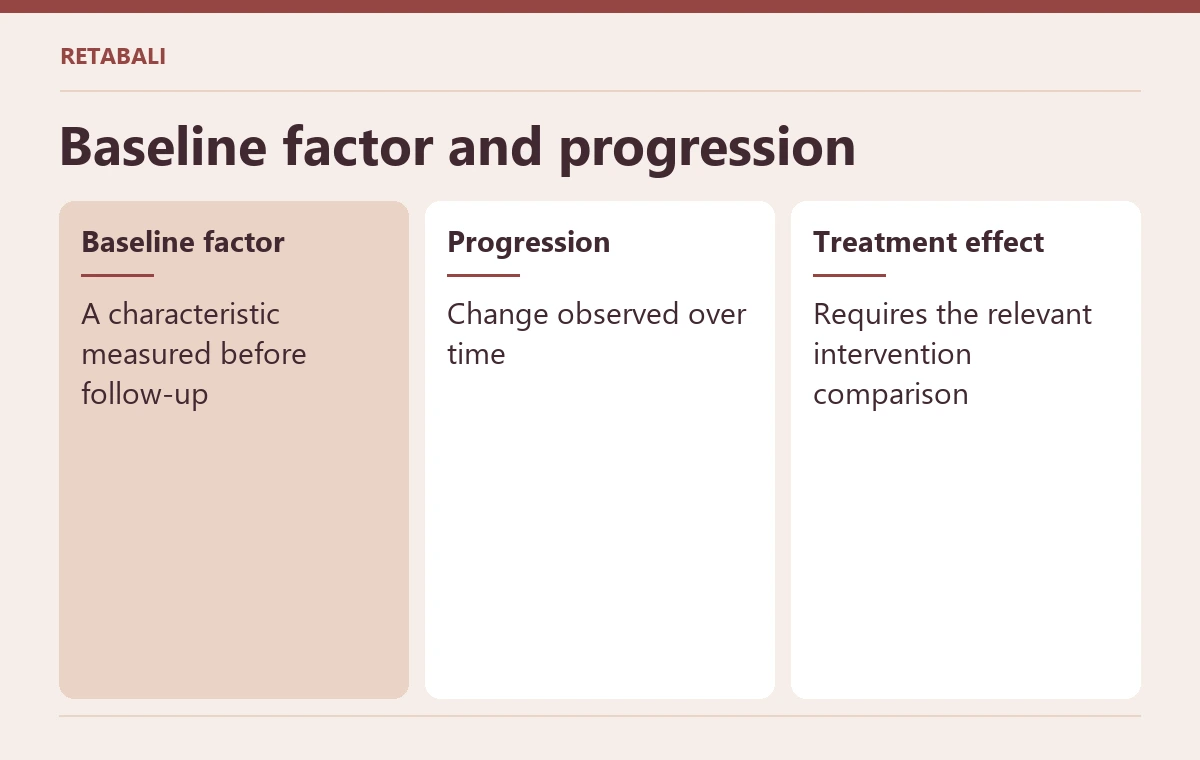
A baseline factor associated with later fibrosis progression helps researchers understand risk. The association is different from the randomised comparison of tesamorelin with placebo in the parent clinical trial.
What exactly was randomised?
An analysis of people with HIV-associated fatty liver examined predictors of fibrosis presence and progression. Participants were part of a specific clinical research setting. A predictor does not become a proven cause simply because it was studied alongside a randomised intervention. Clinical Predictors of Liver Fibrosis Presence and Progression in Human Immunodeficiency Virus-Associated Nonalcoholic Fatty Liver Disease Randomised tesamorelin study in people with HIV and fatty liver
Random treatment assignment can help investigators compare outcomes between intervention groups. It does not randomise baseline age, a pre-existing characteristic or the degree of a disease present when the participant entered the study. If analysts later compare people with different baseline characteristics, the resulting association can have other explanations. That is true even when everyone originally belonged to a well-conducted randomised trial. Look for the actual grouping used in the particular analysis being quoted.
A risk indicator is not an intervention
Imagine a Bali reader finding that people with one baseline characteristic progressed more often. If those people also differed in other ways, several explanations may fit. Treating the baseline characteristic was not automatically randomised when the drug groups were assigned.
A characteristic that predicts a later outcome can be clinically informative without proving that changing the characteristic would change that outcome. A predictor might reflect another process or identify a group with a different starting risk. A treatment effect asks a counterfactual question about what would happen under different interventions; a prediction asks how an outcome tends to vary with available information. When taking a finding to a Bali clinician, describe both the population with HIV-associated fatty liver and how progression was measured. Do not turn a predictor into an instruction for treating an individual without a relevant clinical assessment.
Before sharing the claim
In particular, compare the people with available baseline and follow-up information with those represented only at enrolment. If a later assessment was unavailable, the corresponding outcome cannot be read directly from the initial characteristic. The approach used to handle that gap belongs in the methods.
A reader asking whether their own fibrosis progressed needs an actual assessment in their relevant clinical setting. A baseline factor associated with progression in someone else's cohort cannot retrospectively assign a new stage to an individual liver.
Keep the predictor, the outcome, the comparison group and the observation period separate. Discuss whether the person's condition resembles the studied population and whether an actual clinical decision depends on the finding.
