Why a copper–peptide complex is not the same as two ingredient names
A study can investigate a defined copper–peptide complex under controlled conditions.
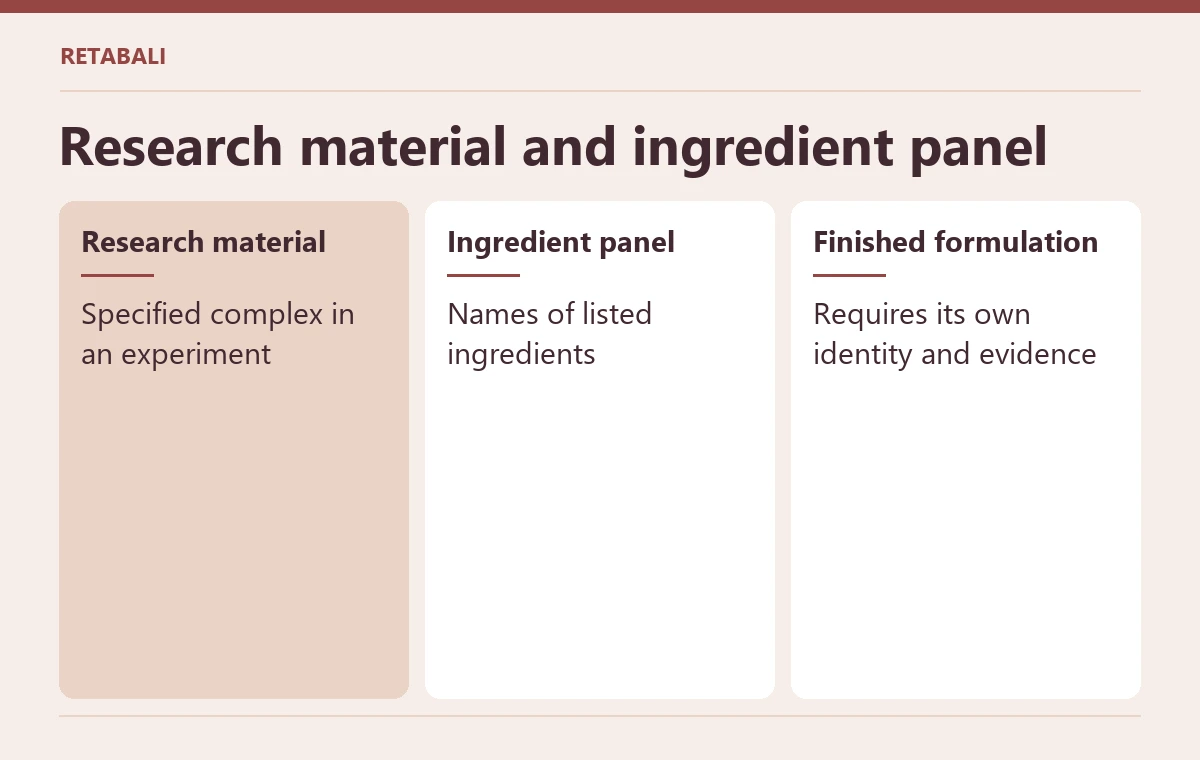
A study can investigate a defined copper–peptide complex under controlled conditions. Seeing a copper ingredient and a peptide somewhere in a product's list does not establish the presence, concentration or behaviour of that same complex.
Name the material investigated
A primary fibroblast study examined a specified tripeptide–copper complex and collagen synthesis. A cosmetic ingredient declaration answers a different question about listed materials. It does not reproduce the experimental conditions or measure the species present in a finished formula. Stimulation of collagen synthesis in fibroblast cultures by the tripeptide-copper complex glycyl-L-histidyl-L-lysine-Cu2+ US FDA guide to cosmetic ingredient declarations
The term copper peptide can describe a defined ingredient or a broad marketing category. A primary study uses a specified preparation under controlled conditions. To connect a different formulation with that work, a reader needs more than the appearance of two related ingredient names. The chemical form, conditions of preparation and concentration in the studied system may matter to the comparison. An ingredient panel is an appropriate place to look for declared names but is not a full analytical characterisation of the finished product.
Find the level the claim concerns
Imagine two products in Bali with similar front wording, one explicitly listing Copper Tripeptide-1 and another listing separate ingredients with no comparable specification. The paper supports questions about chemical identity; it cannot resolve what was formulated inside either bottle.
A paper about a complex in fibroblast culture can support a statement about the response observed in that setting. A different claim, such as a change in visible skin appearance after using a particular topical product, requires evidence involving people and the specified product or a justified comparison. A third claim might concern the identity of a material inside a bottle; that is a formulation or analytical question. Labelling all three claims copper-peptide science removes the very differences needed to evaluate them. Ask which claim is under discussion and what evidence would actually resolve it.
How to use the research figure
The ambiguity can persist even when both products name exactly the same ingredient. The list does not ordinarily disclose all information about concentration, stability, route or the behaviour of a finished preparation. A source that supports a particular laboratory observation can be correctly cited without implying that every formula bearing related words reproduces that observation. Identify which additional information would actually be necessary before making the stronger claim.
A statement about the chemical identity of an ingredient is already a meaningful and testable claim. It need not be stretched into a promise about a health outcome.
Ask the manufacturer which ingredient the claim identifies and whether the evidence concerns the actual finished formula. A study in fibroblasts does not establish how two ingredients interact on human skin simply because their names appear together.
