MOTS-C, AMPK and Glucose: The Metabolic Research Explained
Explore MOTS-C’s nutrient-sensing research, AMPK and glucose-related endpoints, then compare the 32 mg pen offered in Bali.
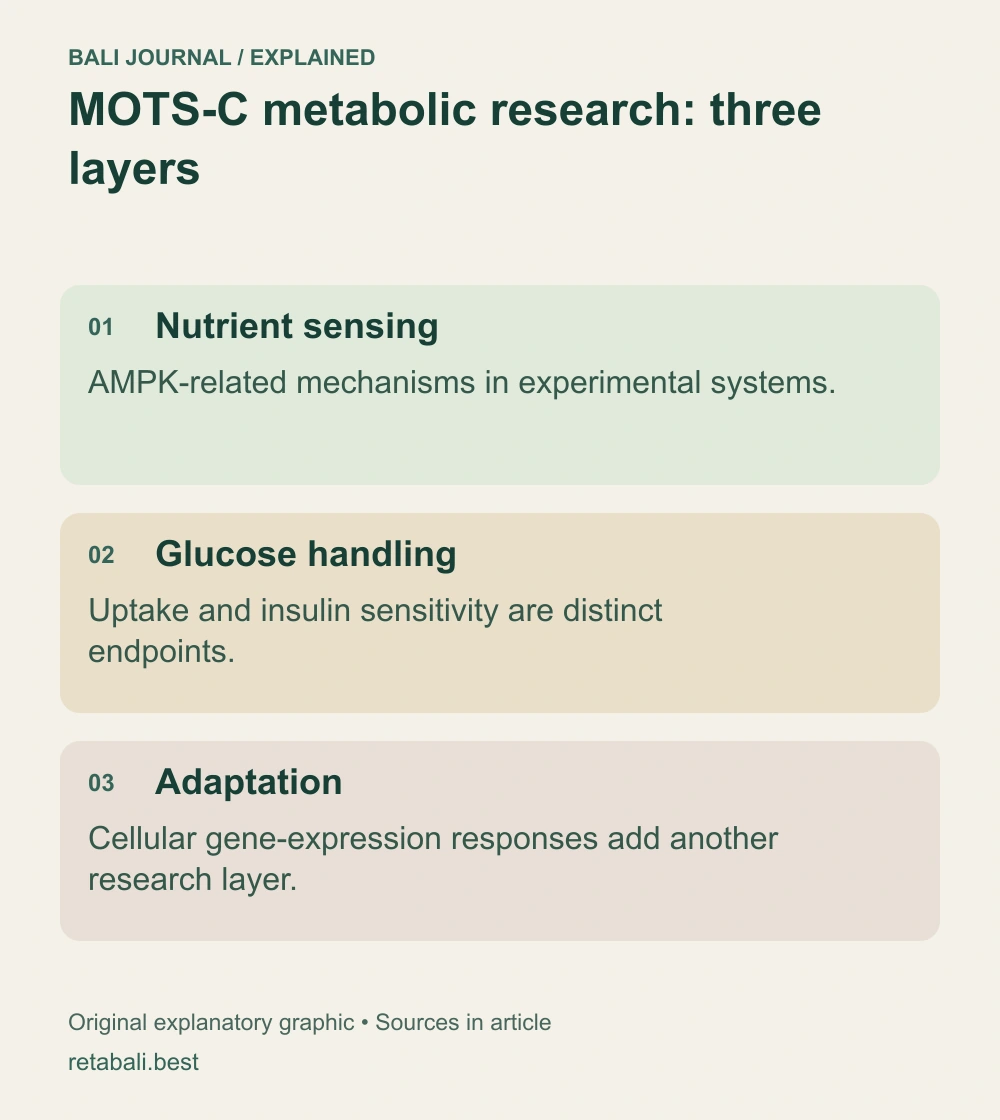
MOTS-C's metabolic appeal comes from its connection with nutrient sensing and glucose handling in experimental research. The peptide is discussed alongside AMPK, a regulator involved in cellular energy responses, and has been investigated through cell and animal studies as well as observations in people.
For a reader in Bali, Indonesia, the useful question is which part of that evidence supports a particular statement. A mechanism involving AMPK, a glucose-related result in mice and a human treatment outcome are different kinds of information. Understanding the difference lets you see why the research is interesting without turning every observation into the same claim.
What is being sensed?
Cells have to coordinate fuel use with changing energy demand. Nutrient-sensing systems help organise those responses. AMPK appears in this conversation because it participates in the regulation of cellular energy balance.
MOTS-C is a mitochondrial-derived peptide, and its discovery work linked it with metabolic homeostasis. The interest is not simply that it “comes from mitochondria,” but that a short peptide can participate in a wider signalling network affecting cellular metabolism.
The term homeostasis describes the maintenance of an organised internal state. In a research paper, evidence for it comes from specific measurements. It is more useful to identify those measurements than to use “balance” as an undefined promise.
The original metabolic research
The primary MOTS-C discovery study described metabolic effects in cells and mice, including AMPK-related mechanisms and changes in insulin-sensitivity-related outcomes. These experiments helped establish the peptide as a subject of metabolic research.
The model matters. A result in an animal given a specified research preparation supports a finding in that experiment; it does not determine how a supplied pen will affect a person's glucose or replace a clinical diabetes assessment.
That is also why the ingredient-level research should be read separately from the catalogue. The study tells you which biological questions motivated further investigation. The product page tells you the name, presentation and total contents offered for enquiry.
Glucose uptake and insulin sensitivity are different concepts
Glucose uptake concerns movement of glucose into cells or tissues. Insulin sensitivity concerns the response to insulin. Blood-glucose measurements describe another observable part of the system. They are related, but they are not interchangeable terms.
An experimental increase in a pathway associated with glucose transport is not automatically a measured improvement in every clinical glucose outcome. The method could involve cell assays, an animal challenge test or a human laboratory measurement, each with its own interpretation.
For someone researching MOTS-C benefits, the most useful reading habit is to ask: which endpoint changed, in what model, and compared with what? Three short questions turn a broad metabolic headline into a much clearer piece of information.
How adaptation fits alongside fuel handling
Cell research on MOTS-C and nuclear signalling adds another dimension: under metabolic stress, the peptide can participate in adaptive gene-expression responses. This links the nutrient-sensing discussion with communication between cellular compartments.
Separate exercise research included human endogenous observations and mouse intervention experiments. The two strands are related to metabolic adaptation, but they answer different questions. Human exercise-induced expression should not be presented as a human supplementation trial.
Together, the studies explain why MOTS-C attracts attention beyond a single receptor target. The central theme is metabolic communication: how cells detect changing conditions and organise a response.
What the 32 mg presentation tells you
The MOTS-C catalogue listing offers 32 mg total contents in a prefilled pen, listed at IDR 2,900,000. This is a concrete specification for comparing the item, not a numerical prediction about glucose handling.
When reviewing another offer, match the named molecule, total quantity and presentation before comparing prices. A different compound described as a “mitochondrial booster” is not automatically the same item. Neither is a powder listing directly interchangeable with a prefilled product.
Inspect the pack photographs and relevant product information. If documentation is requested, keep the product identity and any batch reference together. It is easier to resolve a precise question than a general request for the most powerful metabolic product.
Bringing the comparison to Bali
For a Bali product enquiry, send the MOTS-C 32 mg presentation, quantity and the place where someone can receive it. Include your accommodation and address in Seminyak, Canggu, Ubud or the relevant area. The team confirms current availability and arrangements for the request.
MOTS-C's research identity is strongest when the pathway and endpoint remain visible: AMPK-related signalling, glucose-handling experiments and adaptive cellular responses. Use that evidence to understand the ingredient, then open the actual 32 mg presentation for a clear local comparison.
