Why a niacin flush cannot measure an NAD+ response
A flush after taking nicotinic acid is a skin response to that form of vitamin B3.
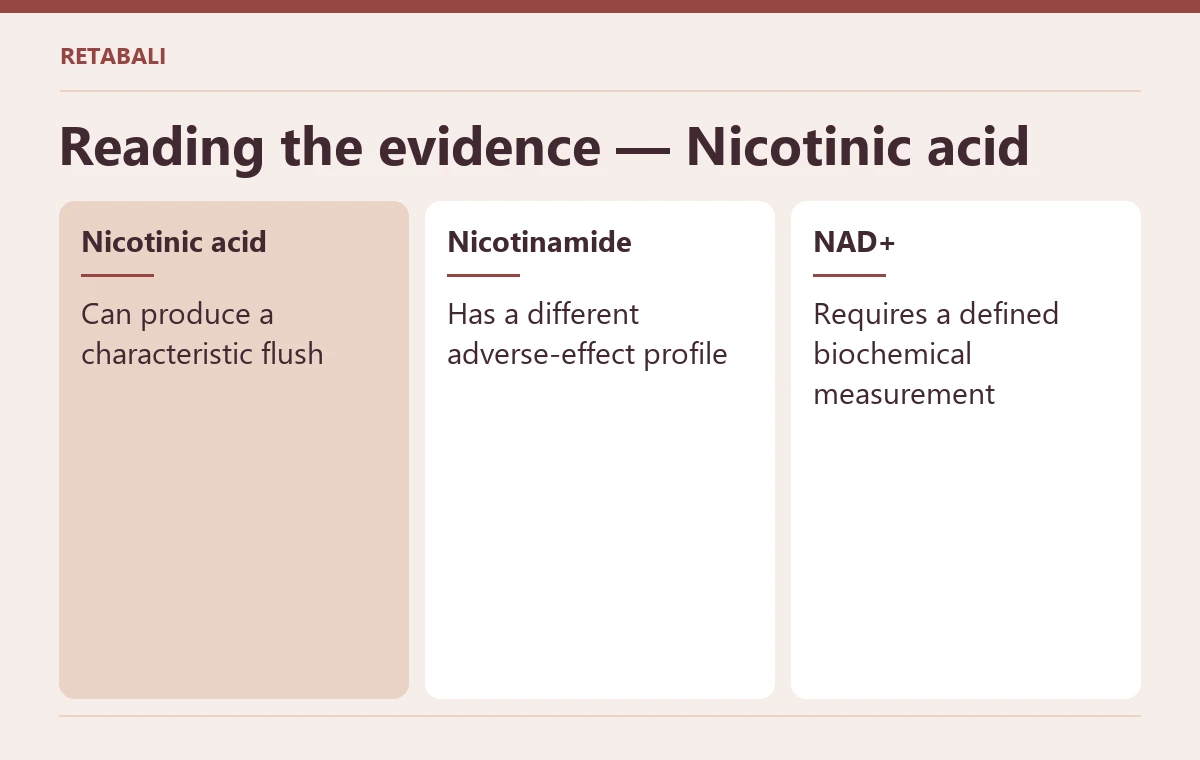
A flush after taking nicotinic acid is a skin response to that form of vitamin B3. Feeling warmth does not measure a change in cellular NAD+, and the absence of flushing does not demonstrate a failure to absorb a different form of the vitamin.
First identify the chemical form
The NIH Office of Dietary Supplements distinguishes nicotinic acid from nicotinamide. They have different adverse-effect profiles. Nicotinic acid can cause flushing, warmth and itching, while nicotinamide does not normally cause that characteristic flush. These distinctions concern specified oral vitamin forms. They cannot be transferred as a performance test for an NAD+ pen. NIH Office of Dietary Supplements on niacin
A front label may use a broad term such as vitamin B3 while the ingredient panel specifies nicotinic acid or nicotinamide. That second line is important when discussing flushing. Two containers can share the headline vitamin name but differ in the form supplied, in additional ingredients and in the amount associated with one serving. Describing both as simply an NAD booster obscures those distinctions. Keep the actual route alongside the name too. A response after taking an oral nutrient cannot be transferred to a different compound or preparation just because an advertisement links them to the same biochemical pathway. The question is what entered the body and what was actually observed.
Keep a symptom separate from a laboratory endpoint
Two friends in Bali compare notes after one takes a multivitamin listing nicotinamide and the other takes a product labelled nicotinic acid. Their experiences might differ even before considering amounts, timing, other products or individual skin responses. A photograph of reddish skin would document the appearance but would not measure NAD in blood or tissues.
Warmth and reddening are observations that a person can report. A biochemical measurement requires a defined specimen, a laboratory method and a time in relation to the exposure. A skin photograph can improve a description of the first kind of observation, but it cannot retrospectively produce the second. A useful account states when the change began, how long it lasted and whether symptoms were limited to the skin. Someone who never flushed still cannot conclude that an oral nutrient was ineffective, and someone who did flush cannot infer an improvement in energy metabolism. Both inferences skip the measurement required to connect a symptom with a biochemical change.
When the distinction matters
If symptoms occur, keep the product label, the timing and the names of anything else taken that day for a clinical review. Seek urgent help for breathing trouble, facial swelling or a severe reaction. Avoid deliberately repeating an exposure to test whether a flush returns.
