Did the retatrutide appetite study measure what people ate?
A trial questionnaire about hunger, cravings or eating attitudes measures what participants report.
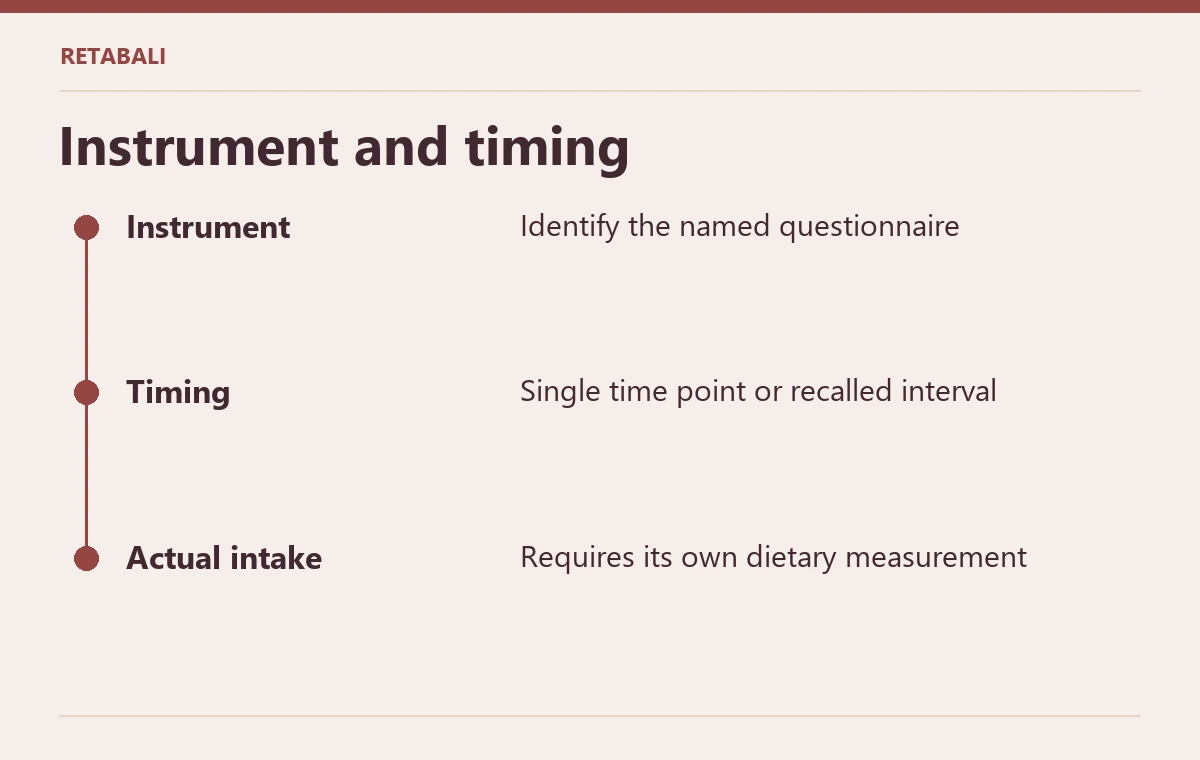
A trial questionnaire about hunger, cravings or eating attitudes measures what participants report. It is not inherently a weighed dietary record or a direct measurement of energy intake.
The question written on the form
The retatrutide paper analysed appetite and eating behaviour in a trial population with type 2 diabetes. Different questionnaires and scales capture different constructs. Look for which instrument was used and when responses were collected. Appetite, eating attitudes, and eating behaviours during treatment with retatrutide in adults with type 2 diabetes: Results of a phase 2 study
An instrument can ask a person to rate current hunger, recall cravings or describe control over eating. These three answers can differ without any of them being false. A person can experience little hunger at the moment a form is completed yet remember strong cravings earlier in the week. Read the exact construct and recall period in the methods before treating a score as a record of what was eaten.
What would measure food intake?
A Bali reader recalls being less hungry after breakfast yet eating a similar amount at an evening gathering. These observations need not contradict each other. Hunger at a point in time and a day's total energy intake have different measurement windows.
A weighed dietary record or a controlled meal measurement uses a different data source from a questionnaire about attitudes. Both have limitations, but they are not interchangeable. An intake record may miss unrecorded foods, and a rating scale may detect a change in experience without establishing how much food was consumed. If the question concerns symptoms rather than intake, a different tool or clinical history may be more appropriate. Keep the question attached to the measurement being discussed.
Which finding can be carried forward?
Imagine someone answers a hunger question before dinner on several days but later reports on cravings recalled across an entire week. These two answers may not move in parallel. The single-time question is sensitive to what happened just beforehand. The recalled answer may give more weight to memorable episodes. Neither measurement directly supplies the weight or composition of the food the person ate. A diary that records what was served and how much was left can illuminate a different question, while still having its own limitations. When a study uses a scale, retain the direction of its scoring as well: a higher number can indicate more of a symptom on one instrument and a more favourable experience on another. The label on the axis and the original questionnaire are more informative than whether a trend line points up.
For a clinician, write down which concern matters: troublesome fullness, meal completion, cravings or weight change. Ask whether the published scale actually measured that concern before quoting a favourable questionnaire result.
