Which kidney events counted in the SURPASS-4 composite?
A composite kidney endpoint counts the first qualifying component as defined by a study.
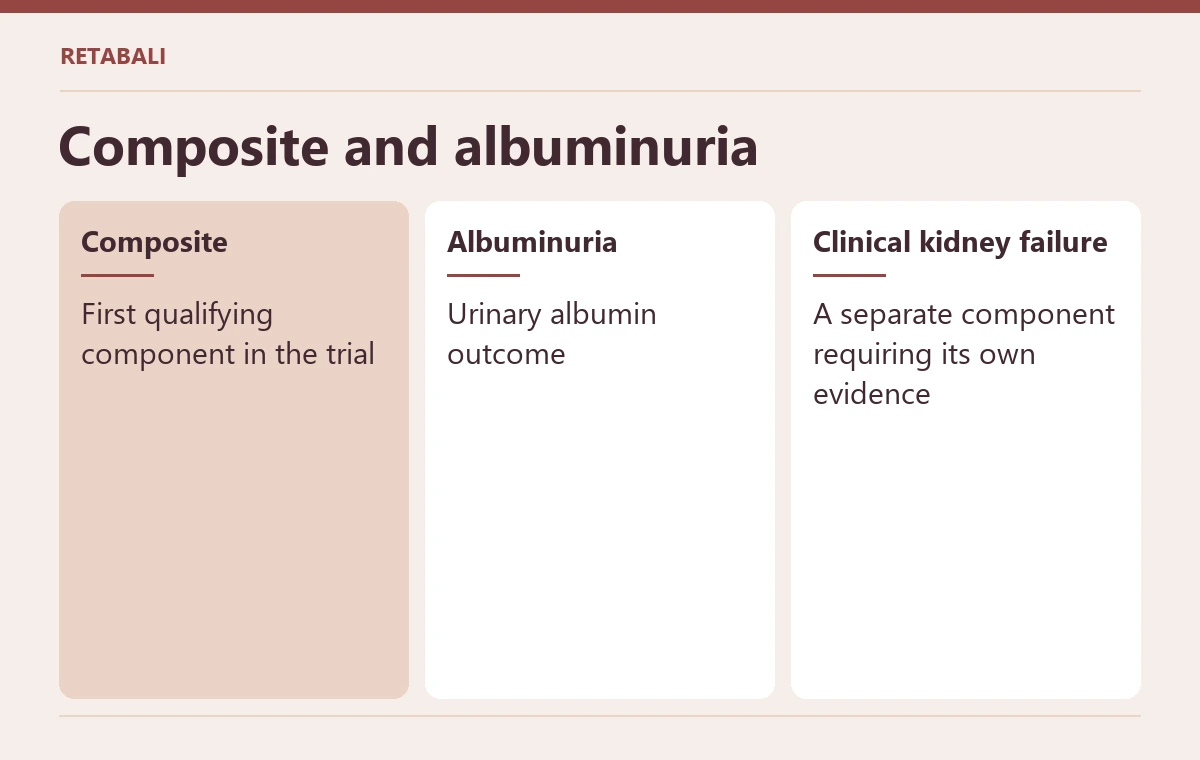
A composite kidney endpoint counts the first qualifying component as defined by a study. Its overall result cannot be carried over automatically to every component or to one person's chance of dialysis.
What counts as the first event?
The SURPASS-4 post-hoc kidney analysis compared tirzepatide with insulin glargine in adults with type 2 diabetes and high cardiovascular risk. Its composite included new-onset macroalbuminuria as well as specified loss of kidney function, kidney failure and kidney death. Effects of tirzepatide versus insulin glargine on kidney outcomes in type 2 diabetes in the SURPASS-4 trial: post-hoc analysis of an open-label, randomised, phase 3 trial
A composite defines a set of qualifying outcomes and a rule for counting them. One person can have more than one medically important change during follow-up while contributing only the first qualifying event to a particular time-to-first-event analysis. A component that occurs frequently can influence the composite more than a rarer but more serious component. Read the component results and the uncertainty around them before recasting a combined endpoint as a particular clinical event.
A biomarker threshold and a clinical event
A chart can suggest a clear difference in the composite even when rarer components occur too infrequently for precise estimates. Check the published numbers for each type of event before turning the composite into a statement about a particular outcome.
New-onset macroalbuminuria is a specified change in the amount of albumin excreted in urine. Kidney failure and kidney death are distinct clinical outcomes. Combining them for analysis does not imply that they have the same consequences for an individual, occur with equal frequency or show the same treatment effect separately. The kidney analysis was post hoc, which matters when judging what was planned and how findings should be interpreted. A reader with a personal urine albumin result also needs their actual laboratory history and clinical assessment. The composite trial estimate is not a personal prediction.
The question to take to clinic
Consider what happens if a person first develops one component and subsequently another. A time-to-first-event analysis counts the first qualifying event at its recorded time. It cannot be interpreted as the total number of all events that person experienced over follow-up.
If the comparator group received insulin glargine, the reported contrast is against that strategy in the studied population. The result cannot be copied directly into an estimate versus no treatment or versus a different glucose-lowering medicine without another suitable comparison.
For discussion in Bali, distinguish filtration rate, urine albumin and clinical kidney failure. The analysis is relevant to a defined trial population and comparator; it does not predict an individual result from a pen label.
