When does a lower HbA1c on tirzepatide count as diabetes remission?
A lower HbA1c during tirzepatide treatment and confirmed type 2 diabetes remission answer different questions. Read the dates and treatment history together.
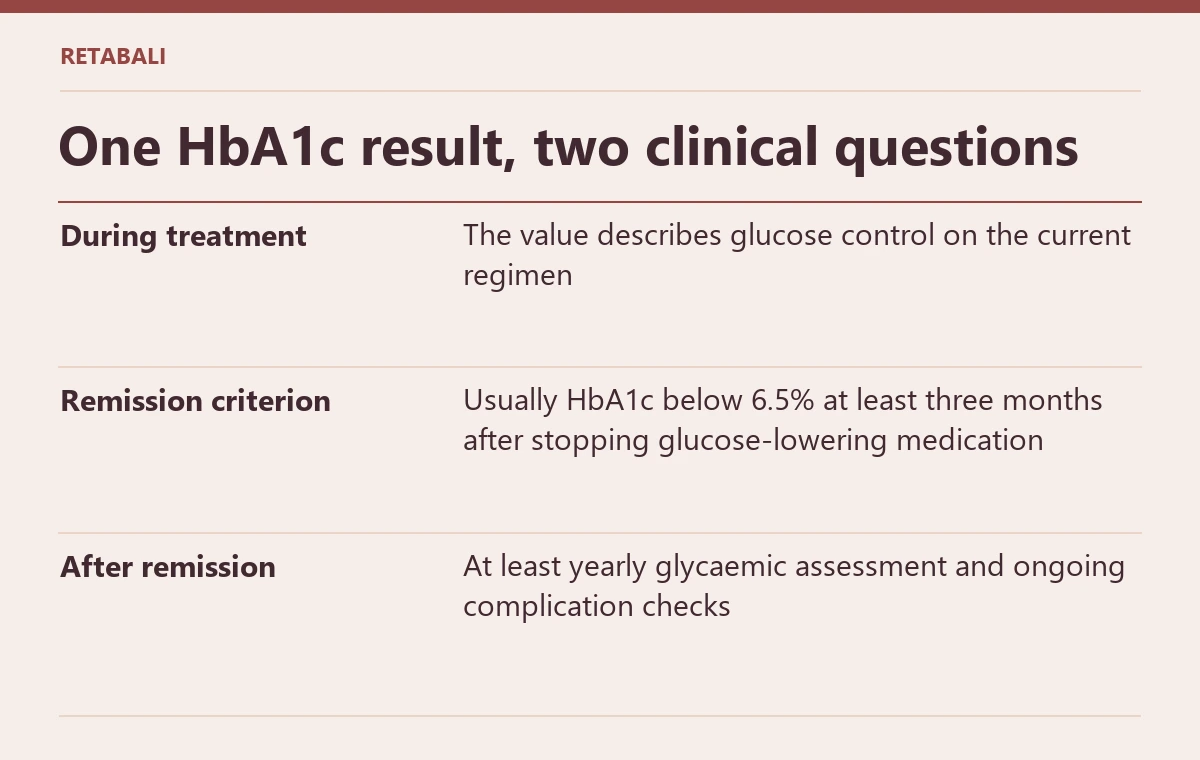
A result of 6.2% can be welcome news for someone with type 2 diabetes. Whether a clinician can also record remission depends on when the blood was drawn and whether glucose-lowering medicines were still being taken. Those details can get lost when a patient brings a photograph of a single laboratory result to a new clinic in Bali.
What a tirzepatide trial established while treatment continued
In SURPASS-1, researchers randomly assigned 478 adults with type 2 diabetes to tirzepatide or placebo and followed treatment over 40 weeks. They reported average changes in HbA1c and the proportions who crossed several thresholds. Those outcomes measure how well treatment controlled glucose under the study conditions. Even an HbA1c in the usual range for someone without diabetes has that interpretation if it was measured during treatment. SURPASS-1 original report.
Imagine two appointments with the same result. At the first, the clinician learns the person has been taking tirzepatide continuously. The note can record good control on the current regimen. At the second, another person had previously stopped all glucose-lowering medication with their clinician and remained below the relevant threshold long enough for a follow-up test. For that person the date of stopping becomes central to the interpretation. Both have achieved something worthwhile. Their medication histories answer different questions.
What international experts mean by remission
An international panel convened by the American Diabetes Association proposed a usual criterion of HbA1c below 6.5%, measured at least three months after stopping the usual glucose-lowering pharmacotherapy. A blood test after a few days off treatment cannot establish that result. The interval allows the test to reflect glucose levels beyond the period of active therapy. If a person still needs a glucose-lowering drug, including for another health reason, the clinician cannot establish drug-independent remission while its glucose effects continue. International consensus report on type 2 diabetes remission.
The definition is for documenting a clinical state. It gives no reason to stop a useful prescription just to earn a particular description. Whether changing a medicine is appropriate is a separate decision for the patient and their prescriber. The panel also discusses alternatives a clinician can consider if HbA1c is unreliable for the individual.
How to carry the timeline between clinics
For an appointment in Bali, bring the dated laboratory reports from before and after a treatment change, the drug names and the dates the prescriber actually changed them. Record the units alongside the values, since one laboratory may use percent and another mmol/mol. If a medicine continued for another indication, include it rather than leaving it out of a list headed “diabetes medicines.”
After remission has been documented, the consensus recommends ongoing observation with HbA1c or an appropriate alternative at least yearly, alongside continuing checks for diabetes complications. A person spending part of the year abroad can arrange which clinic will review the next result and send a copy home. A note with the value, date, treatment status and planned follow-up will tell the next clinician much more than the word “reversed” on its own.
