A retatrutide kidney trial paper with no outcome curve yet
A design and baseline paper explains who entered a study and how investigators intend to answer its question.
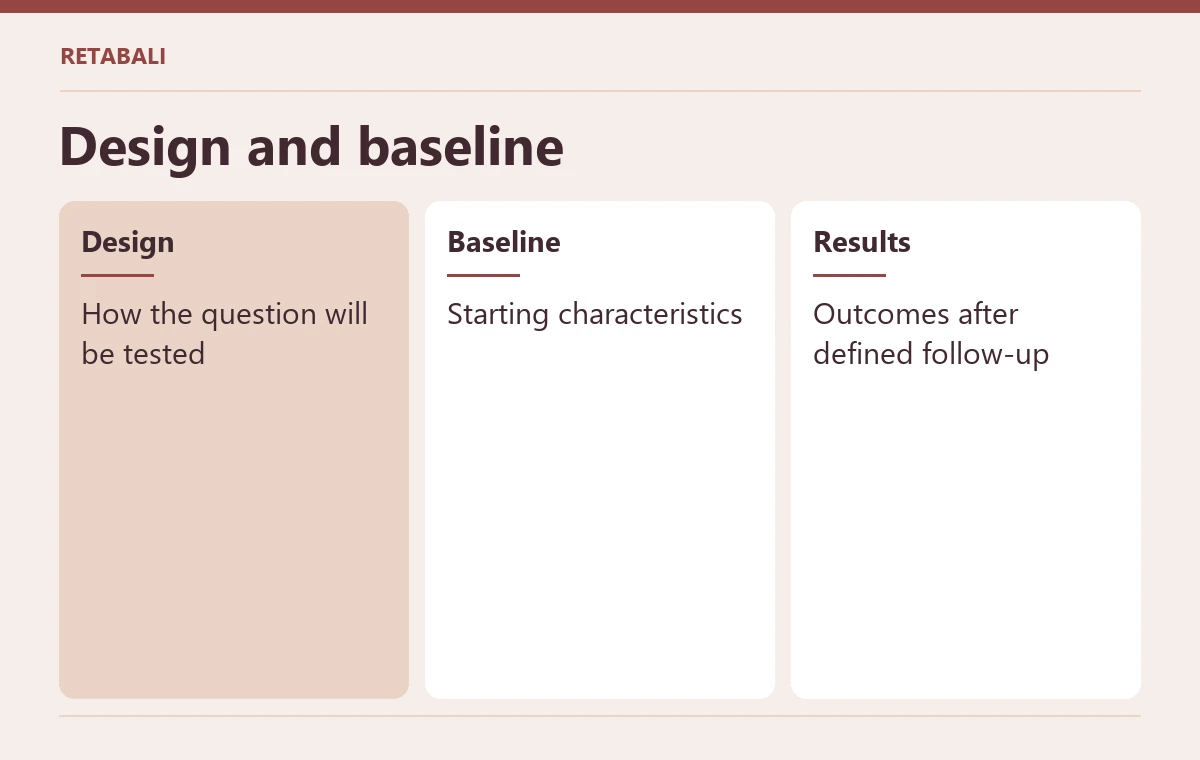
A design and baseline paper explains who entered a study and how investigators intend to answer its question. Baseline values are measured before the follow-up outcome. They cannot show whether the treatment worked.
Look at the verbs in the abstract
The TRANSCEND-CKD design report describes the rationale, protocol and starting characteristics of a retatrutide study in chronic kidney disease. A stated primary endpoint is a planned assessment, different from a completed treatment comparison in a results paper. TRANSCEND-CKD rationale, design and baseline characteristics
A design paper may say that investigators will assess an endpoint, that participants have been enrolled or that baseline characteristics are described. These statements concern different stages of a study. The wording in the results section can still describe genuine measured data even when those data are all baseline characteristics. The decisive question is whether the publication contains the post-assignment comparison required by the claim. A baseline table of eGFR or albuminuria answers who was studied, not what happened after treatment.
What a design paper is genuinely good for
A Bali reader sees two columns with similar starting kidney measurements and says the treatment groups performed equally. At baseline the intervention has not had the follow-up period needed to test its effect. Similar starting values describe comparability, not the outcome.
The population, inclusion criteria, comparator and planned measurement can tell a reader whether a future result might address their question. For example, a study in people with established kidney disease and a study recruiting a broader population can have quite different relevance even if both concern retatrutide. A registry entry can also help identify a later outcomes publication without relying on a social-media description. Check the date and type of each source separately. If the document in front of you presents only baseline data, say so before quoting a number as a treatment finding.
Which finding can be carried forward?
The registry number or trial acronym is useful for matching the publications, but matching a name does not make their information interchangeable. A protocol, an enrolment table and a later efficacy analysis can all legitimately carry the same identifier.
Check whether any later citation is a conference abstract, a full outcomes paper or a news release. Each may contain different amounts of follow-up and methodological information. The existence of a study name on several pages does not show that they all report the same analysis.
Identify the publication type, baseline date and location of any later results report. When discussing a result, quote the report that actually contains the outcome and comparison. A recruitment or design page alone cannot supply them.
