Tirzepatide and low glucose: how to read the SURPASS-4 comparison
A risk expressed as the proportion of participants with at least one low glucose event differs from the number of events experienced over a year.
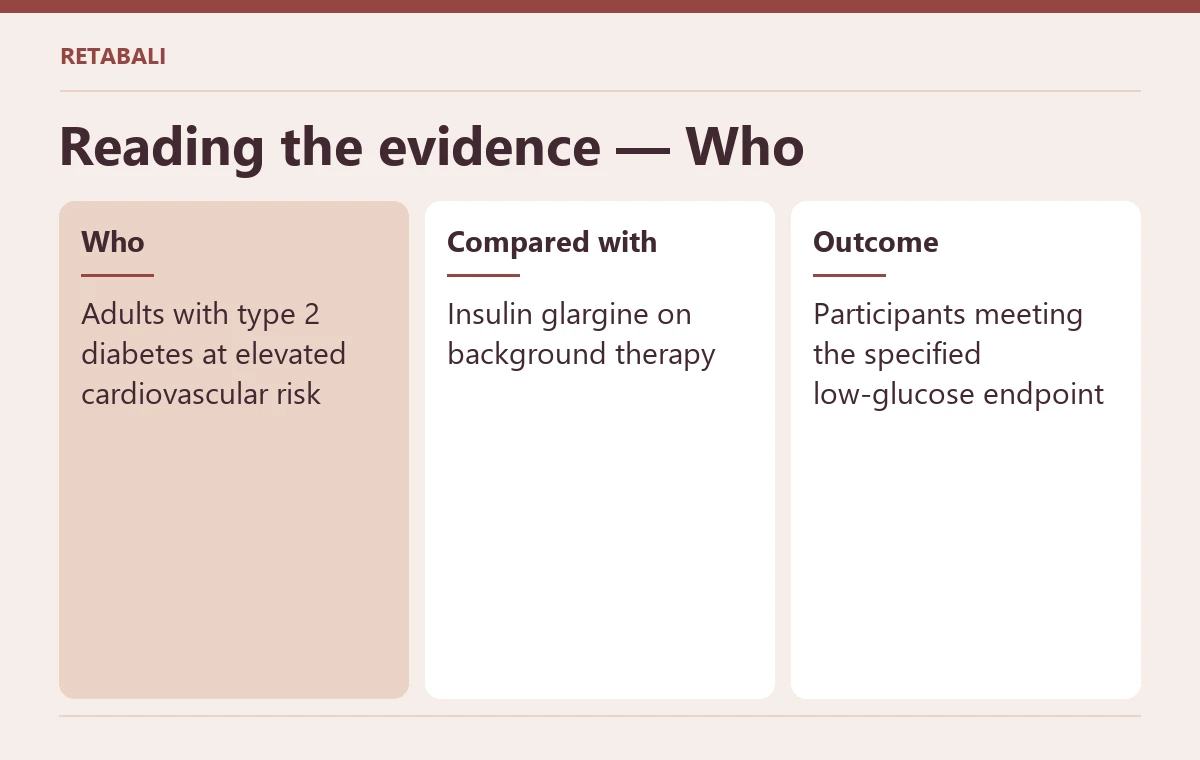
A risk expressed as the proportion of participants with at least one low glucose event differs from the number of events experienced over a year. SURPASS-4 compared tirzepatide with insulin glargine in people with type 2 diabetes and elevated cardiovascular risk. Its comparison group and background medication matter.
Participants, episodes and time at risk
The researchers reported a lower incidence of glucose below fifty-four milligrams per decilitre or severe hypoglycaemia with tirzepatide than with glargine. They also reported results for participants who were not using sulfonylureas. Separating that group changes the clinical context. It does not mean that anyone can infer their personal risk solely from a product name. SURPASS-4 randomised trial
An event rate can change if a small number of participants experience repeated episodes. A proportion of people with at least one event, on the other hand, counts each affected participant once during the defined observation window. Both summaries can be useful. One helps describe how widely the experience was distributed. The other can describe how often events recurred during a period of observation. They cannot be compared from the height of two numbers alone. Look for the denominator after the number, such as participants or patient-years, then read the definition of an event. In particular, a clinical event requiring help and an isolated low sensor reading are different kinds of observations.
Preserve the background medicines when quoting the result
In a hypothetical group of ten people, two could each have five low readings while the other eight have none. Two out of ten had at least one; the group recorded ten readings. A meter reading, a definition of an episode and a severe event requiring assistance are additionally distinct. Check the trial's exact outcome before comparing a home log with its published proportion.
In a clinic conversation, it is easy to recall the name printed largest on the trial slide and leave out the other medicines the participants used. A person taking a sulfonylurea may have a different clinical context from someone taking a different combination. The paper's subgroup information can sharpen a question, but it cannot establish that changing one medicine independently will reproduce the trial. A useful personal record distinguishes what was measured, what was felt and what action was necessary. It also states whether a clinician confirmed the interpretation. A log of low readings without their times and the surrounding medication history offers much less help when the prescriber reviews possible causes.
The question worth bringing back
For a medication review in Bali, bring the names of other glucose-lowering medicines, dated glucose readings and an account of any symptoms or help required. Ask the treating clinician how to respond to future low readings according to your care plan.
