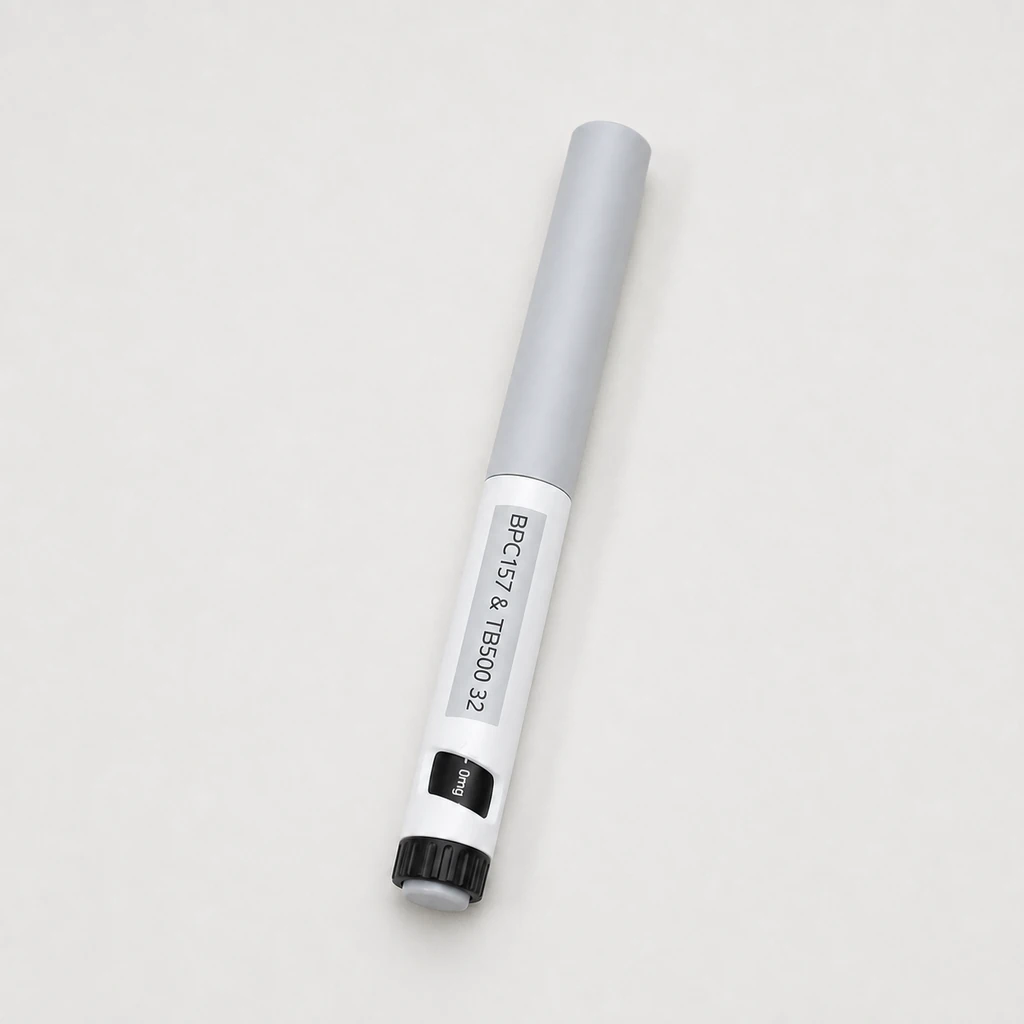
Oral and injectable BPC-157 cannot be ranked for a Bali purchase by assuming that capsules target the gut and injections repair injuries elsewhere. The sources reviewed here do not establish that simple human treatment rule. The local catalogue adds another distinction: its product is a BPC-157 + TB-500 blend pen, not oral BPC-157 or a single-ingredient BPC pen.
First identify which products are being compared
Two advertisements can share the name BPC-157 while describing substantially different interventions. A capsule contains a finished oral formulation. An injectable offer has a different route and product specification. A blend introduces another named ingredient.
| Offer or source | Essential detail | What cannot be assumed |
|---|---|---|
| Oral BPC-157 capsule | Full formulation and amount per unit | Proven delivery to a particular injury |
| Single-ingredient injectable BPC-157 | Exact preparation and route | Results for a two-ingredient blend |
| BPC + TB catalogue pen | 16 mg BPC-157 + 16 mg TB-500 | Equivalence to either standalone product |
| Animal pharmacokinetic paper | Species and actual route studied | The same absorption or outcome in people |
The BPC-157 + TB-500 listing states those two component amounts, 32 mg in total. Do not read the combined total as 32 mg of BPC-157. Oral BPC products are comparison references here, not products offered in this catalogue.
What absorption research can actually answer
A pharmacokinetic study in rats and dogs examined BPC157 after intravenous and intramuscular administration. It measured how the compound behaved in those animals. It was not a trial comparing an oral capsule against this pen in people.
The species and route are not minor footnotes. An intramuscular animal result does not establish a human subcutaneous result, and neither gives a validated conversion from a capsule. Absorption figures quoted without those details can make the evidence appear more directly applicable than it is.
Also separate exposure from benefit. Detecting a compound or its metabolites is not the same as demonstrating a meaningful improvement in pain, function or healing. A purchasing comparison should identify which of those questions the source actually studied.
Why “oral for gut, injectable for tendon” is too simple
That slogan assigns two clinical purposes based mainly on route. To justify it for people, suitable studies would need to evaluate the relevant formulations, conditions and outcomes. A plausible explanation for local exposure is not itself a successful treatment comparison.
The FDA's July 2026 BPC-157 briefing discusses different routes and product forms alongside important limits in the evidence. It should be read as a regulatory scientific assessment, not an approval certificate for any seller's product. An advisory discussion also does not automatically establish a final regulatory decision.
If an article says a formulation is “better absorbed”, ask better than what, in which species, by which route and using what measurement. If those answers are missing, the sentence cannot carry a reliable human product ranking.
A blend needs its own evidence question
Even a useful BPC-only study would not settle whether adding TB-500 changes outcomes or risks. The second ingredient is a meaningful difference, not just extra content in the same experiment.
Write the proposed product as “BPC-157 16 mg + TB-500 16 mg pen” when discussing it with a clinician. That prevents a conversation about oral BPC alone from being treated as approval of a different blend. Our BPC-157 and TB-500 research comparison explains why the names need to remain separate.
For an injury, start with the actual diagnosis and current treatment rather than choosing a route from the location of the pain. A seller's format comparison cannot establish which tissue is injured or whether a symptom needs investigation.
Keep the Bali purchasing question concrete
Ask which exact product is available for confirmation, which component amounts are declared and what documents match the offered batch. Give the seller your product link, quantity and actual handover area. Local convenience does not close a gap in clinical evidence.
When comparing another offer, retain its full label and formulation. A capsule, a vial and a prefilled blend pen should not be placed in one table with only a milligram column. Record the route and ingredients before considering the commercial details.
Do not improvise a new route by opening, transferring or repurposing the contents of a product. The presence of the same ingredient name does not make different finished formulations interchangeable.
Questions buyers ask
Does an injection automatically work better?
No. A route can change exposure, but a useful clinical claim still needs evidence for the exact intervention and outcome. The cited animal study does not answer the buyer's human effectiveness question.
Can oral BPC research prove this blend works?
No. The route and composition differ. Keep those differences visible even when an article discusses both under the same ingredient name.
Is the catalogue a source of BPC capsules?
No. The relevant listing is the BPC-157 + TB-500 pen. The comparison does not add an oral product to the assortment.
Sources & further reading
Educational information. For personal treatment decisions and instructions, consult a qualified clinician or pharmacist with the details of your exact product.