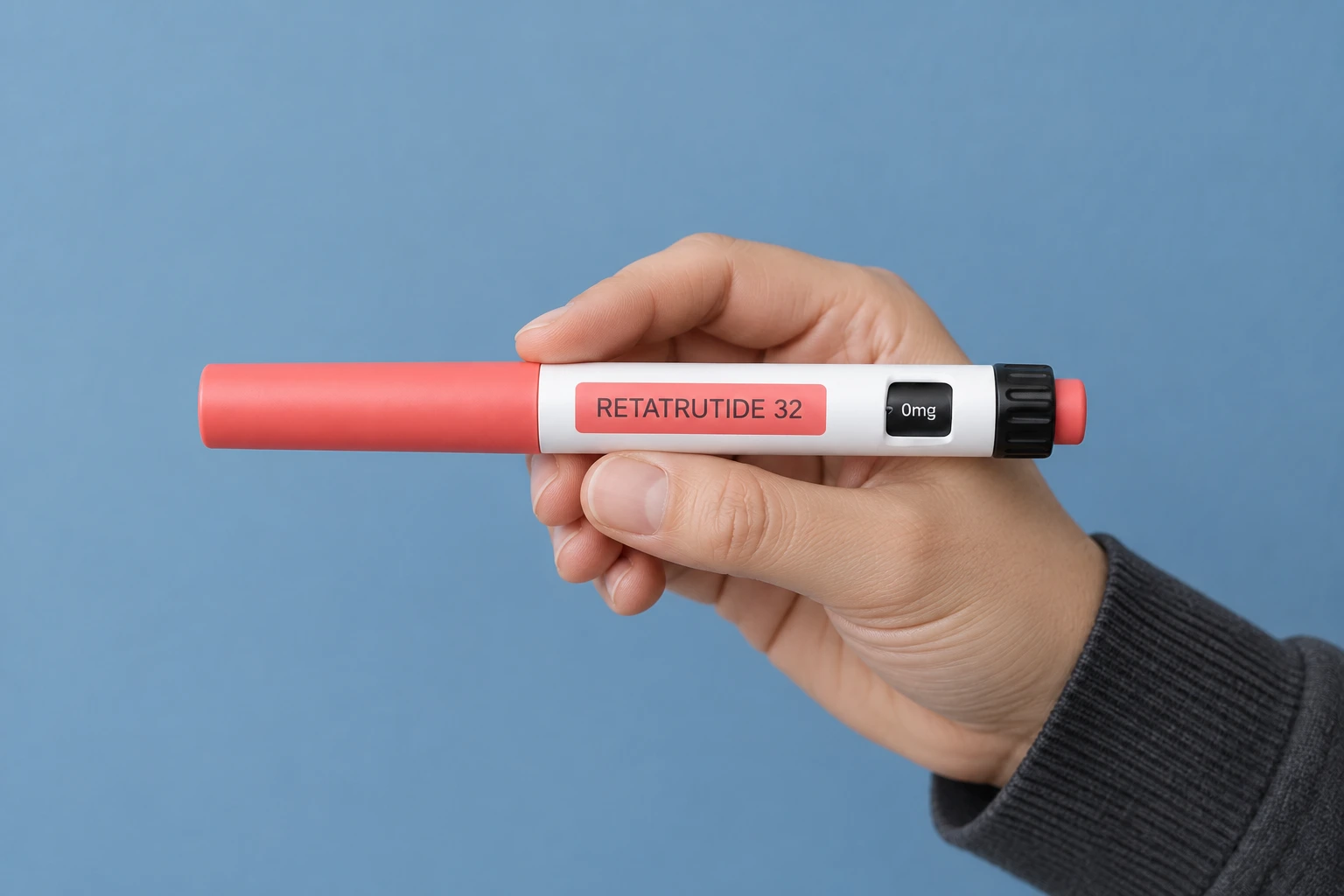
Retatrutide and Survodutide both combine GLP-1 and glucagon receptor activity. Retatrutide also activates the GIP receptor. This makes Retatrutide a triple agonist and Survodutide a dual agonist, with different molecular designs aimed at weight management.
By October 2026, both programmes have published phase 3 results. The useful comparison is their receptor approach and clinical results, rather than an assumption that three targets must be better than two.
The shared idea and the extra target
GLP-1 signaling is involved in appetite and food intake. Adding glucagon receptor activity explores another part of metabolic regulation. Retatrutide adds GIP activity to that combination.
These are coordinated actions within each molecule. They are not separate ingredients mixed together at the point of use, and receptor count is not a measure of potency.
Current results in adults without diabetes
| Feature | Retatrutide: TRIUMPH-1 | Survodutide: SYNCHRONIZE-1 |
|---|---|---|
| Participants | 2,339 adults without diabetes | 725 adults without diabetes |
| Main comparison time | 80 weeks | 76 weeks |
| Mean weight change in active groups | −17.6%, −23.7%, −25.0% | −12.2%, −13.0% |
| Placebo mean weight change | −3.9% | −5.4% |
The active results correspond to the trial's 4, 9 and 12 mg Retatrutide groups and 3.6 and 6.0 mg Survodutide groups. These identify research arms, not interchangeable amounts. Both columns use the primary treatment-regimen analysis, incorporating interruptions or discontinuation as specified in each trial. TRIUMPH-1, SYNCHRONIZE-1.
The larger numerical reductions in the Retatrutide report are an indirect observation across studies. Different participants, follow-up lengths and procedures mean the table does not establish head-to-head superiority.
Why another Survodutide headline may differ
SYNCHRONIZE-2, published in October 2026, studied adults with type 2 diabetes. Its population differs from SYNCHRONIZE-1, so one result should not be silently substituted for the other. SYNCHRONIZE-2.
For someone following weight-management options, that distinction is practical: start with the programme matching the health situation being discussed. Then consider regulatory status, tolerability and clinical follow-up alongside weight results.
Their shared receptors explain why the molecules are compared. Their separate development programmes explain why a result for one cannot simply become a product claim for the other.
Sources & further reading
Educational information. For personal treatment decisions and instructions, consult a qualified clinician or pharmacist with the details of your exact product.