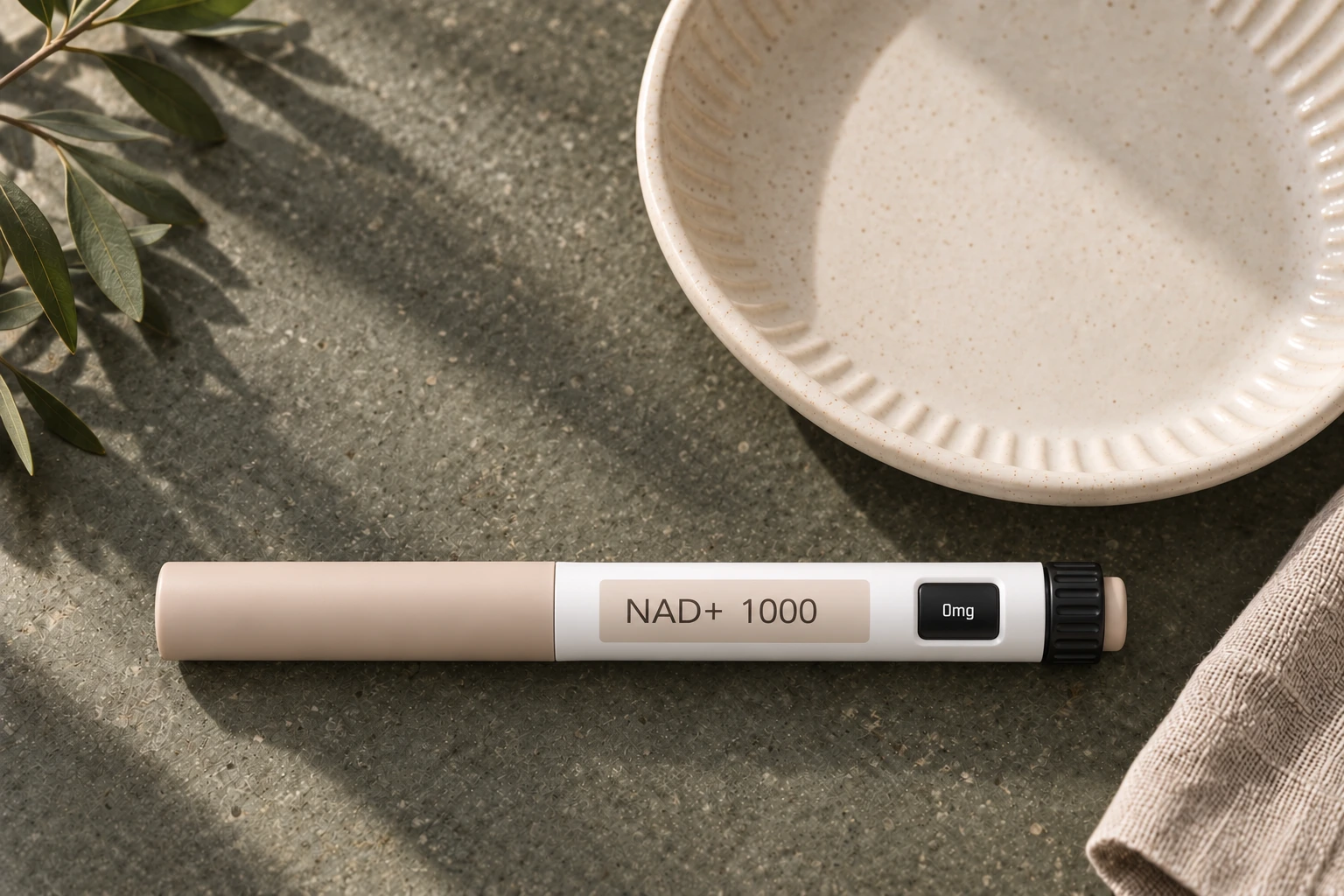
NAD+ and Glutathione have different jobs in cellular chemistry. NAD+ participates in reactions that transfer electrons during metabolism. Glutathione helps maintain the cell's antioxidant and redox systems. They are connected to cellular health without being substitutes for one another.
For someone comparing products, “energy” and “antioxidant” are useful starting categories, but neither word describes a guaranteed experience after taking a product.
Two molecules, two everyday descriptions
NAD+ is a coenzyme, not a peptide. Enzymes use it in many metabolic reactions, including processes connected with obtaining usable energy from nutrients.
Glutathione is a small peptide made from three amino acids. Its reduced form, GSH, participates in systems that manage oxidation within cells. “Antioxidant” describes that biochemical role; it does not mean that more of a product automatically creates better health.
The distinction can be pictured as different work within the same cell: NAD+ helps metabolic reactions move electrons, while Glutathione contributes to maintaining a suitable chemical environment. That is a description of biology, not a comparison of which product makes a person feel better.
What a human Glutathione trial measured
A randomized trial followed 54 nonsmoking adults receiving oral Glutathione or placebo for six months. The investigators measured Glutathione in blood and other cellular samples and reported increases in body stores with supplementation. Original oral Glutathione trial.
This is relevant to the question “Can an oral preparation change measured Glutathione?” It did not test whether the two products have equivalent effects on perceived energy.
What an NAD+ infusion pilot measured
A small study examined plasma and urine metabolites during a six-hour intravenous NAD+ infusion. It described how the administered material was processed over the observation period. It did not compare NAD+ with Glutathione or establish improvement in everyday fatigue. NAD+ metabolism pilot.
The route is part of both results: an oral Glutathione study and an intravenous NAD+ study cannot simply be attached to a different product format.
Make the comparison around the desired change
If the goal is feeling less tired during an ordinary day, the relevant outcome is a meaningful change in fatigue or function. If the interest is biochemical, the question may instead concern a measured concentration in a particular sample. These are different aims.
A product comparison is easier when the aim is stated before choosing an ingredient. NAD+ and Glutathione participate in different cellular processes, and the studies above answer different questions. Neither establishes that replacing one with the other produces equivalent results.
Sources & further reading
Educational information. For personal treatment decisions and instructions, consult a qualified clinician or pharmacist with the details of your exact product.