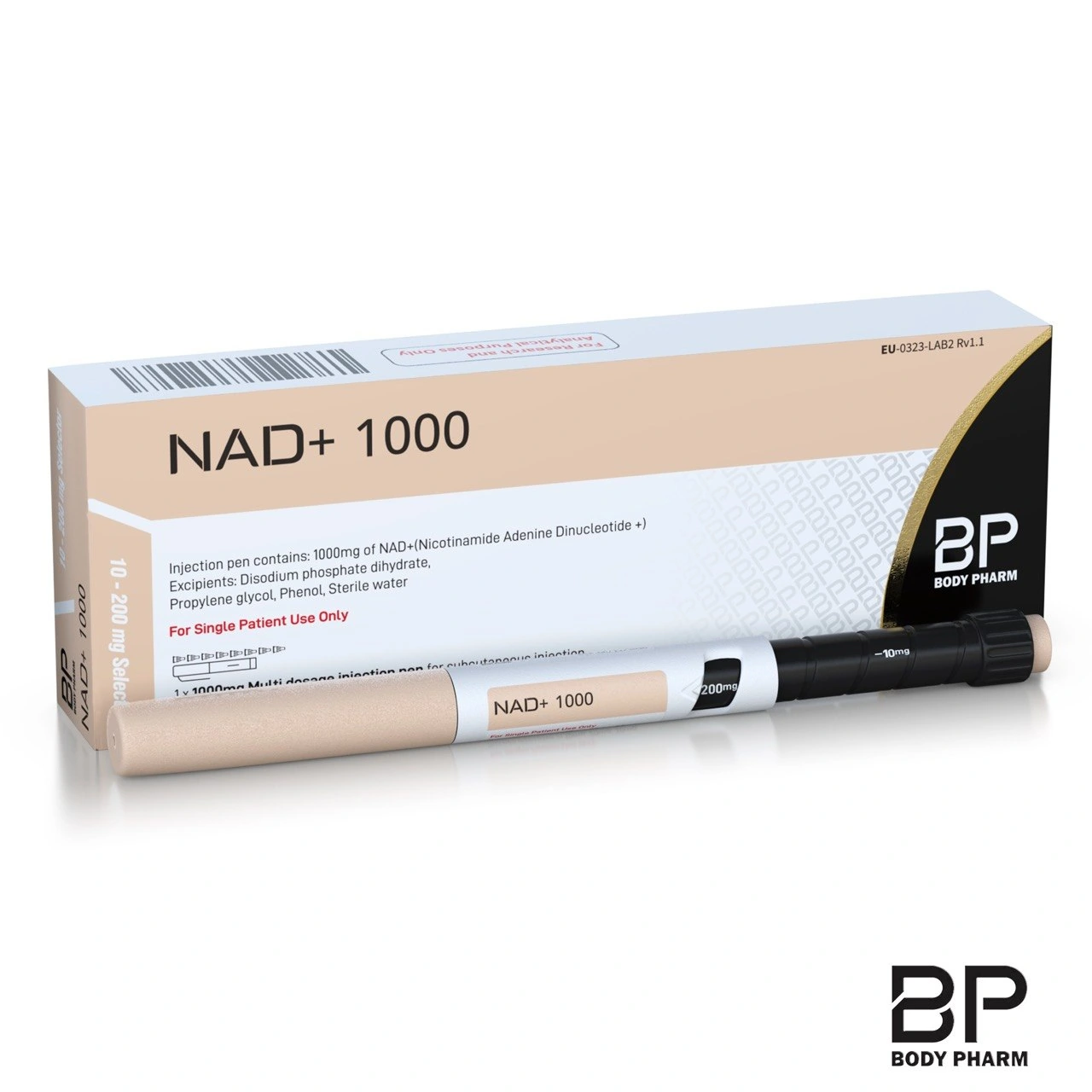
An NAD+ IV infusion and an NAD+ pen are different delivery arrangements, even when the same molecule name appears on both. In Bali, an infusion offer is a clinical service involving a provider, preparation and monitoring; a pen listing describes a packaged product. Neither matching milligrams nor a shared longevity label establishes that the two are equivalent.
NAD+ IV vs pen: compare the complete offer
| Question | IV service | Packaged pen |
|---|---|---|
| What is being offered? | An appointment and a clinical procedure | A specified product format |
| What needs identifying? | Provider, exact preparation, route and monitoring | Exact product, contents, instructions and documentation |
| Relevant research question | What did the studied infusion actually measure? | Is there evidence for this preparation and its intended route? |
| What cannot be inferred? | A wellness outcome from the word infusion | Equivalence to an IV intervention from the total milligrams |
This distinction prevents a misleading comparison between a complete care arrangement and a box. If your question is about clinical treatment, a product format alone cannot answer it. If your question is about purchasing a particular item, an infusion menu may not describe that item at all.
What a human NAD+ infusion study measured
A pilot infusion study examined plasma and urine NAD-related metabolites during a six-hour intravenous infusion. It helps describe what happened to measured compounds in that setting. It was not a study proving longer life or comparing a pen against the infusion.
A metabolic measurement and a meaningful daily outcome are different things. If an advertisement promises clearer thinking, more energy or anti-ageing, look for a study that actually measured that outcome in a relevant population. A source can be real and still fail to support the particular headline placed beside it.
The ingredient's normal role does not settle the route question
NIH PubChem describes NAD+ as a coenzyme involved in cellular redox reactions. That biological role explains scientific interest. It does not establish the effect of every product that contains the name, or show that different administration routes have equivalent outcomes.
Our NAD, NR and NMN identity guide addresses another common confusion: precursors and NAD+ are not simply interchangeable labels. First establish the ingredient. Then assess the formulation and route. Only after those steps does a comparison of clinical evidence become meaningful.
Why product preparation is part of the comparison
The FDA has warned about unsuitable ingredients in sterile NAD+ compounding. Its discussion includes contamination-related concerns and reported reactions. It does not establish that our product or any particular Bali clinic is affected, and it does not determine Indonesian authorization.
The practical lesson is that an ingredient's name or purity headline is not a complete assessment of a sterile preparation. Ask what documentation relates to the actual finished product and who takes clinical responsibility for the proposed procedure. A general statement about NAD+ cannot answer either question.
What the 1,000 mg pen listing tells you
The NAD+ product page lists a 1,000 mg pen. That is total labelled contents, not an IV-equivalent quantity, a frequency of use or a promise of how long an individual course should last. Do not borrow an infusion schedule or convert a clinic menu into a pen protocol.
For someone in Canggu, Seminyak or another Bali area, the practical comparison should include continuity. A clinical service needs clear responsibility for assessment and follow-up. A product order needs confirmation of the exact item, its instructions and the agreed handover. Convenience of location does not erase those different responsibilities.
Questions to resolve before deciding
Ask a prospective clinical provider what outcome they are addressing, what evidence supports that intervention and how they assess suitability and monitor reactions. Ask a product seller which exact preparation is offered and what documentation accompanies it. Keep answers attached to the relevant service or product rather than pooling them into a generic NAD+ benefit list.
The peptide catalogue can help identify the available packaged formats. It should not be read as an infusion service menu or as a recommendation to replace an existing clinical plan.
Questions buyers ask
Is the pen simply a quicker version of an IV appointment?
No such equivalence is established by the sources here. A different format changes the preparation, route questions and care arrangement. Time spent in an appointment is not a conversion factor.
Can I compare the two by total milligrams alone?
No. Milligrams describe mass, not the complete biological exposure or clinical outcome. A useful comparison preserves the distinctions between molecule, preparation, route, population and measured result.
Sources & further reading
Educational information. For personal treatment decisions and instructions, consult a qualified clinician or pharmacist with the details of your exact product.