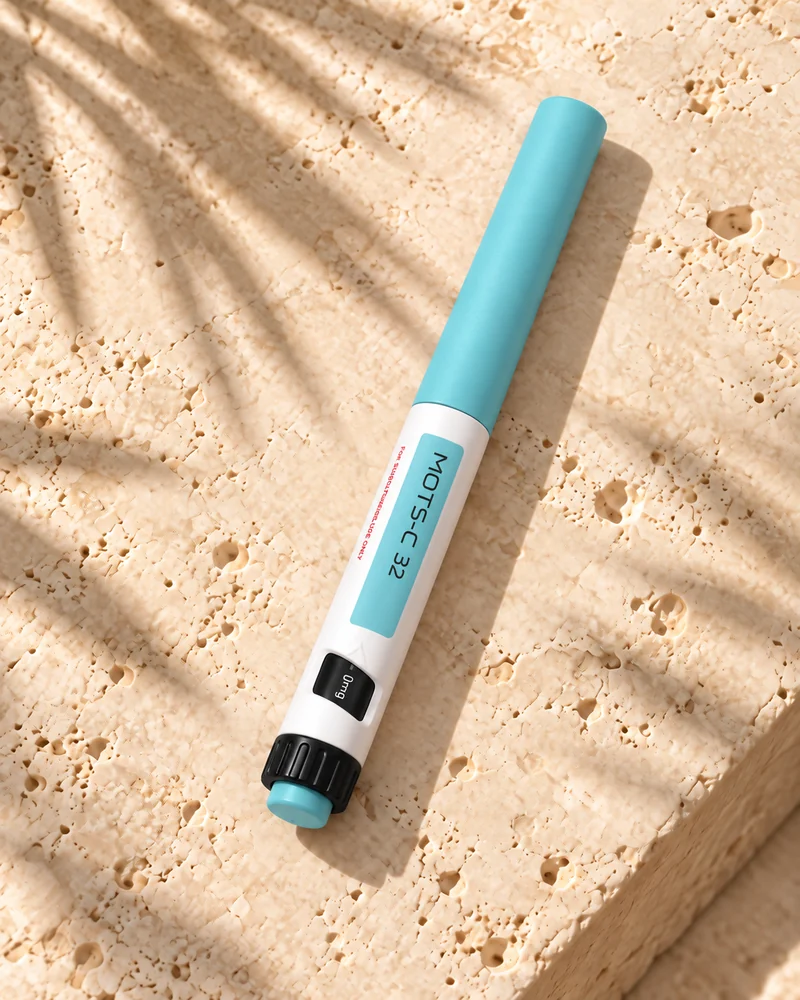
MOTS-C and SS-31 attract interest because both are discussed around mitochondria, but they are not the same peptide. In Bali, the useful comparison is what evidence exists for the exact outcome being claimed, rather than whether both names appear under an energy or longevity heading.
Two kinds of human evidence
The MOTS-C paper includes observations of the body's own peptide around exercise alongside experimental model research. Measuring an endogenous response is different from administering a retail preparation and evaluating its effects.
The MMPOWER-3 study tested elamipretide, also called SS-31, in primary mitochondrial myopathy. Its main walking-distance and fatigue outcomes did not improve versus placebo. A specific clinical trial can therefore answer a different question from an appealing mechanism diagram.
| Claim you may see | Detail needed to evaluate it |
|---|---|
| Supports mitochondria | Which measured outcome, in which population? |
| Exercise-related peptide | Was it administered or measured endogenously? |
| Helps fatigue | What caused the fatigue and what trial tested it? |
| Similar to SS-31 | Similar in mechanism, name or demonstrated outcome? |
Why the population cannot be removed
A person with a diagnosed mitochondrial disorder and a healthy visitor seeking more energy for training are not the same study population. The clinical context is part of the evidence, not an inconvenient footnote. Removing it can make both positive and negative findings misleading.
The same applies to MOTS-C. An observation after exercise does not establish that a MOTS-C pen will reproduce the observation or improve a desired outcome. Product identity and administered-product evidence are separate questions.
Use the comparison to sharpen the question
If you are reading from Bali because of persistent fatigue, describe the problem itself at a consultation rather than assigning it a mitochondrial cause from a search result. If your interest is scientific, ask what the experiment measured and which uncertainty it leaves open.
For a catalogue enquiry, identify the exact ingredient and presentation. SS-31 is a research comparator here, not an additional item being offered. A comparison should not quietly become a suggestion to substitute or combine products.
What to keep in your notes
Record the full study reference, the intervention, the population and the outcome. Keep any product listing separately with its documents. This simple distinction helps when discussing English-language research with different professionals during travel between Bali and elsewhere.
The catalogue shows current formats, and the journal explains related compound comparisons. Neither a shared biological theme nor a similar-looking product image supplies a direct head-to-head result.
FAQ
Are SS-31 and elamipretide the same name?
SS-31 is a name used for elamipretide. Neither name refers to MOTS-C.
Did MMPOWER-3 establish a general energy benefit?
No. It did not meet its primary walking-distance and fatigue endpoints in the studied disease population.
Does a natural MOTS-C exercise response validate a pen?
No. Endogenous observations and a particular administered product require different evidence.
Sources & further reading
Educational information. For personal treatment decisions and instructions, consult a qualified clinician or pharmacist with the details of your exact product.