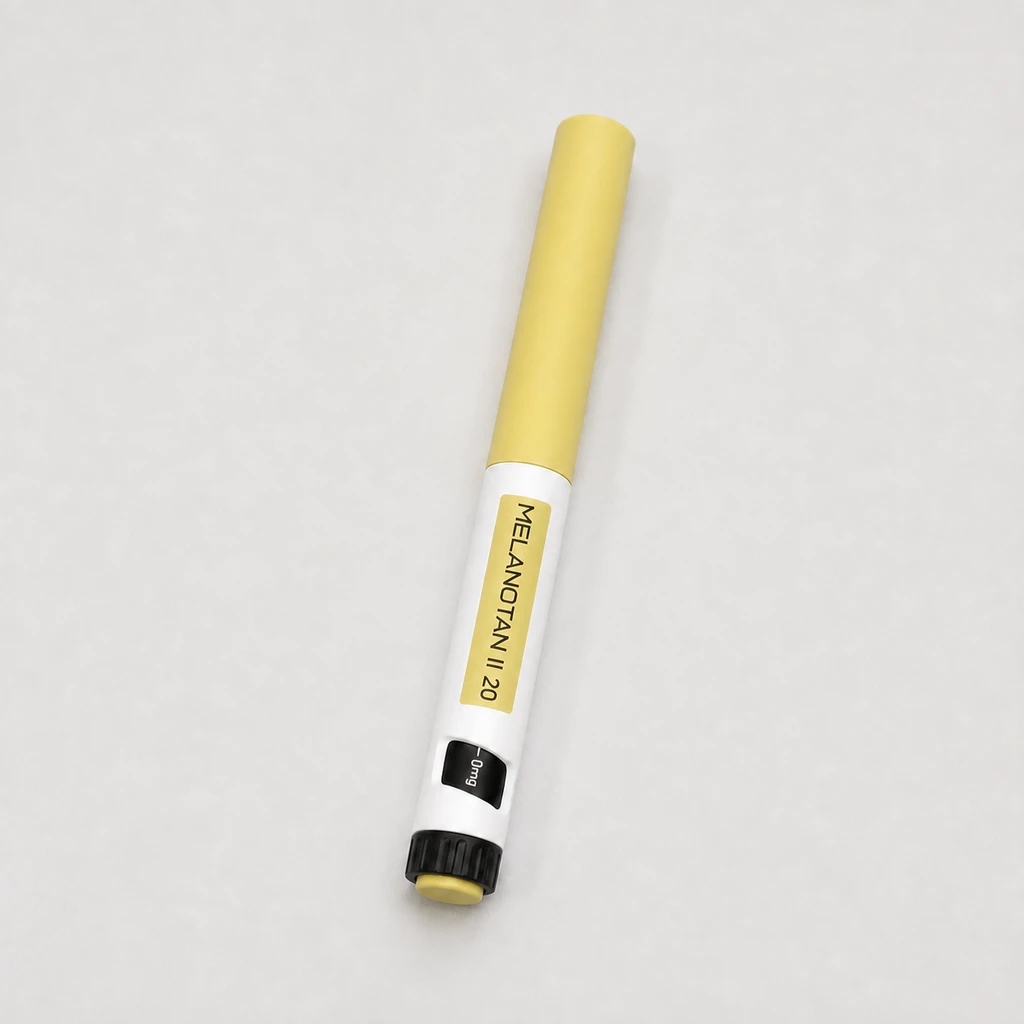
Melanotan II and a DHA self-tanner are different types of product, not two interchangeable ways to use the same ingredient. A self-tanner colours the skin surface; Melanotan products act through pigmentation-related pathways and carry separate safety concerns. For buyers in Bali, neither a darker appearance nor a pen listing establishes protection from ultraviolet exposure.
Start with the result you are asking for
Wanting a temporary darker appearance before an event is not the same question as wanting to change pigmentation through a biologically active substance. The common word “tan” can hide that difference.
The FDA's explanation of tanning products describes DHA reacting with cells at the skin surface to create cosmetic colour. It also distinguishes external use from exposure by inhalation or contact with sensitive areas. A lotion, a spray and an injectable product should not be grouped together simply because photographs show a similar shade.
| Question | DHA self-tanner | Melanotan II offer |
|---|---|---|
| Basic product category | Topical cosmetic colouring | A biologically active peptide product |
| Main distinction | Surface colour from a cosmetic formulation | Pigmentation-related biological action |
| Relevant documentation | Full cosmetic label and intended use | Exact substance, finished product and safety information |
| UV protection from colour alone | Not established | Not established |
| This catalogue | Not offered | Pen labelled 20 mg total contents |
What the catalogue does and does not identify
The Melanotan II product page describes a 20 mg pen. That figure is total labelled contents. It does not predict a skin shade, define a cosmetic routine or show how many holiday days an effect will last.
This article discusses self-tanner as a comparison, not as an additional product in the shop. Likewise, the pen should not be described as a concentrated DHA lotion. The active substance and route are different.
If two offers use “tanning peptide” without a clear ingredient name, ask which substance they contain. Melanotan II should also not be confused with the different product discussed in our Melanotan II and afamelanotide comparison.
Why a sunless label does not settle safety
The Australian TGA warning about melanotan products describes potentially serious harms and states that these products are not approved as tanning agents in Australia. Its warning includes injectable and other forms. This is Australian regulatory information, not a declaration about a specific Indonesian registration.
The practical point is that changing the format does not make the underlying substance a routine cosmetic. A product promoted as sunless can still carry risks unrelated to sun exposure. A neat device and an attractive result photograph do not answer those risks.
For DHA products, the FDA source also sets boundaries around external application and exposure to eyes, lips, mucous membranes or inhaled spray. “Cosmetic” does not mean every method of applying it has been evaluated equally.
Separate cosmetic colour from protection in Bali
A visible colour change is not a sunscreen rating. Do not use it to decide how long you can remain in the sun, and do not treat a darker appearance as evidence that skin is protected.
This matters when a product comparison is framed around beaches or a Bali holiday. The appearance goal and the protection question remain separate even when they occur on the same day. Neither product should be used as a reason to add sun exposure to intensify a result.
If you are comparing photographs, remember that lighting, camera settings and skin condition can change the appearance substantially. A promotional before-and-after picture does not measure UV protection, document product identity or establish a safety record.
A useful comparison does not need a tanning protocol
For a cosmetic discussion, retain the full self-tanner label and ask whether its intended use fits the application you have in mind. For a peptide-product discussion, retain the exact ingredient and finished-product documents. Do not transfer instructions between the two.
If you have changing moles, a persistent skin lesion or another skin concern, discuss that concern with a qualified clinician rather than trying to conceal it with a colour-changing product. If you have used an unapproved melanotan product, the TGA advises stopping and speaking with a health professional.
For a commercial enquiry in Bali, specify the exact catalogue item and quantity. Confirm the offered product and handover arrangements separately from any question of personal suitability. No order confirmation establishes a medical benefit.
Questions buyers ask
Is Melanotan II just self-tanner in a pen?
No. DHA and Melanotan II are different substances with different product and safety questions. The formats are not interchangeable.
Does either option replace sunscreen?
No. Cosmetic colour or increased pigmentation should not be treated as adequate UV protection. Keep sun-protection decisions separate from appearance.
Can a before-and-after photograph show which option is safer?
No. A photograph can show an appearance under particular conditions. It cannot establish the product's composition, systemic effects or longer-term safety.
Sources & further reading
Educational information. For personal treatment decisions and instructions, consult a qualified clinician or pharmacist with the details of your exact product.