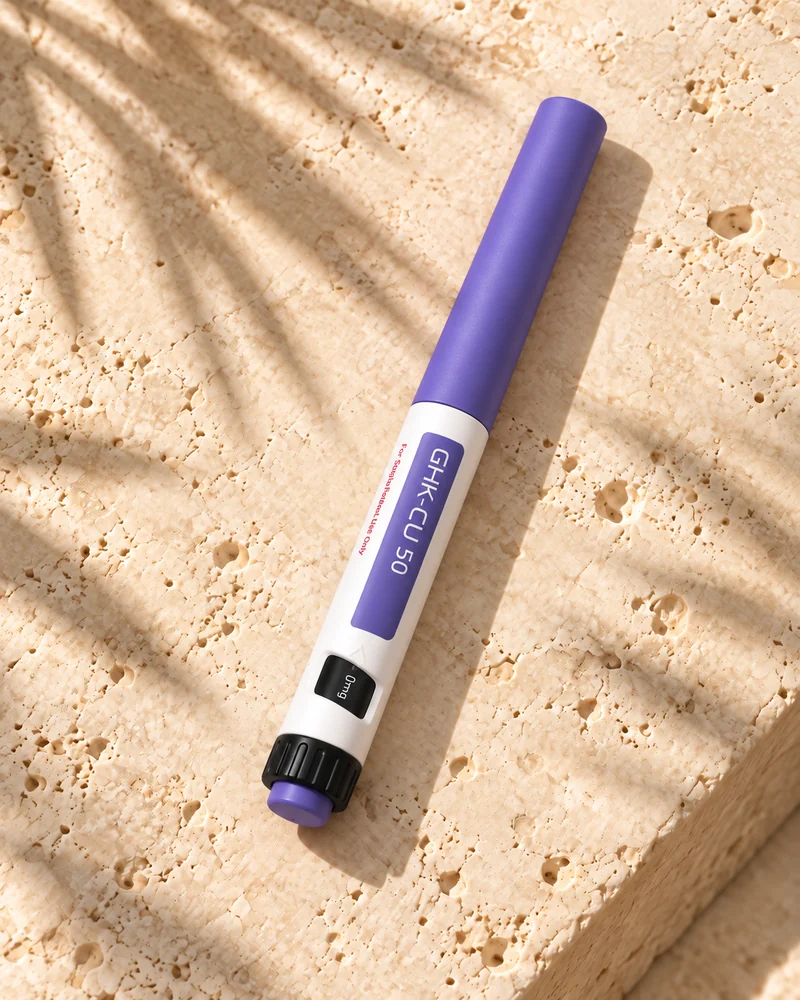
A GHK-Cu pen and a topical azelaic-acid product should not be ranked as though only their ingredient names differ. For Bali readers, a useful comparison includes the skin concern, the formulation and the outcome actually studied. That separates a product-format question from a pigmentation-treatment question.
Two different evidence settings
The azelaic-acid trial studied topical treatment for melasma. A copper-tripeptide trial studied a topical regimen after CO2 laser resurfacing. Neither paper is a direct comparison with the GHK-Cu pen in this catalogue.
The distinction is not merely technical. A post-procedure outcome cannot automatically be rewritten as a result for an unrelated pigmentation concern. A topical intervention also remains topical when its evidence is discussed alongside a pen.
| Comparison layer | Question to ask |
|---|---|
| Skin concern | Is this pigmentation, texture or recovery after a procedure? |
| Intervention | What ingredient, formulation and route were used? |
| Outcome | What changed and how was it assessed? |
| Catalogue item | Which exact product and documents am I reviewing? |
Why “stronger” is often the wrong question
The word stronger can refer to a concentration, a total quantity or a perceived effect. These meanings are not equivalent. Before using it in a product enquiry, identify which one you mean and whether the two formats can sensibly be compared on that basis.
A numerical label cannot settle a clinical question about uneven tone. Nor can a favourable finding in one research setting establish the performance of a different presentation. Matching the question to the evidence is more useful than searching for the largest number.
Local context without a tropical shortcut
In Bali, discuss sun exposure, current skincare and any recent procedures when seeking advice about pigmentation. These details help explain the concern; they do not create a universal tropical skincare prescription.
If you are visiting Canggu for a short stay, consider how the plan will be reviewed after you leave. Multiple new products or procedures introduced together make changes harder to attribute. A clear account of what was used and when is more useful than a list of before-and-after promises.
Keep the next step specific
For a catalogue enquiry, confirm the listed ingredient, presentation and available documents. For a dermatology question, explain the actual skin concern and ask whether the cited research applies. The shop and journal provide product and research context respectively, without turning a scientific comparison into a personal recommendation.
FAQ
Are GHK-Cu and azelaic acid interchangeable?
No. They are different compounds, and their formulations and study settings matter.
Can a topical paper validate a pen's results?
Not by itself. The change of route and preparation cannot be ignored.
Is one automatically better for Bali pigmentation concerns?
No universal conclusion follows from these studies. The actual condition and relevant formulation need to be identified first.
Sources & further reading
Educational information. For personal treatment decisions and instructions, consult a qualified clinician or pharmacist with the details of your exact product.